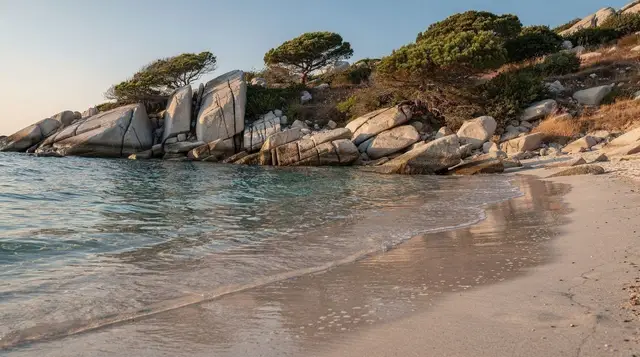
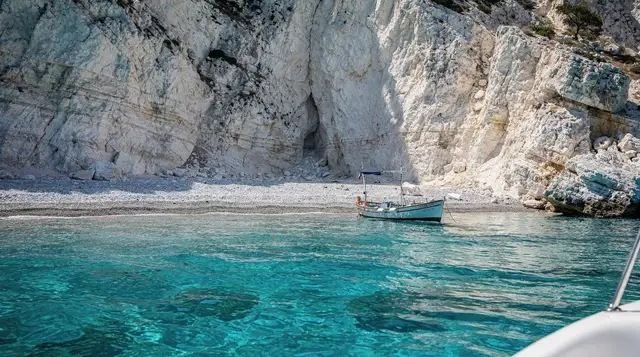
Quiet beaches in Sardinia, away from the August crowds
Where can you actually find a quiet beach in Sardinia in summer?
The west coast around Piscinas and the Sinis peninsula, the islands reached only by boat (Asinara, Tavolara), and any of the famous coves visited before 10am or after 5pm. July and August are crowded almost everywhere on the accessible coast; quiet is mostly a function of distance from an airport, not the beach's quality.
Quiet in Sardinia is mostly about distance and timing, not secrecy
There is no genuinely secret beach left in Sardinia — every cove worth photographing is on someone’s map, and in July and August the well-known ones fill by mid-morning regardless of how far you drive to reach them. What actually works is picking beaches that are inconvenient rather than hidden: a 90-minute drive from the nearest airport, a stretch of coast with no beach club infrastructure, or a cove that only opens up outside the two peak months. This guide works region by region, with realistic notes on how quiet each option stays and when it stops being quiet at all.
| Beach | Region | Why it stays quieter | How to reach it |
|---|---|---|---|
| Piscinas | West (Costa Verde) | No public transport, unpaved final approach | Car, 90 min from Oristano or Cagliari |
| Is Arutas & the Sinis coves | West | Off the main tourist circuit | Car, 25 min from Oristano |
| Cala Sisine | East (Gulf of Orosei) | Boat-only, fewer operators stop here than at Cala Luna | Boat from Cala Gonone or Baunei |
| Cala Domestica | West (Iglesiente) | Former mining bay, little signage | Car, 45 min from Iglesias |
| Spiaggia della Reale | Islands (Asinara) | National park access rules limit numbers | Boat from Stintino or Porto Torres |
| Cala Sabina & Cala Coticcio | Islands (Caprera) | Difficult footpath, no facilities | Boat or hike from La Maddalena |
The west coast: Sardinia’s genuinely quiet default
If you want a quiet beach without booking a boat or planning a hike, the west coast around Oristano and Costa Verde is the most reliable answer on the island. Piscinas sits behind Europe’s tallest moving dune system, up to 60m in places, and the final few kilometres of approach road are unpaved sand track that discourages casual visitors.
There is a handful of beach umbrellas for hire near the old mining village but nothing resembling a resort, and even in mid-August you can walk ten minutes along the dunes and lose sight of other people entirely. The trade-off is logistics: the nearest supermarket is back in Arbus, and there’s essentially no shade, so this is a beach for people who plan ahead rather than turn up on a whim.
Further north, the Sinis peninsula around Cabras has a string of coves that rarely make anyone’s top-ten list despite being genuinely striking — Is Arutas with its rice-grain quartz sand is the best known and does get busy on August weekends, but Maimoni and Mari Ermi a few minutes further along the same road stay noticeably calmer even in peak season.
None of these beaches has a quota or an entry fee; they’re simply far enough from Cagliari and Olbia airports (roughly two hours from either) that day-trippers rarely bother. Our best beaches in west Sardinia guide has the full west-coast shortlist, and Is Arutas has the detail on that specific cove.
Further south again, Buggerru and Masua sit inside the old Iglesiente mining district, with cliffs, sea stacks and small pocket beaches like Cala Domestica reached down a short valley path rather than a car park. These beaches see plenty of Sardinian day visitors from Iglesias and Carbonia but very few international tourists, which changes the atmosphere noticeably even when the sand itself isn’t empty.
The south coast, minus the two most photographed beaches
The south around Cagliari has the island’s best beach infrastructure and, as a direct consequence, its busiest beaches — Chia and Tuerredda draw serious crowds by 10am in August. What’s less obvious is that the same stretch of coast has quieter alternatives within a short drive of those two. East of the city, Villasimius has more beach frontage than its reputation suggests, and Solanas, roughly halfway between Villasimius and Cagliari, gets a fraction of the visitors of either without materially different water quality. A guided tour that includes Solanas alongside Villasimius spreads a day across two beaches rather than parking at the single most Instagrammed one:
Villasimius and Solanas beaches tour from CagliariChia itself has four or five distinct bays rather than one beach, and Sa Colonia and the stretch behind the old watchtower are noticeably calmer than the main Su Giudeu car park area even fifteen minutes’ walk apart. A full-day tour that takes in Chia and Tuerredda together, with a driver who knows the quieter access points, beats arriving independently and gravitating to whichever car park fills up first:
Full-day guided beach tour to Chia and Tuerredda from CagliariFor a lighter, more flexible option that still avoids self-driving into an August car park queue, the van tour covers similar ground on a looser schedule:
Van tour of the Chia beaches from CagliariFor the full picture on the south’s beach hierarchy, including which coves genuinely thin out by early afternoon, see best beaches in south Sardinia and Chia beaches guide.
The east coast: quiet is a function of which boat you’re on
The Gulf of Orosei has no coast road, which sounds like a guarantee of quiet — in practice, Cala Luna and Cala Goloritzé see dozens of boats converge by late morning in July and August. The genuinely quieter option in the same stretch of coast is Cala Sisine, a beach most operators either skip or treat as a secondary stop rather than the headline destination, and Cala Biriala further north, reached only by a small number of specialist boats or a demanding hike.
Our gulf of Orosei boat trips guide covers which operators stop where, and Cala Luna guide and Cala Goloritzé guide explain why those two specifically get so crowded despite the lack of road access.
Further south, Ogliastra around Tortolì and Santa Maria Navarrese has beaches that see a fraction of Cala Gonone’s boat traffic simply because most first-time visitors base themselves further north. Cea and Foxilioni, both a short walk from Santa Maria Navarrese, are ordinary beach-with-a-car-park spots by Sardinian standards, but they rarely feel crowded even in August because the town itself gets less tourist traffic than Cala Gonone or the Costa Smeralda.
The islands: boat-only usually means genuinely quiet
Asinara, the former penal colony turned national park off Stintino, caps visitor movement by design — there’s no free-roaming tourism, and most people see the island’s beaches, including Cala Sabina and Cala d’Arena, as part of an organised boat or minibus itinerary rather than independently. That structural limit keeps the island’s coves calmer than almost anywhere else accessible by day trip; see Asinara boat tours for the operators and Asinara National Park guide for the access rules.
Tavolara, the limestone islet off San Teodoro, works similarly — Spalmatore beach on its sheltered side gets busy with boat traffic in peak season, but the island’s harder-to-reach north side stays close to empty because most tour boats don’t attempt the crossing. Tavolara boat tours has the detail on which itineraries reach which side of the island.
La Maddalena and Caprera are less isolated but their smaller, less-publicised coves — Cala Coticcio in particular, reached by a genuinely steep footpath — reward the extra effort with far fewer people than Spiaggia Rosa or the archipelago’s headline beaches; see La Maddalena archipelago boat tour for how operators typically structure a day around the busier and quieter stops.
What quiet actually costs you
Every trade-off on this list runs the same direction: less crowded means less convenient. Piscinas has no lifeguard cover and precious little phone signal in patches, so it suits confident swimmers and families comfortable being genuinely self-sufficient for a day, not a first outing with very young children. The Sinis coves have no rescue infrastructure of any kind beyond what you bring yourself.
Asinara and Tavolara’s quieter stretches require booking a boat rather than simply driving up, which adds cost and a fixed schedule you don’t have on a beach you can reach by car. None of that makes these beaches a bad choice — it just means “quiet” in Sardinia is rarely free in either money or planning effort, and it’s worth deciding in advance how much self-sufficiency you actually want from a beach day.
There’s also a genuine cost difference by region. The west coast is free to visit and needs no booking, which makes it the cheapest route to a quiet beach day on the island. The islands, by contrast, mean at minimum a return boat crossing (roughly €35-90 depending on the operator and island), which changes the maths if you’re trying to build several beach days into a tight budget — see Sardinia on a budget for how that trade-off fits into a wider trip.
Practical planning for a quiet-beach day
Because the quieter beaches on this list tend to have fewer facilities than Sardinia’s headline coves, the planning matters more than usual. Fill up on fuel before heading toward Costa Verde or the Sinis peninsula — service stations thin out fast once you’re off the SS131, and Piscinas in particular has none nearby. Bring more water than feels necessary; none of the west-coast dune beaches have a reliable freshwater source, and shade is close to nonexistent past mid-morning. If you’re heading to a boat-only quiet cove on Asinara or around Caprera, check the specific itinerary’s swim-stop length before booking — a “quiet beach” stop that only lasts twenty minutes defeats the purpose of choosing it in the first place.
Timing your arrival matters as much as choosing the right beach. Even genuinely quiet spots see a local surge on Sunday afternoons in July and August, when Sardinian families join the coastal traffic alongside tourists. A weekday visit, or an arrival before 10am, consistently outperforms picking a slightly more obscure beach and turning up at 1pm on a Saturday.
Building quiet beaches into a wider itinerary
A trip built specifically around avoiding crowds works best if it’s planned that way from the start rather than bolted on afterward. Our west coast Sardinia 7 days itinerary is the closest match to this guide’s priorities, spending most of its time in Costa Verde and the Sinis peninsula rather than the more heavily touristed south or north-east.
For a shorter trip, 3 days in Cagliari can be adapted by swapping a Chia day for Piscinas or the Sinis coves, at the cost of a longer drive each way. If quiet matters more than covering the whole island, resist the temptation to chase every region on a single trip — the driving time between quiet pockets adds up fast on an island where 60km/h is closer to the real average speed than the map suggests.
When to go for genuinely quiet beaches
June and the second half of September give the best balance: sea temperatures are already comfortable (June) or still warm (September), and the school-holiday crowd that fills the coast from mid-July to the end of August has either not arrived or has gone home. Even the busiest beaches on this list — Chia, Cala Luna, Spalmatore — are noticeably calmer in those windows. For a month-by-month breakdown, see Sardinia in June, Sardinia in September and best time to visit Sardinia.
Frequently asked questions about quiet beaches in Sardinia
Is there any beach in Sardinia that’s quiet even in August?
Piscinas and the smaller Sinis coves like Maimoni come closest — their remoteness from any airport limits day-tripper numbers even at peak season. Nowhere reachable by a short drive from Cagliari or Olbia stays genuinely quiet in the first three weeks of August.
Are quiet beaches harder to reach without a car?
Yes, almost without exception — the busiest beaches have the best tour and transport infrastructure precisely because they’re accessible, while quiet beaches tend to be quiet because getting there takes more effort. See renting a car in Sardinia for what to expect.
Do quiet beaches in Sardinia have facilities?
Rarely. Piscinas and the Costa Verde coves have minimal services; most Sinis and Iglesiente beaches have none beyond occasional summer-only kiosks. Bring water, food and shade.
Which region has the best chance of a quiet beach day?
The west coast, consistently — Costa Verde and the Sinis peninsula see a fraction of the visitor numbers of the south or the Costa Smeralda year-round.
Is it worth booking a boat tour to reach a quieter cove?
Often yes for the islands and the Gulf of Orosei, since the alternative is a demanding hike or no access at all. Ask the operator directly which beaches the itinerary actually stops at — see what boat tour operators don’t tell you before booking.
Can I combine a quiet beach with a boat tour from Cagliari?
Yes — the guided tours to Villasimius and Solanas, or Chia and Tuerredda, both include a quieter second stop alongside the headline beach, which is a reasonable middle ground between total solitude and total crowds.
Are quiet beaches in Sardinia safe to swim at without a lifeguard?
Most have no lifeguard cover at all, unlike Poetto or the main Chia car park beach. Stick to calm, sheltered water if you’re an inexperienced swimmer, and check local conditions before swimming anywhere on the west coast, where currents can be stronger than on the sheltered south or Costa Smeralda coves.
How do quiet beaches compare for photography?
The west coast’s dune systems at Piscinas and the quartz sand at Is Arutas photograph as well as anything on the island, arguably better than the more crowded coves precisely because there are fewer people and beach umbrellas in the frame. See Sardinia’s best photography spots for more locations across the island.
Beach & coastal tours on GetYourGuide
Verified deep-linked GetYourGuide tours. Book through these links and we earn a small commission at no cost to you.
These are our own photographs of Sardinia, not the operator's pictures of this tour — open the tour page to see those.