Best beaches in west Sardinia
What is the best beach on Sardinia's west coast?
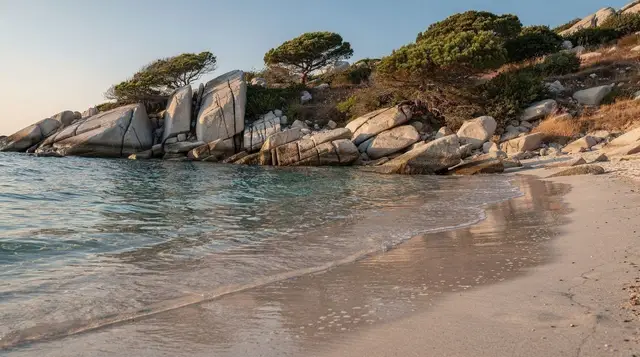
Is Arutas, on the Sinis peninsula near Oristano, is the region's best-known beach for its quartz pebble sand. Piscinas, further south in Costa Verde, has Europe's tallest moving dunes and even fewer visitors than Is Arutas gets outside August.
Sardinia’s quietest coast, and the reason it stays that way
The west coast, running from the Sinis peninsula near Oristano down through Costa Verde, is the region most first-time visitors skip entirely, and that’s largely a matter of geography rather than beach quality.
It sits further from both of Sardinia’s busiest airports — Cagliari-Elmas is about 90 minutes south, Alghero-Fertilia around two hours north — so it rarely makes a short-trip itinerary. What that extra driving buys you is beaches that stay uncrowded even in August, plus genuinely unusual sand: Is Arutas is made of rice-grain quartz pebbles rather than silica, and the sand at Piscinas moves in dunes tall enough to bury the scrub that tries to grow on them.
| Beach | Distance from Oristano | Character | Crowds |
|---|---|---|---|
| Is Arutas | 25 min | Quartz pebble sand | Moderate in August, quiet otherwise |
| Maimoni / Mari Ermi | 25-30 min | Similar quartz sand, quieter | Low |
| Torre Grande | 10 min | Long sandy town beach | Moderate |
| Piscinas | 90 min | Europe’s tallest moving dunes | Very low |
| Costa Verde coves | 60-90 min | Wild, off-road access | Very low |
Is Arutas and the Sinis peninsula: unusual sand, real geology
Is Arutas, about 25 minutes from Oristano on the Sinis peninsula, owes its texture to millennia of quartz erosion rather than the usual silica-sand process — the grains are genuinely rice-sized and pale pink to white, and they crunch differently underfoot than any other beach on the island. It’s a genuinely protected feature: removing sand here carries the same fines (€500-3,000) as removing sand anywhere else in Sardinia, enforced with random checks at Oristano’s roads out of the peninsula in peak season. A short drive north, Maimoni and Mari Ermi share the same quartz-sand geology with noticeably fewer visitors, worth the extra ten minutes if Is Arutas is busy.
The Sinis peninsula mountain bike tour is a good way to see several of these beaches plus the peninsula’s lagoons and birdlife in one outing rather than driving to each separately, and it covers ground a car often can’t on the peninsula’s sandier tracks.
Torre Grande: Oristano’s own beach, five minutes closer
Torre Grande, Oristano’s town beach, is the practical choice if you’re staying in the city itself and don’t want to drive out to the peninsula every day — a long, straightforward sandy stretch with a working harbour at one end and considerably more facilities (restaurants, showers, parking) than the wilder Sinis beaches. It’s not the region’s best beach on scenery alone, but it’s the easiest, and a reasonable base for exploring the rest of the coast from.
Costa Verde: Europe’s tallest dunes and almost nobody on them
Further south, Costa Verde around Piscinas holds some of the tallest moving sand dunes in Europe, some reaching over 50m, shaped by the mistral wind off a coastline with no significant development.
The area was mined for lead and zinc until the late 20th century, and the abandoned mining infrastructure near Buggerru and Masua adds an odd, atmospheric backdrop to what’s otherwise one of the wildest stretches of coast on the island. Getting here properly means a genuine drive — closer to 90 minutes from Oristano, or roughly the same from Cagliari via the west — and rougher roads for the final stretch, which is precisely why it stays this quiet.
The Costa Verde off-road trip from Oristano covers the dune tracks and mining-era coastline properly without risking a rental car’s suspension on the rougher access roads, and it’s the most sensible way to see Piscinas if you’re not driving a 4x4 yourself.
Combining the west coast with a day trip from further afield
If a full base on the west coast doesn’t suit your itinerary, the region works well as a single long day trip from either Oristano or Cagliari. The Oristano day trip bundles the Sinis peninsula’s beaches with the region’s Punic-Roman history at Tharros and the Mont’e Prama statues, which is a more efficient use of a single day than beaches alone.
For visitors based in the south who want a beach day rather than the archaeology angle, the Villasimius and Solanas beaches tour from Cagliari is the better-suited option if the west coast’s extra driving time doesn’t fit the schedule — see best beaches in south Sardinia for that alternative in full.
What else the west coast is good for beyond beaches
Oristano and the Sinis aren’t only about sand — Tharros is one of Sardinia’s best-preserved Punic-Roman sites, sitting on the same peninsula as Is Arutas, and the Giants of Mont’e Prama, extraordinary Bronze Age stone statues discovered nearby, are now displayed in Cabras’s small archaeological museum. If wine is more the draw, this region also produces Vernaccia di Oristano, a distinctive oxidative white unlike anything else made on the island. See what to eat in Sardinia and the bottarga of Cabras for the food side of a west-coast stay.
The mining coast: Nebida, Masua and the Pan di Zucchero
South of Piscinas, the coastline around Nebida and Masua adds an unusual industrial-scenic combination to the west coast’s roster: abandoned mine buildings clinging to cliffs above the sea, with the Pan di Zucchero sea stack rising just offshore at Masua — one of the more striking natural landmarks on this side of the island.
It’s less about a beach day here and more about the drive itself and a handful of short, dramatic viewpoints, worth combining with the wider Costa Verde detour if industrial heritage or unusual coastal scenery appeals more than another swim. Nearby Iglesias and Carbonia both have mining museums that give the ruins along this coast proper historical context.
Wildlife and the Sinis peninsula’s lagoons
Beyond the beaches themselves, the Sinis peninsula’s lagoons around Cabras are an important wetland for flamingos and other wading birds, visible from several points along the road out to Is Arutas without needing a dedicated detour. Cabras itself is worth a stop for its small archaeological museum, home to the Giants of Mont’e Prama — extraordinary Bronze Age stone statues discovered nearby in the 1970s and only fully excavated decades later — and for the mullet-based bottarga that’s produced in the lagoon and used across Sardinian cooking. Our the bottarga of Cabras and the Giants of Mont’e Prama guides cover both in more depth.
Wine and where to eat around Oristano
The Oristano plain produces Vernaccia di Oristano, a distinctive oxidative white wine unlike anything else made in Sardinia, aged in a way that gives it a sherry-like character rather than the fresh, crisp profile of Vermentino. It pairs naturally with the region’s seafood, particularly bottarga and mullet from the lagoons around Cabras, and a handful of cantine near Oristano offer tastings that make a good midday break from beach-hopping. For the wider Sardinian food picture, see Sardinian food and wine and wine tours in Sardinia for operators who cover this specific area.
Practical notes: sun, wind and what to pack
This coast is more exposed to the mistral than the sheltered south, and the wind here can be a genuine feature of a beach day rather than a rare inconvenience — bring something to weigh down a towel or umbrella, and expect Piscinas’s dunes to be actively shifting sand underfoot on breezier days. Shade is limited to non-existent at Is Arutas and Piscinas alike, so a proper sun umbrella or a beach tent is worth packing rather than relying on natural cover. Fuel up before heading out to Costa Verde specifically — petrol stations thin out considerably past Iglesias, and running low on the rougher access roads is a genuinely inconvenient place to do it.
A comparison worth making before you commit the extra driving time
If time is tight, it’s fair to weigh the west coast against the south before adding the extra driving hours to an itinerary. Chia and Villasimius, covered in best beaches in south Sardinia, offer easier access and similarly strong beach quality; what the west trades that convenience for is a genuinely different, quieter atmosphere and the unusual quartz sand at Is Arutas that no other beach on the island can match. Our north versus south Sardinia and broader best beaches in Sardinia guides help place this region in context against the rest of the island if you’re still deciding how to split a limited number of days.
Where to stay for a west-coast beach trip
Oristano itself is the most practical base for a west-coast beach trip, close enough to Is Arutas, Maimoni and Torre Grande to treat each as a short daily drive rather than a relocation, and considerably cheaper than a Costa Smeralda or Alghero stay at the same standard — a comfortable double room in town typically runs €70-110 a night outside August. For Costa Verde specifically, staying nearer Guspini or Arbus, inland towns closer to Piscinas than Oristano itself, cuts the drive to under 40 minutes and makes an early start at the dunes realistic before the day heats up.
Agriturismi scattered through the Sinis and Marmilla hinterland offer a genuinely different overnight option — working farms with home-cooked dinners, often for less than a comparable hotel room — and pair naturally with a west-coast trip that already leans toward the quieter, more rural side of the island. See where to stay in Sardinia and hotel versus agriturismo in Sardinia for the fuller comparison.
Wind, kitesurfing and other watersports
The same exposure that makes this coast windier than the sheltered south turns it into one of Sardinia’s better spots for kitesurfing and windsurfing, particularly around Torre Grande and the open stretches south toward Marina di Arborea, where a reliable thermal wind builds most summer afternoons.
It’s a different crowd from the swimmers heading to Is Arutas — schools and rental operators cluster around Torre Grande rather than the quieter Sinis beaches — but worth knowing about if watersports are part of the trip rather than purely a beach day. Conditions are most consistent from May through September, easing off outside that window along with most of the coast’s tourist infrastructure. See kitesurfing in Sardinia for operators and conditions across the island, including this stretch.
S’Archittu and the quieter coast north of the Sinis
North of the Sinis peninsula, around the small village of S’Archittu, the coast holds a natural limestone arch carved by wave action, plus a small, sheltered beach that sees a fraction of Is Arutas’s crowds even in August. It’s roughly 40 minutes from Oristano, further than most visitors bother driving for a single beach, which is exactly why it stays quiet — snorkelling around the arch itself is genuinely rewarding on a calm day, with clear water and enough rock structure to hold fish close to shore.
There’s no direct comparison to Is Arutas’s quartz sand here; this is a smaller, rockier cove better suited to an hour or two than a full beach day, but worth the detour for anyone working their way up the coast from Oristano toward Bosa and the north-west.
Frequently asked questions about west Sardinia’s beaches
What makes Is Arutas’s sand different?
It’s made of quartz pebbles eroded into rice-grain size, rather than the silica sand typical of most Mediterranean beaches — genuinely distinct underfoot and in photographs.
Is it illegal to take sand from Is Arutas?
Yes, the same rules apply here as everywhere in Sardinia: removing sand carries fines from €500 to €3,000, and enforcement includes random checks on roads leaving the Sinis peninsula in peak season.
How far is Costa Verde from Oristano?
Around 90 minutes’ drive, with a rougher final stretch of road toward Piscinas itself — budget more time than the distance alone suggests.
Is the west coast good for a day trip from Cagliari?
It’s possible but long — closer to two hours each way. A day trip from Oristano itself, or a one- or two-night stay in the region, makes far better use of the driving time.
Are west Sardinia’s beaches crowded in summer?
Less so than the south or Costa Smeralda. Is Arutas sees moderate crowds in August but nothing like Chia or Spiaggia del Principe, and Piscinas stays very quiet year-round.
Can I combine beaches with archaeology on the west coast?
Yes — Tharros sits on the same Sinis peninsula as Is Arutas, making it easy to pair a morning of ruins with an afternoon on the sand.
Is there kitesurfing on Sardinia’s west coast?
Yes — Torre Grande and the coast south toward Marina di Arborea have consistent thermal winds through summer and a cluster of kitesurfing and windsurfing schools, distinct from the calmer swimming beaches further along the Sinis.
Where should I stay for an early start at Piscinas?
Guspini or Arbus, inland towns closer to Costa Verde than Oristano itself, cut the drive to under 40 minutes and make it realistic to reach the dunes before the day’s heat sets in.
Beach & coastal tours on GetYourGuide
Verified deep-linked GetYourGuide tours. Book through these links and we earn a small commission at no cost to you.
These are our own photographs of Sardinia, not the operator's pictures of this tour — open the tour page to see those.