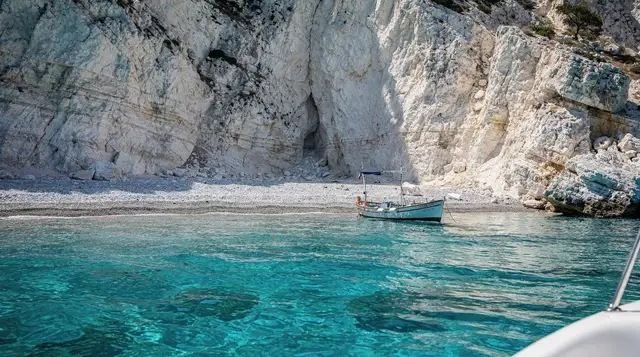
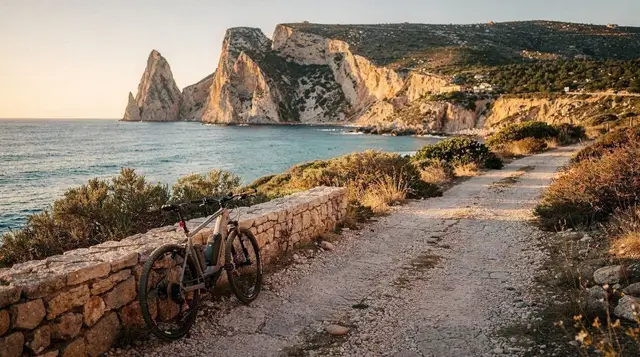
The Costa Verde — the “green coast” — runs for roughly 30km through the Sulcis-Iglesiente in southwest Sardinia, between the small towns of Arbus and Guspini. It’s one of the least developed coastlines on the entire island: no seafront promenades, barely any restaurants, unpaved tracks in place of coast roads for long stretches, and a landscape that alternates between wind-carved dunes and the rusting shell of a 19th-century mining district.
Where Chia or Villasimius have beach clubs and sunbed rows, the Costa Verde has scrub, silence and a wind that rarely stops in the afternoon. It rewards visitors who want a genuinely wild piece of coast and can live without a beach bar; it frustrates anyone expecting facilities.
| Where | Sulcis-Iglesiente, southwest Sardinia, between Arbus and Guspini |
| Covers | Piscinas dunes, Scivu, Portu Maga, Torre dei Corsari, the mining villages of Ingurtosu and Montevecchio |
| Time needed | A full day to see several beaches and one mining village; two days to cover the whole coast unhurried |
| Getting there | Car essential; a 4x4 or high-clearance vehicle is genuinely useful on the track to Piscinas via Ingurtosu |
| Best time | May to September for swimming and dune walking; spring and autumn for the mining history without peak heat and wind |
An undeveloped coast, not an accident
The Costa Verde’s emptiness isn’t neglect — it’s the direct result of what this stretch of coast was used for until relatively recently. Through most of the 20th century this was mining land, not holiday land, and the roads, villages and infrastructure that exist here were built to move lead and zinc ore, not tourists. When the mines closed in the 1960s and 70s, nothing much replaced them.
There’s no equivalent here of the hotel and villa development that followed the end of farming or fishing economies on other parts of the island. The result, decades on, is a coastline that looks much as it must have looked a century ago: dunes, scrub-covered hills, a scatter of half-collapsed industrial buildings and long, empty beaches that most visitors to Oristano or Iglesias never see, because seeing them takes a deliberate detour and a car that can handle a rough track.
That same emptiness is the main practical warning for anyone planning a visit. There is no lifeguard cover on almost any beach along this coast, mobile signal is patchy in the mining villages and on some of the tracks, and services — food, water, toilets, fuel — are thin on the ground once you’re off the main road through Arbus or Guspini. Treat this as a coast you prepare for rather than one you drop into casually.
The dunes of Piscinas: Europe’s largest active dune system
At the heart of the Costa Verde, inside the beach of Piscinas, sits the largest system of active sand dunes in Europe — mobile golden dunes that reach up to 60 metres in height and shift with the wind rather than being fixed by vegetation, the way most European dune systems now are.
The area was once managed as a WWF reserve and remains a protected zone today, which is part of why it has stayed this undeveloped: building here has always been restricted in a way it wasn’t on more accessible coasts. This page covers the Costa Verde as a whole; for the practical detail of visiting Piscinas itself — the access track, where to park, what the beach is actually like underfoot — see the dedicated Piscinas guide.
A guided off-road trip is the most efficient way to see the dunes alongside the rest of the coast in a single day, without worrying about the state of the access tracks yourself:
Costa Verde off-road trip from OristanoScivu, Portu Maga and Torre dei Corsari: the rest of the coast
Piscinas gets the attention, but it isn’t the only beach on this stretch. Scivu, further south towards Arbus, is a similarly wild, dune-backed beach with even less infrastructure than Piscinas — often just a dirt track and a rough parking area, no fixed facilities.** Portu Maga**, between Scivu and Torre dei Corsari, is a smaller cove with dark volcanic sand mixed into the paler quartz-and-silica base typical of this coast, reachable by a shorter unpaved approach.
Torre dei Corsari, at the coast’s northern end near Marina di Arbus, is the most accessible point on the Costa Verde and the closest thing it has to a village — a scatter of holiday homes, a handful of places to eat, and an actual paved road to the beach.
It takes its name from a 16th-century Spanish watchtower on the headland above the sand, one of the chain built along Sardinia’s coast to warn of Barbary pirate raids; the tower itself is fenced off from close access but visible from the approach road and from the beach below. Torre dei Corsari’s dunes are lower and more stabilised than Piscinas’s, and its relative ease of access makes it the sensible first stop for visitors who want a taste of the Costa Verde without committing to a rough track.
| Beach | Character | Access |
|---|---|---|
| Piscinas | Dunes up to 60m, the coast’s main draw | Unpaved track from Ingurtosu; 4x4 useful |
| Scivu | Wild, almost no facilities | Dirt track, rough parking |
| Portu Maga | Small cove, dark and pale sand mixed | Short unpaved approach |
| Torre dei Corsari | Most developed point, 16th-century watchtower | Paved road, easiest access |
Ingurtosu and Montevecchio: walking through an abandoned mining district
Inland from Piscinas, the villages of Ingurtosu and** Montevecchio** were once among the most productive lead and zinc mining sites in Europe, worked from the 19th century until operations wound down through the 1960s and 70s. What’s left today is a genuine ghost district: washing plants, workers’ housing, administration buildings and mine-head structures in varying states of collapse, spread across a hillside that once supported thousands of workers and their families.
Some buildings at Montevecchio have been partly restored and opened for visits as part of Sardinia’s wider mining-heritage circuit, alongside better-known sites like Masua and Nebida further south; others at Ingurtosu remain fenced off and genuinely dangerous to enter, with unstable floors and open shafts nearby — a reason to stick to marked paths rather than treat the ruins as a free-for-all.
A guided tour is the easiest way to see both the mining history and the dunes without navigating the unpaved network of tracks yourself, since Piscinas sits at the end of the same access road that runs down from Ingurtosu:
Piscinas old mines and Montevecchio tour from CagliariFor the wider mining-heritage picture of this corner of Sardinia — including the more visited ruins further south — see the Iglesias and Buggerru destination pages, and for a guided option that starts from Iglesias rather than the coast itself:
Sulcis jeep experience from IglesiasWind, waves and no lifeguards
The Costa Verde faces almost due west and catches the prevailing mistral with little to break it, which means a strong, reliable afternoon wind is closer to the norm than the exception, especially from late spring through summer. Mornings are calmer, but by early-to-mid afternoon the sea here is regularly choppy, sometimes rough enough that swimming stops being relaxing and starts being hard work — this isn’t the gentle, sheltered swimming of a bay like Chia or the coves around Villasimius.
Combined with the complete absence of lifeguard cover on almost every beach along this coast, that makes the Costa Verde a poor choice for families wanting calm water for young children; see Sardinia’s beaches with kids for gentler alternatives.
What the wind takes away from swimming, it gives to two other activities. Kitesurfers use stretches of this coast, particularly around Piscinas and Scivu, for exactly the conditions that make casual swimming unappealing — see kitesurfing in Sardinia for where this coast fits among the island’s better-known spots like Porto Pollo. And the dunes themselves are a destination for walking rather than lying on a towel: climbing the highest ridges at Piscinas for the view back over the sand and out to sea is, for a lot of visitors, the actual point of coming here, wind and all.
There’s essentially no shade anywhere on this coast outside a handful of tamarisk trees near the Piscinas access road, so water, sun protection and food need to be brought in rather than bought locally. Where a bar or trattoria does exist — mostly around Torre dei Corsari or the small hotel near the Piscinas dunes — a simple lunch or a grilled fish plate runs somewhere around €15-20, but don’t count on finding one open, especially outside July and August.
Getting around the Costa Verde
A car is not optional here — there’s no bus service that usefully covers this coast, and the distances between Arbus, Guspini and the beaches are too long to walk. The road situation varies sharply by section: the approach to Torre dei Corsari and the main road linking Arbus and Guspini are paved and in reasonable condition, but the track down to Piscinas from Ingurtosu, and several of the approaches to Scivu and Portu Maga, are unpaved, rutted in places and slow going.
A 4x4 or a car with genuine ground clearance is a sensible precaution on the Ingurtosu-to-Piscinas track in particular, rather than a low city hire car; a standard hatchback can usually get through in dry conditions if driven carefully, but it’s not a road to rush and not one to attempt after heavy rain.
See renting a car in Sardinia for what to look for when booking, and driving in Sardinia for why average speeds across the island run closer to 60km/h than a map’s distances suggest — on the Costa Verde’s unpaved sections, expect considerably less than that. Sardinia’s driving times reality check goes further into why the mileage on a map rarely matches the time in the car.
Fuel and mobile signal both thin out once you’re off the Arbus-Guspini road, so it’s worth filling the tank and downloading any maps you need before heading down towards Piscinas or Ingurtosu.
When to come
May through September covers swimming and dune-walking weather, though July and August bring the strongest and most consistent afternoon wind, along with, occasionally, more visitors at the more accessible points like Torre dei Corsari. April, May and October are better months for the mining villages specifically, since the walking is more comfortable without peak heat and the afternoon wind is generally less punishing. Winter is possible for the history and the dunes — the sand looks striking under a lower, colder light — but expect anything resembling a bar or a place to eat to be shut, and check road conditions if rain has been heavy, since the unpaved tracks degrade faster than paved ones.
Frequently asked questions about the Costa Verde
Do I need a 4x4 to visit the Costa Verde?
Not for every part of it — the road to Torre dei Corsari is paved, and the main Arbus-Guspini road is in good condition. A 4x4 or a car with real ground clearance becomes genuinely useful, though, on the unpaved track down to Piscinas via Ingurtosu and on some approaches to Scivu and Portu Maga, particularly after rain.
Is the Costa Verde the same place as Piscinas?
No — Piscinas is one beach, with its own dune system, inside the wider Costa Verde, which also includes Scivu, Portu Maga, Torre dei Corsari and the mining villages of Ingurtosu and Montevecchio. This page covers the whole coastline; the Piscinas guide covers that one beach in detail.
Is it safe to explore the abandoned mining buildings at Ingurtosu and Montevecchio?
Some restored buildings at Montevecchio are open for supervised visits, but many structures at Ingurtosu are unstable, with collapsed floors and unmarked shafts nearby. Stick to marked paths and treat any fenced-off area as genuinely off-limits rather than an invitation.
Why is the sea so rough compared with other Sardinian beaches?
The Costa Verde faces almost due west into the prevailing mistral wind with little natural shelter, so afternoon chop and swell are common, especially from late spring through summer. Mornings are usually calmer than afternoons if you’re set on swimming.
Are there restaurants or shops along the Costa Verde?
Very few. Torre dei Corsari has a handful of places to eat and a small hotel near the Piscinas dunes offers basic food service; elsewhere, plan to bring your own water and food, since services thin out fast once you leave the main Arbus-Guspini road.
Is the Costa Verde good for a family beach day?
Not for young children who need calm, shallow water — the wind and swell here are usually stronger than at sheltered south-coast beaches, and there’s no lifeguard cover. It works better as a scenic and historical stop on a wider road trip; see Sardinia’s beaches with kids for gentler alternatives.
How does the Costa Verde fit into a west-coast itinerary?
It pairs naturally with Oristano and the Sinis peninsula to the north and Iglesias, Buggerru and Carbonia to the south, all part of the same Sulcis-Iglesiente region. The west coast Sardinia itinerary covers this whole stretch, including the mines, over roughly a week, and day trips from Oristano has options for seeing part of it without an overnight stay.
Is there anywhere similarly quiet elsewhere on the island?
Yes — see quiet beaches in Sardinia and Sardinia’s hidden coves for other stretches of coast that stay uncrowded, though few match the Costa Verde’s combination of scale, wildness and history.