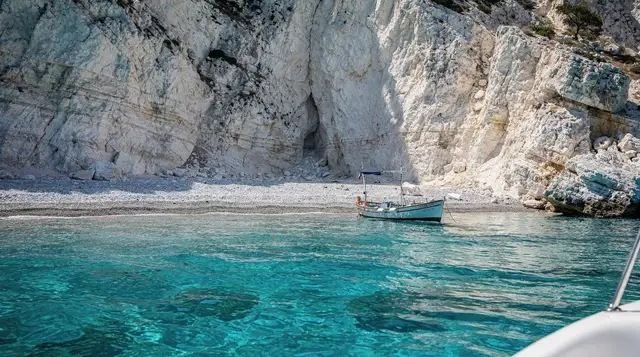
7 days on Sardinia's west coast
Sardinia’s coast without the crowds
The west coast rarely makes anyone’s first-time shortlist, and that’s precisely the appeal — quartz-sand beaches with a fraction of the visitor numbers of the south or the Costa Smeralda, an important Phoenician-Punic-Roman site at Tharros, and a genuinely striking stretch of abandoned mining infrastructure clinging to cliffs above the sea around Nebida and Masua.
This route works from Oristano down to the Sulcis, and it’s the itinerary on this site best suited to travellers on a tighter budget — accommodation and restaurant prices here sit well below the coasts either side. It also suits repeat visitors who’ve already done Cagliari, the Costa Smeralda or the Gulf of Orosei and want to see a side of the island that gets a fraction of the visitor numbers, without sacrificing genuinely good beaches or archaeology along the way.
| Details | |
|---|---|
| Where | Oristano → Sinis Peninsula → Costa Verde → Iglesias mining coast → Sulcis islands |
| Duration | 7 days, 6 nights |
| Best for | Budget travellers, independent explorers, second- or third-time visitors |
| Getting around | Hire car essential; distances are longer and roads quieter than elsewhere |
| Best months | May, June, September |
Day 1: Oristano and the Sartiglia town
Land at Cagliari-Elmas and drive roughly an hour north to Oristano, a workaday provincial capital rather than a resort town, best known for the Sartiglia, an equestrian carnival tradition covered in our Sartiglia of Oristano guide.
Spend the afternoon in the compact historic centre before an early dinner — this is one of the few Sardinian towns where restaurant prices haven’t caught up with the coast, with a full meal for two typically running €35-50 even in a well-regarded restaurant. The Torre di Mariano II, the town’s medieval bell tower, and the Antiquarium Arborense museum both give useful context on the Giudicato of Arborea, the medieval kingdom that once ruled much of the island from here, before the following days’ older archaeology further out on the peninsula.
Day 2: The Sinis Peninsula and Tharros
The Sinis Peninsula, a short drive west of Oristano, holds Tharros, a Phoenician-Punic-Roman port city whose columns and mosaics sit right above the water — full detail in our Tharros archaeological site guide.
The Sinis Peninsula mountain bike tour covers the ruins alongside the peninsula’s other big draw, Is Arutas, a beach made entirely of rice-grain-sized quartz pebbles rather than sand — taking any away is illegal and enforced with real fines, the same rule as sand elsewhere on the island. The quartz here is genuinely unusual to see for the first time — rounded, rice-grain-sized grains rather than fine sand, cool underfoot even in midsummer heat, and the water just offshore is some of the clearest on this coast, worth a mask and snorkel even for a casual look.
Day 3: Cabras and the Giants of Mont’e Prama
Cabras, the small town beside the Sinis lagoon, is home to the Giants of Mont’e Prama — enormous Nuragic-era stone statues discovered in a nearby field in 1974 and now displayed in the town’s museum, among the most significant archaeological finds in Sardinia’s history. The e-scooter tour of the Giants of Mont’e Prama covers the museum and the find site together.
Round off the day with the bottarga of Cabras, cured mullet roe that’s been the lagoon’s speciality for centuries and turns up on menus across the island — grated over spaghetti or simply sliced with olive oil, it’s worth trying at least once from the source rather than a supermarket packet elsewhere. Several small producers around the lagoon sell direct, and a good-quality piece costs a fraction of what it fetches once exported to mainland restaurants.
Day 4: South to the Costa Verde’s dunes
Drive about ninety minutes south to the Costa Verde, where Piscinas has some of the tallest active sand dunes in Europe, rising directly behind the beach with almost nothing built around them. There’s no real infrastructure here beyond a couple of hotels, which is exactly the point — bring water and sun protection, since shade is scarce.
It’s one of the wildest stretches of coast covered anywhere on this site, and the dunes themselves, some rising 60 metres or more above the beach, shift noticeably year to year depending on wind patterns, which locals will tell you has swallowed more than one building over the decades. A short walk up into the dune field gives a genuinely different perspective on the coastline than any beach further north or south on this route.
Day 5: The mining coast — Iglesias, Nebida, Masua
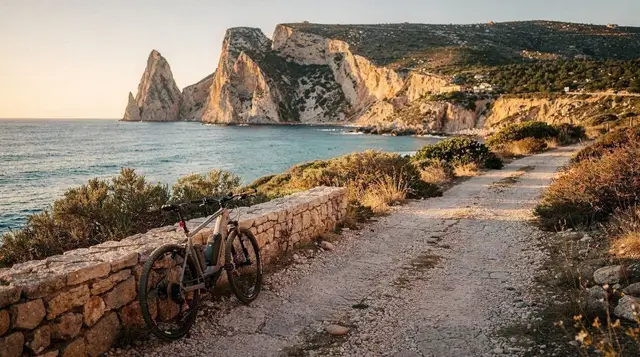
The Sulcis-Iglesiente’s mining heritage is the west coast’s most distinctive feature: 19th and 20th-century industrial buildings, some abandoned mid-construction, perched on cliffs above the sea around Nebida and Masua, near the town of Iglesias. The panoramic hiking tour of Nebida and Masua covers the clifftop paths past Porto Flavia, an engineering landmark cut directly into the rock to load ore onto ships, and the offshore sea stack at Pan di Zucchero, a limestone monolith rising straight out of the water that’s become the unofficial symbol of this coastline.
Porto Flavia itself is worth the entry fee on its own merits — two tunnels blasted through the cliff in the 1920s to load mineral ore directly onto ships below, engineering that was considered remarkable for its time and still is. Alternatively, the old mines and Montevecchio tour goes inland to the largest mining complex on the island instead of the coastal stretch.
Day 6: Crossing to Sant’Antioco and Carloforte
Continue south to Portoscuso or Calasetta for the short ferry to Sant’Antioco or Carloforte on San Pietro island. The full-day boat trip and snorkelling around Sant’Antioco is the best way to see the coastline properly, and Carloforte’s Ligurian-dialect-speaking Tabarkin community, descended from 18th-century coral fishers, makes for a genuinely distinctive final overnight — see Carloforte and its Tabarkin heritage.
The town’s pastel-coloured harbourfront and tuna-heavy menus feel more Ligurian than Sardinian in places, a genuine linguistic and culinary island within an island that surprises most first-time visitors who haven’t read up on the Tabarkin history beforehand.
Day 7: Barumini on the way back
Heading back towards Cagliari-Elmas, Barumini sits roughly on the route and is worth the detour for Su Nuraxi, Sardinia’s only UNESCO World Heritage site — the guided tour of Su Nuraxi di Barumini covers the visit, which is compulsory to do with a guide. Our Su Nuraxi Barumini guide has timing details for fitting this in before an afternoon flight. Two hours is enough for the guided visit itself, which leaves a reasonable buffer before the final 45-minute drive to Cagliari-Elmas, but book an afternoon rather than a midday flight if you want any margin for delays on this last day.
What this route costs
This is the most affordable itinerary on this site, and it’s worth choosing deliberately for that reason if budget is a real factor in planning the trip.
| Typical cost | |
|---|---|
| Double room, mid-range | €70-110/night |
| Dinner for two | €35-55 |
| Guided tour (per person) | €35-60 |
| Ferry to Sant’Antioco/Carloforte (per car) | €10-15 return |
Restaurant and hotel prices here run consistently below the south, Gallura and even the east coast for a comparable standard, largely because this coast sees a fraction of the visitor numbers. The trade-off is fewer organised activities and a greater reliance on your own driving and initiative, which suits some travellers better than others — see Sardinia on a budget for more general cost-saving detail that applies well beyond just this route.
Practicalities for this route
This is the itinerary on this site with the fewest boat tours and the most independent driving and walking, which suits travellers comfortable navigating without much English signage — menus and information boards away from Oristano and the islands lean more heavily on Italian than the tourist-focused coasts elsewhere on the island. Fuel stations and restaurants thin out noticeably south of Oristano along the coast road, so plan meals and fill-ups around the towns rather than assuming you’ll find something en route.
Mobile coverage is generally reliable along the coast itself but patchier inland toward the old mining sites, so download offline maps for the Nebida and Masua walking day in particular. Our Sardinia on a budget guide is particularly relevant here, since this coast is genuinely one of the cheaper parts of the island to visit.
Frequently asked questions about a week on the west coast
Is the west coast worth a full week on its own?
Yes, if quieter beaches and industrial archaeology interest you more than resort infrastructure — it’s a deliberately different pace from the south or Gallura.
Do I need snorkelling gear for Is Arutas?
Not essential, but the clear water off the quartz beach rewards it; bring your own since rental options are limited compared with the south coast.
How long does the mining coast around Nebida and Masua take to see properly?
A half-day minimum for the clifftop walk and Porto Flavia; a full day if you also visit an underground mine museum inland such as Montevecchio or Porto Flavia’s own tunnel tour.
Are there fuel stations along the whole route, or should I plan ahead?
Plan ahead for the stretch south of Oristano toward Piscinas specifically — stations thin out noticeably there compared with the rest of the route, though they’re plentiful again around Iglesias and the Sulcis coast.
Is this route family-friendly?
Partly — the beaches and Tharros work well for children, but the mining coast’s clifftop paths need supervision, and it’s a more driving-heavy route than the south.
Can I combine this with the south coast itinerary?
Yes — Barumini on day seven sits close to the route in 7 days in southern Sardinia, making a natural link if you have extra time.
What’s the best time of year for this coast specifically?
May, June or September — the dunes at Piscinas offer little shade, which makes July and August considerably harder going here than on more developed beaches.
Is the west coast a good fit for a first trip to Sardinia?
Not usually as a stand-alone first trip — it rewards travellers who’ve already seen the more obvious highlights and want something quieter; first-timers are generally better served by 7 days in southern Sardinia or 7 days in northern Sardinia. It works well as a second visit, or tacked onto either of those routes for travellers with more than a week to spend on the island overall.
How does this coast compare to Sicily’s less-visited west, if I’m deciding between the two islands?
Both offer a quieter alternative to their island’s better-known coasts; see Sardinia vs Sicily for a broader comparison if you’re still deciding which island suits the trip better overall, rather than just this one region within it.
tours.7 days
Verified deep-linked GetYourGuide tours. Book through these links and we earn a small commission at no cost to you.
These are our own photographs of Sardinia, not the operator's pictures of this tour — open the tour page to see those.