Is Arutas, the beach made of quartz instead of sand
What makes Is Arutas different from a normal beach?
The 'sand' is actually small, rounded quartz grains rather than silica sand, ranging from rice-grain size to small pebbles depending on the stretch. It's a genuine geological rarity, and removing any of it — even a handful — is illegal, with fines up to €3,000.
Is Arutas is the beach on Sardinia’s Sinis peninsula that photographs least like a beach and most like a jar of coloured gravel — because that’s essentially what it is. Millennia of erosion ground down the surrounding quartz rock into small, rounded grains rather than the fine silica sand found almost everywhere else on the island, and the result catches light in a way ordinary beaches don’t, ranging from milky white to pink depending on the mineral mix and the angle of the sun.
| Where | Sinis peninsula, west coast, 20 minutes from Oristano |
| Cost | Free; parking a few euros in season |
| Time needed | 2-4 hours, or a full day combined with Tharros |
| Getting there | Car via the SP1 from Oristano; no useful bus route |
| Best time | May-September for swimming; morning to avoid the worst midday heat |
Quartz, not sand — and why that matters
The grains at Is Arutas range from roughly rice-grain size near the main access point to noticeably coarser pebbles at the beach’s quieter northern stretches. Unlike sand, quartz doesn’t compact or stick to skin the same way, which some visitors find pleasant underfoot and others find genuinely uncomfortable in peak summer heat, when the pale grains can get hot enough to make bare feet impractical by early afternoon. It’s worth bringing sandals for the walk from the car park even if you plan to go barefoot once you’re at the water’s edge.
How the removal law came about
The sand and quartz removal ban wasn’t always as strictly enforced as it is today; it grew out of a broader regional law protecting Sardinia’s coastal environment, tightened significantly after visible erosion at several of the island’s more distinctive beaches, Is Arutas prominently among them, made clear that souvenir-taking at scale was measurably reducing the beach’s volume over time. What looks like a single handful taken by one tourist becomes a genuine environmental problem multiplied across hundreds of thousands of visitors a season, and the current fines and airport checks are a direct response to that scale problem rather than an arbitrary rule invented for its own sake.
The sand-removal law, and why it’s taken seriously
Taking quartz, sand or shells from any Sardinian beach is illegal island-wide, but Is Arutas is where the rule gets enforced most visibly, precisely because the quartz is the beach’s entire identity and the temptation to pocket a handful is obvious. Fines range from €500 to €3,000, and spot checks happen both at the beach itself — rangers patrol during peak season — and at Cagliari and Olbia airports, where security has confiscated jars and bottles of quartz from departing tourists. The message from local authorities is unambiguous: photograph it, don’t pocket it.
Accessibility and getting around at the beach
Is Arutas isn’t an easy beach for visitors with limited mobility — the walk from the car park crosses loose quartz and low dune terrain with no paved or boardwalk path, and the beach itself offers no firm surface once you’re on it. Wheelchair users and anyone who struggles on uneven ground are generally better served by a beach with proper boardwalk access, such as Lu Impostu near San Teodoro, than by Is Arutas specifically. It’s worth factoring this in before planning a visit around Is Arutas as the sole beach stop for a day, particularly for a group with mixed mobility needs.
Getting there and parking
Is Arutas sits about 20 minutes from Oristano via the SP1 through Cabras, a straightforward but narrow final approach road that gets congested in August when the car park fills. Parking costs a few euros in peak season and, like Tuerredda and several other quota-adjacent beaches, tends to reach capacity by mid-morning on the busiest July and August days. There’s no useful public bus route directly to the beach, so a car is effectively required — see renting a car in Sardinia for the practicalities.
Mari Ermi and Maimoni: the quieter alternatives
A few minutes’ drive north of Is Arutas, Mari Ermi has a broadly similar quartz composition — slightly coarser in places — with noticeably fewer visitors even in August, largely because it’s less heavily promoted and has smaller parking capacity of its own.** Maimoni**, further along the same stretch, is smaller again and quieter still. Neither requires a different approach or booking system; they’re simply less well known, which is often the practical answer when Is Arutas itself looks full from the car park.
Exploring the peninsula by bike
The Sinis peninsula is unusually flat for Sardinia, which makes it one of the few parts of the island genuinely well suited to cycling between sights rather than driving. A guided mountain bike tour links Is Arutas with the Tharros ruins and the Cabras lagoon in a single, low-effort route that avoids backtracking by car:
Sinis peninsula mountain bike tour from OristanoFor a lower-effort option covering some of the same archaeological ground, a guided e-scooter tour departs from nearby Cabras:
Tour of the Giants by e-scooter from CabrasSee cycling in Sardinia for rental options if you’d rather explore independently rather than on a guided route.
How the quartz actually formed
The quartz grains at Is Arutas come from the erosion of granite and quartzite outcrops further inland, carried down by streams over tens of thousands of years and rounded by wave action once they reached the coast — the same basic process that forms any beach, just with a mineral source dramatically different from the shell and coral fragments that make up most Mediterranean sand.
What makes the Sinis peninsula unusual is the concentration and purity of the quartz deposit here specifically; nearby beaches along the same coast are ordinary sand, which is why Is Arutas, Mari Ermi and Maimoni stand out as a genuinely rare formation rather than a common feature of this coastline repeated everywhere. Geologists studying the area point to the specific combination of an eroding quartz-rich hinterland and a low-energy bay that concentrates rather than disperses the grains, a combination that doesn’t repeat itself often even within Sardinia.
Swimming conditions and water clarity
The water off Is Arutas is consistently clear thanks to the same quartz seabed that makes the beach itself distinctive — there’s very little fine sediment to cloud the water the way silica sand sometimes does when disturbed. The bay shelves gradually, making it a reasonably safe swimming spot for moderately confident swimmers, though the coarser grains further from the main access point can make wading in and out less comfortable than a conventional sandy beach. There’s no lifeguard presence at Is Arutas in most seasons, so the usual self-reliance rules that apply across Sardinia’s less developed beaches apply here too — check conditions before swimming in any wind, and don’t rely on facilities that simply don’t exist at this beach.
What to actually bring
Beyond the obvious sun protection and water, a few specific items make a real difference at Is Arutas: closed sandals or water shoes for the walk from the car park and for standing at the shoreline, since the quartz can be genuinely uncomfortable on bare feet in peak summer heat; a proper towel or mat, since sitting directly on the grains is less comfortable than on sand; and a container that isn’t glass, since bottles have a habit of getting buried and lost in loose quartz in a way they wouldn’t on packed sand. There is no rental infrastructure at the beach itself — no sunbeds, no umbrella hire — so whatever you bring is what you’ll have for the day.
The wider Cabras coastline and its birdlife
The Stagno di Cabras lagoon, bordering the Sinis peninsula’s inland edge, is one of Sardinia’s most important wetlands for birdlife, hosting flamingos alongside herons, egrets and a range of migratory species that pass through on route between Europe and Africa. It’s a working lagoon as well as a nature reserve — local fishing cooperatives still harvest mullet here using techniques largely unchanged for generations, the source of the bottarga di Cabras that shows up on menus across the region.
A visit to Is Arutas pairs naturally with a stop at the lagoon’s edge or in Cabras town itself for anyone interested in the area beyond the beach; see birdwatching in Sardinia and the bottarga of Cabras for more on both.
Combining Is Arutas with Tharros and the Sinis lagoon
Most visitors treat Is Arutas as one stop in a wider Sinis peninsula day that also takes in the Phoenician-Roman ruins at Tharros and the flamingo-filled Stagno di Cabras lagoon. The Sinis peninsula guide covers the full loop, including realistic timings for combining the beach with the ruins in a single day without rushing either. For the archaeology specifically, the Tharros archaeological site guide has entry costs and opening patterns.
How Is Arutas compares to Sardinia’s other unusual beaches
Sardinia has a handful of beaches that stand out for their geology rather than simple sand-and-sea appeal, and Is Arutas belongs in that company alongside the marbled pebbles of Cala Mariolu on the east coast and the pink-tinged granite framing Spiaggia del Principe on the Costa Smeralda. What sets Is Arutas apart even within that group is accessibility — no boat, no demanding hike, just a straightforward drive from Oristano, which makes it one of the easiest genuinely unusual beaches on the island to add to almost any itinerary without extra planning.
A note on the wider quartz beach system
Is Arutas isn’t a single isolated phenomenon — the quartz deposit extends, with varying grain size and density, along a several-kilometre stretch of the Sinis peninsula’s western shore, taking in Mari Ermi and Maimoni as well as a scatter of smaller, unnamed coves between them. Visitors with time to explore beyond the main car park often find a quieter patch of the same quartz simply by walking a little further along the coast path rather than driving to a formally named second beach — the geology doesn’t stop at the parking areas, even if the name and the crowds do.
When to go
May through September covers the swimming season, with June and September offering the best balance of warm water and manageable crowds. A morning visit is worth prioritising regardless of month — the light is better for photographs, the heat is more bearable underfoot, and the car park hasn’t yet filled. For the island-wide seasonal comparison, see best time to visit Sardinia.
San Giovanni di Sinis, on the way in
The road from Cabras to Is Arutas passes directly through San Giovanni di Sinis, a small fishing village built around one of the oldest churches in Sardinia — a paleo-Christian and early-medieval structure with origins reaching back to the 5th century, later rebuilt in a plainer Romanesque form that still stands today.
It’s a five-minute stop rather than a destination in its own right, but the church’s age and the village’s rows of low, flat-roofed fishermen’s houses (cumbessias, traditionally used during religious festivals) are worth the brief detour on the same drive that leads to both Is Arutas and the Tharros ruins just beyond it. Combining the church, the quartz beach and Tharros in one loop makes far better use of the drive out to the peninsula than treating any of the three as a standalone trip from Oristano.
Frequently asked questions about Is Arutas
Is it really illegal to take quartz from Is Arutas?
Yes, and it’s actively enforced — fines range from €500 to €3,000, with checks both at the beach and at Cagliari and Olbia airports on departure.
Is Is Arutas good for swimming?
Yes, the water is clear and the entry gradual, though the quartz seabed feels different underfoot from sand — some visitors find it uncomfortable for standing for long periods.
How does Is Arutas compare to Mari Ermi?
Mari Ermi has a similar, slightly coarser quartz composition with fewer visitors and less parking pressure; it’s the practical alternative when Is Arutas is full.
Do I need to book Is Arutas in advance?
No, unlike La Pelosa or Cala Goloritzè, the Sinis quartz beaches currently have no reservation or entry-quota system.
Is there shade at the beach?
Very little natural shade exists; bringing your own umbrella is strongly recommended for a midday visit.
Can I combine Is Arutas with Tharros in one day?
Yes, easily — the two sit a short drive apart on the same peninsula, and most visitors comfortably see both, plus the Cabras lagoon, in a single day.
Are there sunbeds or umbrellas for hire at Is Arutas?
No — there’s no rental infrastructure at the beach at all. Bring your own umbrella, mat and everything else you’ll need for the day.
How does the quartz feel underfoot compared to sand?
Coarser and less forgiving than sand, closer to walking on small, smooth pebbles. It’s fine for a short walk but less comfortable for lying directly on without a mat, and it can get uncomfortably hot in peak summer sun.
Beach & coastal tours on GetYourGuide
Verified deep-linked GetYourGuide tours. Book through these links and we earn a small commission at no cost to you.
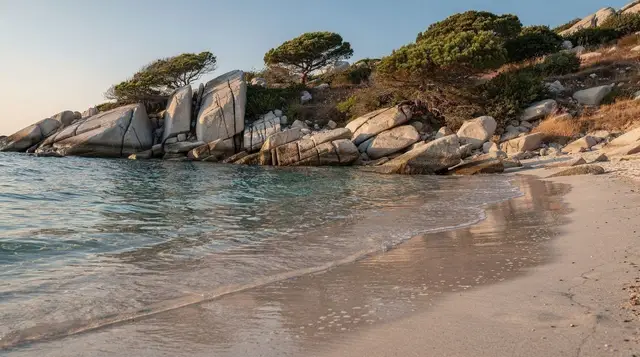
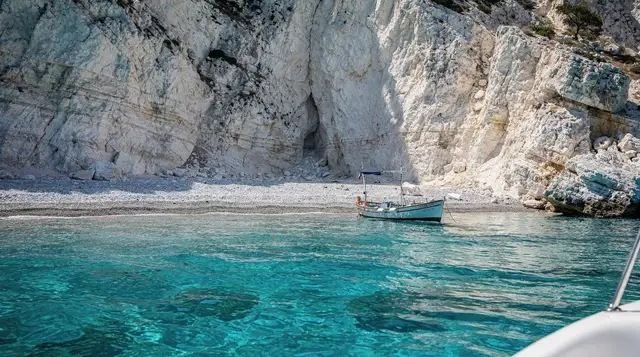
These are our own photographs of Sardinia, not the operator's pictures of this tour — open the tour page to see those.