Iglesias is the old capital of one of Europe’s great 19th-century mining districts, and it still looks and feels like a mining town rather than a resort — which is exactly why it’s worth an overnight stop rather than a drive-through. The name itself gives it away: Iglesias means “churches” in Spanish, a legacy of the centuries when Pisan and then Aragonese-Catalan rulers controlled this corner of Sardinia and left a walled medieval centre, a Gothic-Catalan cathedral and a street grid that still reads as European rather than purely Sardinian.
Around that historic core, later layers of mining-era building tell a second story: this was, until the 1970s, the administrative and social hub of the Iglesiente, the lead, zinc and silver district that made Sardinia one of the largest mining regions in Europe.
| Where | Sulcis-Iglesiente, west Sardinia, about 55km west of Cagliari |
| Known for | Medieval walled centre, Santa Chiara cathedral, mining heritage, Piazza Sella aperitivo scene |
| Time needed | Half a day for the centre and cathedral; a full day with an evening aperitivo added |
| Getting there | Car needed; around 55 minutes from Cagliari-Elmas (CAG) via the SS130 |
| Best time | Year-round for the town; April-June and September to pair it with the coast without the summer heat |
A capital built on lead, zinc and silver
Iglesias grew rich, and grew large, because of what lies underground. From the 19th century until the mines finally closed in the 1970s, this was the administrative and commercial capital of the Iglesiente mining basin, one of the biggest lead, zinc and silver-producing districts in 19th-century Europe.
At its peak, tens of thousands of people worked the seams that run through the hills around the town — some of the ore bodies had already been worked by the Romans and, before them, Phoenician and Punic traders, but it was the industrial-scale mining companies of the 1800s and early 1900s that turned Iglesias from a fortified market town into a genuine regional capital, with the banks, schools, theatres and grand apartment blocks that money brings.
That history is still legible everywhere. It shows in the scale of the town relative to its neighbours — Iglesias is noticeably larger and more urban than Buggerru or Carbonia, the other mining settlements nearby — and in the mix of medieval fortification and 19th-to-20th-century civic architecture that makes the centre worth a slow walk rather than a quick photo stop.
Several of the mining sites in the wider Iglesiente, including the coastal ruins at Nebida and Masua, sit within the Parco Geominerario Storico e Ambientale della Sardegna, recognised by UNESCO in 1998 as the first geopark in the world — a formal acknowledgement that this landscape of mines, machinery and mining towns is heritage in its own right, not industrial leftovers to be ignored.
The walled medieval centre and Castello Salvaterra
The oldest part of Iglesias sits behind a genuine set of fortifications — stretches of city wall and towers built under Pisan rule in the 13th century and reinforced afterwards under the Aragonese, when Iglesias (then called Villa di Chiesa) was fought over as a strategic prize between Pisa, the Sardinian Giudicato of Cagliari and the Crown of Aragon. Walking the old streets inside the walls, the town reads more like a small Catalan or Ligurian hill town than the rest of west Sardinia: narrow lanes, tall stone houses, small squares that open up unexpectedly.
Above the centre, the ruins of Castello Salvaterra sit on a rocky outcrop, watching over the rooftops. The castle dates to the Pisan period and was expanded under Aragonese control; what survives today is a partial ruin rather than a restored monument, but the climb up is short and the view over the old town, the surrounding hills and, on a clear day, towards the coast, makes it worth the ten minutes it takes. There’s no ticket booth or fixed opening hours to plan around — it’s an open, informal site, best visited in the late afternoon when the light is better for photos and the heat has eased.
Santa Chiara cathedral and the old town’s Catalan face
The centrepiece of the historic centre is the Cattedrale di Santa Chiara, Iglesias’s cathedral, with a 13th-century Gothic-Catalan façade that’s one of the clearest examples of Catalan-influenced ecclesiastical architecture on the island — a direct legacy of the centuries of Aragonese and later Spanish rule that shaped so much of Sardinia’s coastal and urban architecture. The façade’s pointed arches and rose window are worth a proper look before stepping inside, where the interior has been reworked over the centuries in a mix of styles that’s typical of a cathedral this old; it’s a working parish church rather than a museum, so visiting hours follow Mass times rather than tourist opening hours.
Around the cathedral, the streets of the old town are lined with a genuine mix of medieval, Aragonese and later Piedmontese and mining-era buildings, since Iglesias came under the House of Savoy along with the rest of Sardinia in 1720 and kept developing through the mining boom that followed in the 1800s. It’s a compact enough area to cover on foot in an hour, though it rewards a slower pace — small workshops, unassuming bars and the occasional mining-era warehouse or civic building sit alongside the church architecture without much fanfare.
Piazza Sella and an evening in the mining-era centre
Where the old walled town shows Iglesias’s medieval roots, Piazza Sella and the streets around Corso Matteotti and Piazza Duomo show its mining-boom expansion. Piazza Sella was effectively the civic showpiece of the mining era, laid out with the grander, more formal architecture that a wealthy 19th-century industrial town could afford, and it’s still where Iglesias does its evening socialising. From around 7pm, the bars along the corso and the square fill up with locals rather than tourists, ordering a spritz or a glass of Vermentino with a plate of olives or a few slices of salame for €4-7 — noticeably cheaper than the equivalent aperitivo on the Costa Smeralda or in central Cagliari, and with none of the queue.
This is, honestly, one of the better reasons to stay overnight in Iglesias rather than just passing through on a day trip to the mining coast: the town has a real evening life of its own, shaped by residents rather than seasonal visitors, and it’s a useful, unpretentious contrast if you’ve spent the rest of your trip in more polished resort towns. It’s also markedly less expensive — a sit-down dinner of malloreddus or fregola with a main course typically runs €25-35 for two with wine, well under what the same meal costs on the coast in August.
Iglesias as a base for the Sulcis-Iglesiente mining coast
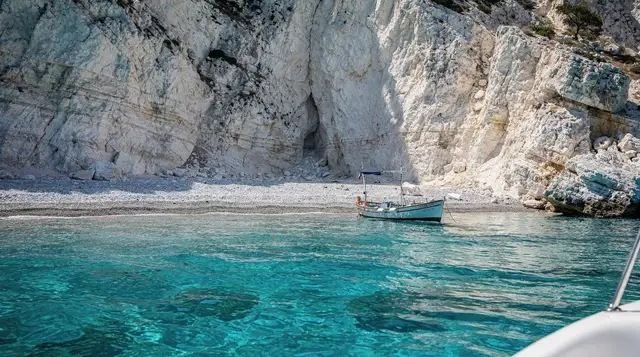
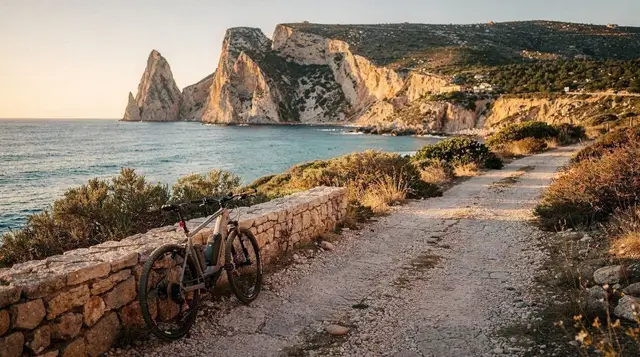
The single biggest practical reason to base yourself in Iglesias is what surrounds it. The dramatic mining coast at Nebida and Masua — with the Pan di Zucchero sea stack, the cliffside Porto Flavia loading tunnel and the ruined Laveria Lamarmora ore-washing plant — is only 15-20 minutes away by car, making Iglesias a far more convenient overnight base than trying to stay on the coast itself, where accommodation is thinner and mostly self-catering.
a Sulcis jeep tour departing from Iglesias covers a wide loop of the mining hinterland in a single organised outing, useful if you’d rather not navigate the back roads yourself or are short on time.
For a slower, more active way to see the same coast, a panoramic hiking route from Nebida to Masua follows the old mining paths along the clifftops between the two villages, with the kind of sea views that a car simply can’t give you. And for a guided deep-dive into the mining history itself, rather than just the scenery, a private tour of the Iglesiente mines at Nebida and Masua takes in the engineering and the human story behind the ruins with a local guide.
Further along the same coast, Buggerru adds a quieter former mining town with its own museum and the Galleria Henry tunnel, about 25-30 minutes from Iglesias. South, Carbonia, Sardinia’s youngest town, adds a completely different 20th-century mining story — a planned 1938 settlement rather than a centuries-old capital — around 30-35 minutes away. All three towns are covered in detail on their own pages; this one focuses on Iglesias itself as the base and historic centre for the whole district.
| Destination | Distance from Iglesias | What it adds |
|---|---|---|
| Masua | ~15-20 min drive | Pan di Zucchero, Porto Flavia |
| Nebida | ~15-20 min drive | Laveria Lamarmora, cliff viewpoints |
| Buggerru | ~25-30 min drive | Museo del Minatore, Galleria Henry tunnel |
| Carbonia | ~30-35 min drive | Planned 1938 town, Museo del Carbone, Monte Sirai |
A cheaper alternative to the coast
Because Iglesias isn’t a beach town, it never developed the seasonal price spikes that hit Chia, Villasimius or the Costa Smeralda every July and August. Hotel rooms that would cost €150-200 a night on the coast in high summer run closer to €70-100 in Iglesias, and restaurants price for a local, year-round clientele rather than a six-week tourist window.
That makes it a sensible base for anyone exploring the west and southwest of the island on a budget, provided you’re comfortable being a 20-30 minute drive from the nearest swimmable beach rather than steps from the sand; our guide to Sardinia on a budget covers this kind of trade-off in more depth, and where to stay in Sardinia sets Iglesias against the island’s other bases.
The town also works well against a broader itinerary. Anyone building a route through the west coast should look at our west coast Sardinia in seven days itinerary, which strings together Oristano, the Sinis peninsula, the Costa Verde and this mining region, or the shorter south Sardinia in seven days route if Cagliari and the Sulcis are your main focus. For day-trippers based in the capital, our day trips from Cagliari guide places Iglesias and its mining coast alongside the other realistic options from the city.
Getting to Iglesias and getting around
Cagliari-Elmas airport (CAG) is the nearest, roughly 55 minutes away via the SS130, a reasonably fast two-lane road by Sardinian standards, without the summer congestion of the coastal routes. There’s a regional train link from Cagliari to Iglesias, workable if you’re only visiting the town itself, but it doesn’t reach the mining coast, Buggerru or Carbonia, all of which need a car or an organised tour; see renting a car in Sardinia for what to expect from the hire desks, and driving in Sardinia for realistic speeds on roads like the SP83 out towards the coast.
If you’re weighing self-drive against organised tours for this specific region, our hiring a car versus booking tours comparison is a useful next read, and visiting Sardinia without a car is honest about where public transport genuinely falls short — this corner of the island is one of the harder ones to cover without your own vehicle.
Frequently asked questions about Iglesias
Is Iglesias worth an overnight stay, or just a stop on the way to the coast?
An overnight stay is worth it if you want to see the mining coast at Nebida and Masua properly rather than rushing it in an afternoon, and if you’d like an evening in Piazza Sella’s aperitivo scene, which has a genuinely local, unpolished character you won’t find on the coast itself.
How far is Iglesias from the Pan di Zucchero viewpoint at Masua?
About 15-20 minutes by car. It’s the closest sizeable town to the mining coast and the most practical base for visiting Masua, Nebida and the surrounding sites without staying in a self-catering apartment on the coast.
What does the name Iglesias mean, and why is it Spanish rather than Italian?
Iglesias is Spanish for “churches.” The town was known as Villa di Chiesa under Pisan rule and later came under the Crown of Aragon and then Spain for several centuries, a period that shaped both its cathedral and much of its old-town architecture — the current name reflects that Spanish-era heritage.
Can you go inside Castello Salvaterra?
It’s a partial ruin with no ticket booth or fixed visiting hours — you can walk up to and around the site freely, but there’s no restored interior to tour. The main draw is the climb itself and the view over the old town.
Is Iglesias cheaper than staying on the coast?
Yes, noticeably. Hotel rooms typically run €70-100 a night against €150-200 on the coast in high summer, and restaurant prices reflect a local, year-round clientele rather than a short tourist season.
Does Iglesias have a beach of its own?
No. The nearest swimmable coast is 15-20 minutes away at Masua and Nebida, both rocky rather than sandy. For proper sandy beaches, Portixeddu and the Costa Verde dunes further south are roughly 30-45 minutes away.
Is public transport realistic for visiting Iglesias and the mining coast?
A regional train reaches Iglesias itself from Cagliari, but it doesn’t extend to Masua, Nebida, Buggerru or Carbonia. Visiting the wider mining district without a car or an organised tour is genuinely difficult.