Buggerru is a small former mining town on the Sulcis-Iglesiente coast, about 25 to 30 minutes from Iglesias along a winding road that climbs through old mine workings before dropping to the sea. It’s quieter and less photographed than Masua or Nebida further north, largely because it doesn’t have a single postcard landmark like Pan di Zucchero — what it has instead is a proper town centre, a small working harbour, a pebble-and-sand beach right by the houses, and a genuinely important piece of Italian history that most visitors to the Iglesiente coast never hear about.
This was, until the mid-20th century, a lead and zinc mining centre of real size, run largely by French and Belgian mining companies that shipped ore straight from the coast. What’s left today is a town scaled to a few thousand people rather than the tens of thousands who once worked the surrounding mines, with mining-era buildings, a museum dedicated to that history, and a tunnel cut through the cliff that’s one of the more unusual things to walk through anywhere on this coast.
| Where | Sulcis-Iglesiente coast, west Sardinia, about 48km west of Iglesias by road distance travelled (25–30 min drive) |
| How long | Half a day for the town, museum and tunnel; a full day combined with Masua and Nebida |
| Getting there | Car only — no useful bus service; renting a car is the practical option |
| Best for | Mining and labour history, a quiet beach town, small-boat trips along the coast |
| When | May to September for the sea and boat trips; April and October for the history without the heat |
A mining town that changed Italian labour history
Buggerru’s most significant claim isn’t scenic — it’s historical. On 4 September 1904, striking miners here were fired on by soldiers sent to break up the protest, killing several workers and wounding more. The killings caused outrage across Italy and triggered the country’s first-ever national general strike, called within days by the country’s main labour organisations. It’s a piece of history that gets little attention outside Italy, but it’s the reason Buggerru is still cited in Italian labour history and why the town carries genuine weight beyond its size. A small monument and plaques around the town centre mark the events, and the story is told in more depth at the local museum.
Understanding this context changes how the town reads. What looks, at first glance, like a modest, slightly faded seaside village is actually a place where a specific and violent event reshaped national politics — worth ten minutes of background before wandering the streets, even if you’re mainly here for the coast.
The Museo del Minatore
The Museo del Minatore (Museum of the Miner) sits in the town centre and covers the mechanics and the human side of mining on this coast: tools, equipment, photographs of the workforce, and material on the social and political history that culminated in the 1904 strike. It’s a modest, locally run museum rather than a slick modern one, and it’s most rewarding for visitors who’ve already seen the mining ruins at Masua or on the drive in and want the human story behind the machinery.
Opening hours vary seasonally and it’s often closed outside the main summer months, so check locally or ask at the tourist information point in Iglesias before making a special trip in the shoulder season. For the wider archaeological and cultural picture of Sardinia’s museums, see museums worth visiting in Sardinia.
The Galleria Henry
The town’s other genuine curiosity is the Galleria Henry, a pedestrian tunnel driven straight through the cliff face to connect Buggerru’s main beach with a neighbouring cove along the coast. It was built for the mining operation rather than for tourists, cut through solid rock rather than built as a bridge or a path around the headland, and walking through it today — cool, slightly damp, lit at intervals — is unlike anything else on this stretch of coast. The tunnel comes out at a small, quieter cove that most day-trippers never reach, since it isn’t visible or obviously signposted from the main beach.
It’s a short walk, ten minutes or so each way, but it’s worth timing around the tide and checking locally that the far end is open and dry underfoot, since access can vary with weather and maintenance. Bring a torch or use your phone light for the darker stretch in the middle — it isn’t lit to modern standards, and that’s part of its appeal rather than a flaw.
Boat trips and swimming from Buggerru
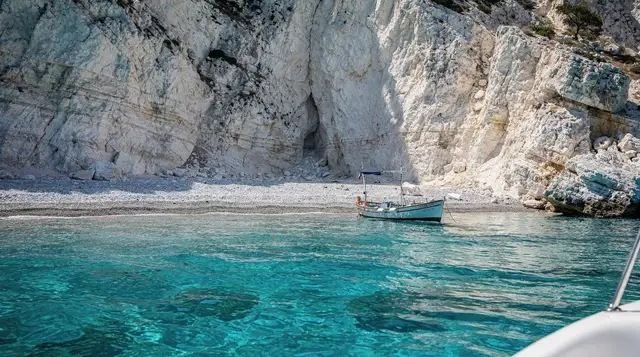
Buggerru’s small harbour is a genuinely good, low-key departure point for exploring the coastline south towards the Costa Verde, an area with far fewer boats than the waters off Alghero or Villasimius. a half-day dinghy tour of the mining coast from Buggerru runs directly from the town, covering roughly two and a half hours on the water past sea caves, cliffs and coves that aren’t reachable on foot, with swimming stops along the way — a genuinely different way to see this coastline than driving between viewpoints.
The town beach itself is a mix of pebble and coarse sand, small and unglamorous compared with the wide white-sand beaches further south at Piscinas, but convenient: you can park in town, walk a few minutes, and be in the water. It’s rarely crowded even in August, since Buggerru sees a fraction of the visitor numbers of the Costa Smeralda or the south coast. For a broader sense of what quieter alternatives look like across the island, see quiet beaches in Sardinia and the best beaches of west Sardinia.
If you’d rather stay on land, an inland option worth pairing with the coast is a Sulcis jeep tour departing from Iglesias, which covers the mining hinterland behind Buggerru rather than the coast itself.
Exploring the wider Iglesiente mining coast
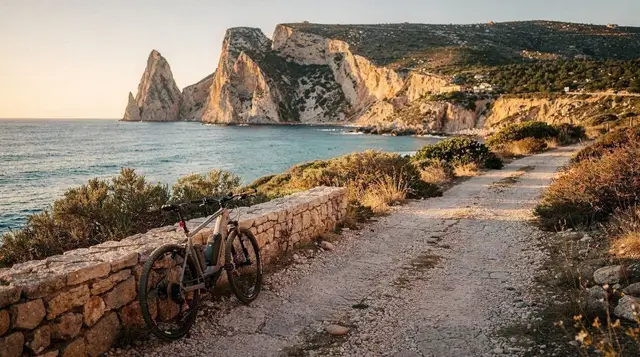
Buggerru works best as one stop on a longer loop rather than a destination on its own. Heading north along the coast road brings you to Nebida and Masua, the two villages with the most photographed mining ruins on the island, including the view of the Pan di Zucchero sea stack. a private tour of the Iglesiente mines covering Nebida and Masua is a useful option if you’d rather have a guide explain the mining history and geology across the whole stretch, rather than piecing it together village by village.
South of Buggerru, the coast road eventually connects towards Costa Verde and the dune beaches at Piscinas, though this section of road is slow and winding rather than a quick hop — budget real time rather than assuming distances on the map translate directly into minutes. For context on how long these coastal drives actually take, see driving in Sardinia and Sardinia’s driving times, the reality check.
Iglesias itself, the old mining capital of the region with its walled centre and cathedral, is the obvious base for exploring this whole coast, and Carbonia a little further south adds another layer of 20th-century mining and planned-town history if you want to go deeper.
| Destination | Distance from Buggerru | What it adds |
|---|---|---|
| Iglesias | ~25–30 min drive | Base town, walled centre, cathedral |
| Masua | ~20 min drive | Pan di Zucchero, mining ruins on the cliff |
| Nebida | ~25 min drive | Laveria Lamarmora mining complex, viewpoints |
| Costa Verde | ~1 hour drive | Dune beaches, Piscinas |
| Carbonia | ~35–40 min drive | Planned mining-era town, further museums |
Getting to Buggerru
There’s no practical public transport to Buggerru — the only realistic way in is by car, and renting a car in Sardinia is worth doing for this whole corner of the island regardless of where else you’re staying. The road in from Iglesias (the SP83 and connecting roads) is scenic but slow: expect 25 to 30 minutes for around 25km, with tight bends as the road drops from the mining plateau down to sea level.
It’s not a road to rush, and it isn’t suited to a quick after-dark return if you’re not used to unlit Sardinian coast roads. If you’re planning this as a day trip rather than an overnight stop, see day trips from Cagliari or day trips from Oristano for how Buggerru fits into a longer loop from either city, and Sardinia’s driving times reality check for realistic timings on roads like this one.
Where to eat and stay
Buggerru has a handful of trattorias and bars around the harbour and main square, mostly simple, locally run places serving fish and standard Sardinian dishes rather than anything aimed squarely at tourists — a seafood pasta or grilled catch of the day typically runs €12 to €18. Accommodation is limited to a few small hotels, B&Bs and holiday apartments; most visitors either stay in Iglesias, which has far more choice, or treat Buggerru as a half-day stop on a driving loop rather than a base for the night. Booking ahead in July and August is sensible even for the modest number of rooms here, since the town’s small size means options fill quickly in peak season.
Frequently asked questions about Buggerru
What happened in Buggerru in 1904?
Soldiers fired on striking miners on 4 September 1904, killing several and wounding others; the outrage that followed triggered Italy’s first national general strike, making Buggerru a genuine landmark in Italian labour history.
What is the Galleria Henry, and can anyone walk through it?
It’s a mining-era pedestrian tunnel cut through the cliff connecting Buggerru’s main beach to a nearby cove. It’s open to walk through outside restricted maintenance periods, but check conditions locally, as access can vary with weather and upkeep.
Is Buggerru worth visiting if I only have time for one Sulcis mining village?
For dramatic mining scenery, Masua’s Pan di Zucchero view is the more obvious choice. For a fuller, more human picture of the region’s mining history, Buggerru — with its museum and 1904 history — adds something the coastal viewpoints don’t.
Is the beach at Buggerru good for swimming?
Yes, but it’s a small pebble-and-sand beach in the town centre rather than a wide sandy bay — fine for a swim and reasonably uncrowded, but not the destination beach that Piscinas or the Costa Smeralda coves are.
Can I do a boat trip from Buggerru itself, or do I need to go elsewhere?
Buggerru’s own harbour runs small dinghy tours along the coast, making it one of the few Iglesiente villages where you can start a boat trip without driving to a bigger port first.
Is the Museo del Minatore always open?
No — hours vary by season and it’s often closed outside the main summer months, so it’s worth checking locally or with Iglesias tourist information before planning a visit specifically around it.