Cala Luna, the easiest of the Gulf of Orosei's boat-only beaches
How do you get to Cala Luna?
By boat from Cala Gonone — the shortest and busiest crossing on the Gulf of Orosei, taking 20-30 minutes — or on a longer hiking or kayaking route from Cala Fuili. There's no road; a car will only get you as far as the harbour.
Cala Luna is the Gulf of Orosei beach most people see first, and for a straightforward reason: it’s the closest of the boat-only coves to Cala Gonone, a 20-30 minute crossing rather than the hour-plus run down to Mariolu or Goloritzè. That makes it busier than its neighbours by mid-morning in summer, but it also makes it the most realistic option for a half-day trip, a family outing, or anyone who wants to see this coastline without committing to a full-day charter.
| Where | Gulf of Orosei, 20-30 minutes by boat south of Cala Gonone harbour |
| Cost | Shared boat/taxi-boat from around €15-25pp return; guided cruises €35-55pp |
| Time needed | Half a day is enough; full-day tours combine it with Cala Sisine or Cala Mariolu |
| Getting there | Boat from Cala Gonone; a longer hiking/kayaking route from Cala Fuili |
| Best time | July-August for warmth but heavy crowds; June and September for a quieter beach |
Sand, pines and a set of caves cut into the cliff
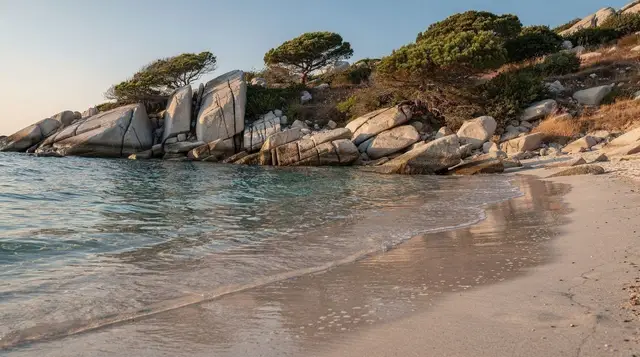
Cala Luna has something its rockier neighbours lack: an actual stretch of sand, backed by a small pine grove and a freshwater stream that trickles down from inland caves and, in wetter months, forms shallow pools near the back of the beach. A handful of caves are cut into the limestone at the southern end, some deep enough to explore a short way in without equipment. The combination of sand, shade and swimmable caves is exactly why Cala Luna gets crowded faster than the rest of the gulf — it’s simply more comfortable to spend a whole day here.
Getting there by taxi-boat
The cheapest and most flexible option from Cala Gonone harbour is the taxi-boat service: small boats running back and forth all day, allowing you to pick your own outbound and return times rather than committing to a fixed tour schedule. A round trip typically runs somewhere in the €15-25 per person range depending on the season and the operator, and this direct route is the fastest way over:
Round-trip taxi-boat from Cala Gonone to Cala LunaFor a first visit with a guide narrating the coastline and its caves, a boat ride specifically to Cala Luna beach covers the same crossing with more context along the way:
Guided boat ride from Cala Gonone to Cala Luna beachGetting there by guided cruise, combined with other coves
If Cala Luna is one stop among several, a combined cruise adds Cala Sisine — a quieter, more remote beach a short distance further south, backed by its own dramatic gorge — without the cost of chartering a private boat:
Cala Luna and Cala Sisine boat tour from Cala GononeThese combined tours run roughly €40-60 per person and typically allow an hour or more ashore at each stop, more time than the fixed taxi-boat schedule usually permits at a single beach. For the full picture of what else operators combine into a day, boat trips in the Gulf of Orosei has the wider comparison.
Renting your own dinghy
Travellers who’d rather set their own pace, without a guide or a fixed timetable, can rent a small motorised dinghy from Cala Gonone — no boat licence is required for engines under a certain power threshold, a rule that surprises a lot of first-time visitors to Italy:
6-metre dinghy rental from Cala Gonone, no licence neededThis is the most flexible way to see Cala Luna, Cala Sisine and the coastline between them, but it does mean navigating and mooring yourself in a bay that gets busy in summer. See renting a boat without a licence in Sardinia for the licence rules, fuel costs and what a typical half-day rental actually includes.
Getting there on foot or by kayak
A hiking trail runs from Cala Fuili, just south of Cala Gonone, along the coast to Cala Luna — a scenic but genuinely tough route over exposed limestone with significant ascent and descent, taking 3-4 hours one way in good conditions. It’s walkable but demanding enough that most visitors treat it as a one-way hike, returning by boat rather than retracing the same ground.
There’s minimal shade for most of the route and no water sources along the way, so this isn’t a spur-of-the-moment addition to a beach day — it needs the same preparation as any serious coastal hike in this part of Sardinia. Sea kayaking is a gentler alternative that several operators around Cala Gonone offer as a guided half-day trip, paddling the same coastline at sea level rather than from the clifftop path above; see sea kayaking in Sardinia for routes and rental options along this stretch specifically.
The caves at the southern end
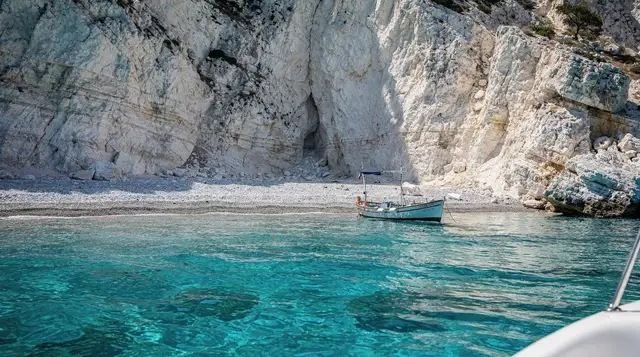
The caves cut into the cliff at Cala Luna’s southern edge are shallow enough to swim into without diving gear, and several were used historically as shelter by shepherds moving flocks along this otherwise impassable coast. They’re a genuine highlight rather than a marketing flourish, but they’re also the beach’s main crowd magnet — arriving on one of the first boats over, before 10am, is the only reliable way to see them without a queue of snorkellers.
The wildlife that gives Cala Gonone’s caves their name
The broader stretch of coast around Cala Luna, and specifically the much larger Bue Marino cave system a short distance further south, is named after the Mediterranean monk seal — “bue marino,” or sea ox, in the old local dialect — which once bred in these caves in significant numbers.
The species is now critically endangered and hasn’t been reliably sighted in this stretch of the gulf for decades, but the name persists, and the cave’s protected status today owes something to that history even if the seals themselves are gone. Cala Luna’s own smaller caves never held the same seal colonies, but they sit within the same limestone system and share the geological story; the Bue Marino cave near Cala Gonone covers that larger cave and its history in full.
Snorkelling around Cala Luna’s rocks
The water either side of Cala Luna’s sandy centre turns rockier, and that’s where the more interesting snorkelling happens — sea urchins, small groupers and the occasional moray hiding in crevices close to the cave mouths. It’s not as consistently clear as Cala Mariolu further south, since Cala Luna’s proximity to Cala Gonone means more boat traffic churning the water on a busy day, but an early-morning or late-afternoon swim along the southern rocks, away from the main taxi-boat drop-off point, usually finds calmer, clearer conditions. Best snorkelling spots in Sardinia has the wider comparison across the gulf’s beaches.
What a day at Cala Luna actually costs
A realistic budget for an independent day trip runs to the taxi-boat fare (roughly €15-25 return per person), a few euros for a sunbed if you’d rather not sit directly on sand, and whatever food and drink you bring or buy from the seasonal kiosk at inflated beach prices. A guided cruise that includes Cala Sisine pushes the cost up to €40-60 per person but removes the planning and adds narration and, often, a swim stop at a second beach that’s harder to reach independently.
Either way, it’s considerably cheaper than a full boat charter, which can run several hundred euros for a private half-day depending on the season and boat size — worth considering only for a group splitting the cost or travellers who specifically want to set their own itinerary along the coast.
Getting to Cala Gonone itself
Cala Gonone sits on Sardinia’s east coast, reached by a winding descent road from Dorgali that drops several hundred metres in a handful of kilometres — slow but scenic, and a fair example of why average driving speeds on this side of the island run well below the mainland-road norm most visitors expect. There’s no rail connection; the nearest useful public transport is a limited ARST bus service linking Dorgali, Cala Gonone and Nuoro. Most visitors arrive by hire car from Olbia or Cagliari airport, a drive of roughly 1.5-2 hours from Olbia and considerably longer from the south; see driving in Sardinia for the realistic timings involved.
Comparing Cala Luna with the rest of the gulf
Cala Luna is the most accessible of the Gulf of Orosei’s boat-only beaches, which makes it the natural starting point, but it’s worth seeing how it stacks up against its neighbours before deciding whether one visit is enough. Cala Mariolu has clearer water and fewer crowds but a longer crossing; Cala Goloritzè has the famous rock arch and a strict booking system; both require considerably more planning than the quick hop to Cala Luna. The best beaches in the Gulf of Orosei ranks all of them together for a first-time visitor trying to choose just one or two.
Practicalities: what to bring and when to go
There are no permanent shops at Cala Luna, though a small seasonal kiosk sometimes operates near the beach in peak summer selling drinks and snacks at a premium — don’t rely on it being open. There are no toilet facilities on the beach itself either; the nearest are back at Cala Gonone harbour, so plan accordingly before you board the taxi-boat. Bring water, sun protection and cash for the taxi-boat, since card payment isn’t guaranteed at the harbour kiosks.
June and September offer a genuinely different experience from July and August: similar water temperature, far fewer boats. For more ways to fill a few days around Cala Gonone, see day trips from Cala Gonone and the Bue Marino cave near Cala Gonone, a separate and much larger cave system a short boat ride further south.
Combining Cala Luna with the rest of the Supramonte
Cala Gonone isn’t just a beach town — it’s the gateway to the Supramonte, the limestone massif inland that holds some of Sardinia’s best hiking and its most significant archaeological sites, including the abandoned nuragic village of Tiscali, hidden inside a collapsed cave system reachable only on foot.
A trip built around Cala Luna works well paired with a half-day inland: the Tiscali hike and the drive up to Genna Silana both start within a short distance of Dorgali, making it realistic to combine a beach morning with an inland afternoon, or vice versa, without an overnight move. See the Tiscali nuragic village hike and Supramonte hiking guide for route details, and Ispinigoli cave near Dorgali for a show-cave alternative that needs no real hiking fitness at all.
Where to stay
Cala Gonone itself is the obvious base, with the harbour, dive centres and boat operators all within walking distance of most accommodation. Dorgali, a short drive inland, is a cheaper and quieter alternative with easy access to Ispinigoli cave and the Tiscali nuragic village hike if you’re combining beach days with the Supramonte’s archaeology and hiking.
Frequently asked questions about Cala Luna
Is Cala Luna good for children?
Yes, more so than Mariolu or Goloritzè — the sand, shallow entry point and short boat crossing make it one of the more family-friendly of the gulf’s boat-only beaches, though the crossing itself and the lack of shade still need planning around.
How long does the boat crossing take?
Around 20-30 minutes from Cala Gonone harbour on a direct taxi-boat, longer on combined cruises that stop at other points along the coast first.
Can I visit Cala Luna without a boat tour?
Yes — the taxi-boat service runs on a flexible schedule throughout the day in season, so you can travel independently without booking a guided tour, or hike in from Cala Fuili if you’re a confident walker.
Is Cala Luna sandy or pebbly?
Sandy, unusually for this stretch of coast — most of the Gulf of Orosei’s other coves, including Mariolu and Goloritzè, are pebble beaches.
What’s the best month to visit without crowds?
June and September give warm water with noticeably fewer boats than July and August; the caves in particular are far more enjoyable outside peak season.
Do the caves require any equipment to explore?
No special equipment is needed for the shallow entrance sections; a mask and snorkel improve the experience but aren’t essential for a quick look inside.
Can I combine Cala Luna with a hike inland?
Yes — Cala Gonone sits close to the Supramonte’s hiking trailheads, including the route to the Tiscali nuragic village, making it realistic to pair a beach morning with an inland hike the same day or the next.
Is Cala Luna crowded outside July and August?
Considerably less so. June and September see a fraction of the boat traffic, and the caves in particular are far more enjoyable without a queue of snorkellers waiting to get in.
Beach & coastal tours on GetYourGuide
Verified deep-linked GetYourGuide tours. Book through these links and we earn a small commission at no cost to you.
These are our own photographs of Sardinia, not the operator's pictures of this tour — open the tour page to see those.