Cala Goloritzé guide
Do I need a permit to visit Cala Goloritzé?
Yes, if you're hiking in — a paid, capped daily permit is mandatory for the trail from the Golgo plateau above Baunei, bought in advance through the official booking system. Arriving by boat avoids the hiking permit but landing numbers are still managed during peak hours.
A UNESCO natural monument with a pinnacle rising straight from the beach
Cala Goloritzé, on the Baunei coast within the Gulf of Orosei, is framed by a 143m limestone spire known locally as the Aguglia (or Monte Caroddi), rising directly out of the pebble beach and recognised as a UNESCO natural monument. It’s one of the most photographed spots on the island, and also one of the most tightly managed: there is no road to Cala Goloritzé, and the only ways in are a genuinely demanding hike down from the Golgo plateau, or a boat from Santa Maria Navarrese or Arbatax. Both routes are worth the effort, but neither is a spontaneous half-day plan — this guide covers exactly what to book and when.
| Region | East coast, Gulf of Orosei, near Baunei |
| Hiking access | From the Golgo plateau, paid permit mandatory, capped daily |
| Boat access | From Santa Maria Navarrese or Arbatax, no hiking permit needed |
| Trail difficulty | Moderate-to-difficult, ~300m descent and re-ascent |
| Trail time | 1-1.5 hours down, 1.5-2 hours back up |
| Best time | Early morning start in June or September to avoid heat and crowds |
The permit: what it covers and how to book
Access to the hiking trail from the Golgo plateau above Baunei has been managed for several years now through a paid permit system with a capped number of daily entries, introduced to slow erosion on the descent path and protect the beach’s ecosystem. Booking is done in advance through the official municipal or park booking portal, and in July and August the daily allocation can sell out days ahead — this is not a beach where turning up unbooked and hoping is a workable plan.
The permit fee is modest (typically a few euros) but the cap on numbers is the real constraint. For how this compares to the other capped beaches on the island — La Pelosa, Cala Mariolu, Cala Brandinchi, Lu Impostu and Tuerredda — see Sardinia’s beach access quotas explained.
The trail: what the descent actually involves
The hike starts on the Golgo plateau, a stark limestone tableland dotted with the occasional free-roaming donkey, reached by a rough but drivable road inland from Baunei. From the trailhead, the path descends roughly 300m in altitude over a distance of under 2km — steep, exposed to full sun for most of the route, and rocky underfoot in a way that rewards proper hiking shoes over sandals. Reckon on 1 to 1.5 hours down and closer to 1.5 to 2 hours back up, since the climb out is the harder half by a clear margin. Bring at least 2 litres of water per person; there is no shop or refill point on the trail or the beach itself.
Because the trail and the permit system both take some local knowledge to navigate smoothly, a guided option removes most of the friction. The guided trekking tour to Cala Goloritzé handles the permit booking and sets a realistic pace with proper rest stops, which matters on a trail that gets genuinely hot by mid-morning in summer — starting at dawn with a guide who knows the route is a meaningfully better experience than a self-guided attempt in the heat of the day.
The boat alternative: no hike, but still managed numbers
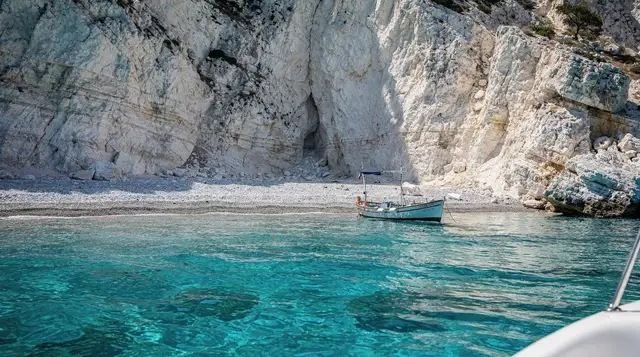
If the descent isn’t for you — and it genuinely isn’t a beach for young children, anyone with knee problems, or a hot afternoon start — arriving by boat sidesteps the hiking permit while still bringing you into the same UNESCO-protected cove, subject to landing limits during the busiest hours rather than a formal advance-booking system. From Santa Maria Navarrese, the closest departure point, the Baunei coast cruise with swim stops reaches Cala Goloritzé along with other coves on the same stretch of coast, without the 300m descent and re-ascent.
From further south, the full-day guided boat tour of the Baunei coast from Arbatax covers the same ground on a longer itinerary, suiting anyone based around Arbatax or Tortolì rather than closer to Baunei itself. Neither boat option guarantees unlimited time ashore during the busiest midday hours in August, when landing is sometimes staggered between boats — arriving earlier in the day, on the first sailing, gives the best chance of longer beach time.
Cala Mariolu, next door, if you have a second day
If Cala Goloritzé is the highlight of a longer stay in this area, Cala Mariolu — a pebble beach with an even more striking turquoise-to-blue water gradient — sits a short boat ride further along the same coast and has its own, less strict, access management. See our Cala Mariolu guide for the comparison, and the broader best beaches in the Gulf of Orosei roundup for how both fit alongside Cala Luna and Cala Sisine on a longer coastal itinerary.
Where to base yourself
Baunei itself, a small hilltop town, and Santa Maria Navarrese on the coast below it are the two sensible bases for a Cala Goloritzé visit, both giving quick access to the Golgo plateau trailhead and the boat departures. If a longer hiking trip is the goal rather than a single beach visit, the Selvaggio Blu trek, Italy’s toughest long-distance coastal trail, threads through this same stretch of coast over several days and passes close to Cala Goloritzé itself.
The Golgo plateau: worth exploring beyond the trailhead
The Golgo plateau above the descent trail is worth a slower look if time allows — a stark, almost lunar limestone landscape grazed by free-roaming donkeys, with the Su Sterru sinkhole nearby, one of the deepest in Europe at over 270m. Most hikers pass straight through on the way to the trailhead, but a short detour to the sinkhole’s viewing point adds relatively little time and gives a genuinely different perspective on the geology that shapes this whole stretch of coast. The small church and rural settlement of San Pietro sit on the same plateau and occasionally host a rustic agriturismo lunch for hikers finishing the trail in the early afternoon.
Combining Cala Goloritzé with the Selvaggio Blu
For experienced hikers, Cala Goloritzé is one stop on the Selvaggio Blu, a multi-day coastal trek considered Italy’s toughest long-distance trail, involving via ferrata sections, ropes and genuine exposure in places. It isn’t a casual add-on to a beach holiday — proper planning, a guide for the technical sections, and several days are required — but for anyone drawn to this stretch of coast specifically for its wildness, it’s worth knowing the full trail exists beyond the single-day version covered in this guide. See our Selvaggio Blu trek guide for what the multi-day version actually involves.
Photography: when the light works best
The Aguglia pinnacle catches dramatic side-lighting in the first hour or two after sunrise, when the low sun rakes across the limestone and throws long shadows across the pebble beach — genuinely the best window for photographs, and it coincides usefully with the cooler part of the day for the hike itself. Midday sun flattens the scene and makes the white limestone glare uncomfortably bright; if a guided tour offers an early departure specifically to beat the heat, it also happens to be the best time for photography, which isn’t a coincidence.
Weather windows and when to plan the hike
The permit system doesn’t account for weather, so it’s worth checking the forecast before locking in a date — a hot, still day makes the exposed descent genuinely uncomfortable, while a windy day can make the boat alternative choppy or occasionally cancelled. June and September offer the best combination on this coast: warm enough to make the swim at the bottom worthwhile, without the punishing midday heat of a July or August ascent. Rain is rare in summer but the trail can turn slippery quickly if a storm does pass through, given the loose limestone underfoot on the steeper sections.
Fitness and preparation: is this hike really for you?
The trail’s numbers understate how demanding it feels in practice — a 300m descent sounds modest against Sardinia’s bigger mountain hikes, but the loose limestone, full sun exposure and the psychological weight of knowing every metre down has to be climbed back out make this a genuinely different proposition from a flat coastal walk. Anyone without recent experience of a multi-hour hike on uneven ground, or with knee or ankle concerns that flare on descents specifically, should weigh the boat option seriously rather than assuming determination alone gets them through comfortably.
A realistic fitness bar: if a 90-minute uphill walk at a steady pace without stopping sounds difficult, the return climb from Cala Goloritzé in summer heat will be harder still. None of this is meant to put off a reasonably fit visitor — thousands complete the hike every summer — but it’s worth an honest self-assessment before booking, since turning back partway isn’t a simple option on a trail with a capped daily permit and no easy shortcut.
Water conditions and what swimming here is actually like
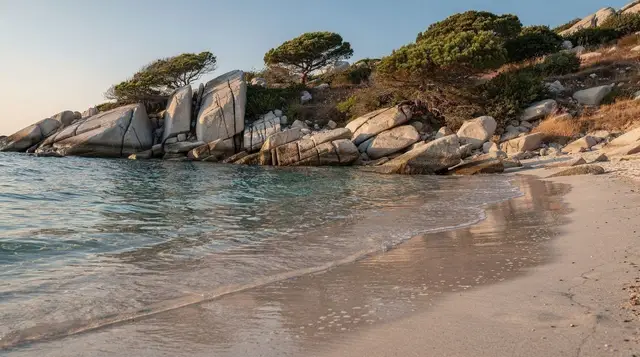
The water at Cala Goloritzé is Gulf of Orosei-clear — a startling turquoise-to-deep-blue gradient over a pebble seabed rather than sand, cold enough to be genuinely refreshing even in August given the depth just offshore. The beach itself is pebbles rather than sand, which means water shoes are worth packing alongside swimwear, since the stones underfoot can be uncomfortable for a longer stretch of walking in and out of the water.
There’s no lifeguard cover, in keeping with most of the more remote coves on this stretch of coast, so swimming here is on the same self-reliant basis as everywhere else in the Gulf of Orosei — stay within your ability, particularly given how much energy the hike itself has already used if you’ve walked in rather than arrived by boat.
Where to eat before or after: Baunei and the Golgo plateau
Baunei itself has a handful of trattorie serving straightforward Sardinian food — culurgiones, roast meats, local cheese — at prices noticeably lower than the coastal resorts further north, worth factoring in if you’re basing yourself here rather than in a pricier beach town.
On the Golgo plateau itself, near the trailhead, a rustic agriturismo occasionally serves a set lunch built around local lamb and cheese for hikers finishing in the early afternoon, though this isn’t guaranteed to be running on any given day and is worth checking rather than relying on. Santa Maria Navarrese, the coastal town below Baunei, has a wider spread of restaurants along its seafront, better suited to an evening meal after a boat trip than the more limited options directly around the trailhead.
Frequently asked questions about visiting Cala Goloritzé
Is Cala Goloritzé hard to reach?
Yes, deliberately so — there’s no road, and both the hiking trail and boat access involve real effort or a booking. It’s one of the more demanding “beach visits” in Sardinia, but also one of the most rewarded.
How much does the Cala Goloritzé permit cost?
A modest fee, typically a few euros, paid at booking — the real constraint is the daily cap on numbers rather than the price.
Can children hike to Cala Goloritzé?
It isn’t recommended for young children — the trail involves a genuine 300m descent and re-ascent on loose, exposed ground. A boat trip is the safer way to bring a family to this beach.
Is Cala Goloritzé better by boat or on foot?
Both are worthwhile for different reasons — the hike gives you the full Golgo plateau landscape and a sense of achievement, while the boat is far less physically demanding and can combine several coves in one day.
How long should I budget for the hike?
Around 3 to 3.5 hours round trip on the trail itself, plus time at the beach — a full morning or afternoon at minimum, not a quick stop.
Is Cala Goloritzé crowded in August?
The permit and quota systems cap numbers, but the beach still feels busy at midday in peak season; an early start or a late-afternoon boat slot both help avoid the worst of it.
What should I bring for the hike?
At least 2 litres of water per person, proper hiking shoes (not sandals), sun protection, and swimwear — there is no shop or shade on the trail or at the beach itself.
Is the water cold at Cala Goloritzé?
Cooler than the shallower beaches elsewhere in Sardinia, since the water deepens quickly offshore, but genuinely refreshing rather than uncomfortable through summer. Water shoes help on the pebble seabed.
Is there anywhere to eat at Cala Goloritzé itself?
No — there are no shops or restaurants at the beach. A rustic agriturismo on the Golgo plateau near the trailhead occasionally serves lunch for hikers, and Baunei and Santa Maria Navarrese both have proper restaurants.
Beach & coastal tours on GetYourGuide
Verified deep-linked GetYourGuide tours. Book through these links and we earn a small commission at no cost to you.
These are our own photographs of Sardinia, not the operator's pictures of this tour — open the tour page to see those.