A harbour village built around one old olive tree
Santa Maria Navarrese is technically a frazione of Baunei, the town that sits eight kilometres inland on the SS125, but in practice it functions as its own small resort. The whole place is organised around a modest marina, a long sand-and-shingle beach, and a solitary, centuries-old olive tree standing on a rocky islet just off the shore — the closest thing the village has to a landmark. There’s a watchtower, a handful of hotels and guesthouses, a short seafront promenade, and not much else, which is exactly the point for people who want a quiet base rather than a nightlife town.
What makes Santa Maria Navarrese worth a dedicated stop, rather than a stop on the way to somewhere bigger, is its position at the southern end of the Gulf of Orosei. Boats leave straight from the harbour for Cala Goloritzé, Cala Mariolu, Cala Biriala and the caves further along the coast, which puts it on equal footing with Cala Gonone as a departure point — closer for anyone already staying in Ogliastra, further for people based around Nuoro or the north.
| Where | Frazione of Baunei, Ogliastra province, east coast |
| Nearest towns | Arbatax/Tortolì (~10 km), Baunei village (~8 km) |
| Getting there | Car via SS125 Orientale Sarda; nearest airport Cagliari-Elmas (~140 km, 2h15–2h30) |
| Best time | June and September; boats generally run April–October |
| Main draw | Boat departures for Cala Goloritzé, Cala Mariolu, Cala Biriala, Grotta del Fico |
| Days needed | 1–3, longer if combined with hiking in the Supramonte |
Getting there from Cagliari, Olbia and Tortolì
There’s no motorway on this side of Sardinia, so every journey is slower than the map suggests. From Cagliari-Elmas the drive is roughly 140 km down through the SS131 and SS125, and it takes a genuine 2 hours 15 minutes to 2 hours 30 minutes once you’re on the winding stretch through the Ogliastra hills — not a road to rush. From Olbia it’s a similar story in the other direction: about 150 km and 2 hours 30 minutes to 3 hours, mostly along the SS125 through Dorgali and Baunei. If you’re flying into Olbia specifically to boat-trip the Gulf of Orosei, Cala Gonone is usually the more time-efficient base; Santa Maria Navarrese makes more sense from Cagliari or if you’re already touring Ogliastra.
The closest proper towns are Tortolì and Arbatax, about ten kilometres south along the coast — fifteen minutes by car, and the place to go for a supermarket, a pharmacy, or the small Arbatax–Civitavecchia and Arbatax–Genoa ferry connections if you’re arriving by sea rather than air. Baunei village itself, up on the SS125, is closer still at around eight kilometres. You will need a car: buses along this stretch of coast run a handful of times a day and won’t get you to trailheads or to the smaller beaches, which is true across pretty much the whole of the east coast — see our guide to renting a car in Sardinia if you haven’t sorted one yet.
Boat trips: the actual reason to base yourself here
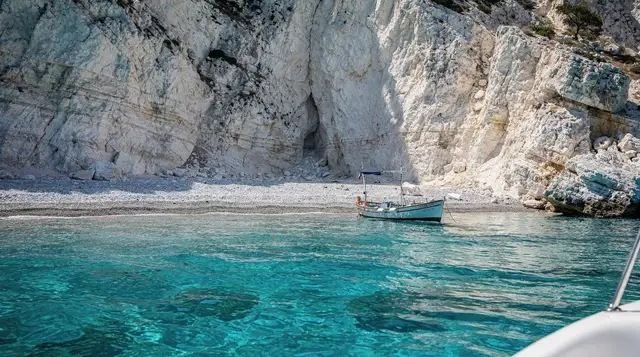
Almost nobody comes to Santa Maria Navarrese for the town itself — they come because it’s a short walk from bed to boat for some of the best-known beaches on the Gulf of Orosei. Operators run a spread of itineraries from the harbour, from a straightforward there-and-back to Cala Goloritzé through to full-day cruises taking in Mariolu, Biriala and Sisine as well. Prices below are realistic 2026 per-person ranges for shared boats; private RIB charters cost considerably more.
| Tour type | Roughly | Duration | Typical price (2026) |
|---|---|---|---|
| Cala Goloritzé only | Shortest option | 2.5–3 hours | €35–45 |
| Goloritzé + Mariolu | Most popular combination | 5–6 hours | €55–70 |
| Goloritzé + Mariolu + Biriala | Extended cruise, fewer stops each | 6–7 hours | €60–75 |
| Goloritzé + Mariolu + Biriala + Sisine | Full southern gulf, long day | 7–8 hours | €70–90 |
| Grotta del Fico + beaches | Focused on the cave, less swimming time | 3–4 hours | €40–50 |
| Maxi-dinghy / faster RIB tours | Smaller group, more time in the water | Varies, usually 5–6 hours | €70–95 |
If you only have one boat trip to spend in this part of the coast, the combined Goloritzé and Mariolu run is the one to book — it’s what most operators build their day around, and it covers the two beaches everyone’s actually heard of.
Book the Cala Goloritzé and Cala Mariolu boat tourFor a longer day that adds Cala Biriala and the sea caves without pushing all the way to Sisine, there’s a middle option:
Check the Goloritzé, Mariolu and Biriala cruiseFamilies with young kids, or anyone who gets seasick on longer crossings, tend to do better with the shorter run to Goloritzé and the coves immediately around it, or with a slower-paced trip like the Baunei coast cruise with swim stops rather than the full southern-gulf marathon. If you’d rather cover the whole southern stretch in one go, the guided full-day cruise is the one to look at.
See the full-day Goloritzé, Mariolu, Biriala and Sisine cruiseCala Goloritzé, Cala Mariolu and the quota system
Both Cala Goloritzé and Cala Mariolu sit inside protected areas with capped daily visitor numbers, and access — whether you arrive by boat or on foot — is booked and paid for separately from the boat ticket itself. Reputable operators build this into the trip and handle the booking, but it’s worth confirming when you buy, especially in July and August when the daily quota fills up days in advance. Our Cala Goloritzé guide and Cala Mariolu guide cover the current booking process, prices and what each beach is actually like once you’re there; the beach access quotas guide explains how the wider system works across the island.
The one rule that catches people out on every one of these beaches is the ban on taking sand or pebbles home. It’s enforced with spot checks at ports and airports, and fines run from €500 to €3,000 — not a rumour, and not worth testing for a jar of white pebbles. Leave the beach exactly as you found it.
Neither Goloritzé’s white-pebble cove under its limestone spire nor Mariolu’s turquoise water and pale round stones is walkable in a normal day trip from Santa Maria Navarrese without serious hiking — Goloritzé has a marked trail down from the Golgo plateau (covered in our hike to Cala Goloritzé guide), but Mariolu is realistically boat-only for most visitors. That’s the whole appeal of basing yourself in a harbour town rather than inland: you skip the trekking and let the boat do the work.
Beyond the boat: the village, Punta Giradili and short walks
The village beach itself, right below the olive tree, is a decent stretch of coarse sand and shingle that’s perfectly fine for an afternoon, if unremarkable next to what’s a short boat ride away. The small harbour handles both the tour boats and a scattering of private yachts, and the seafront has a modest run of trattorias, gelaterias and a couple of dive shops offering snorkelling trips along the closer stretch of coast.
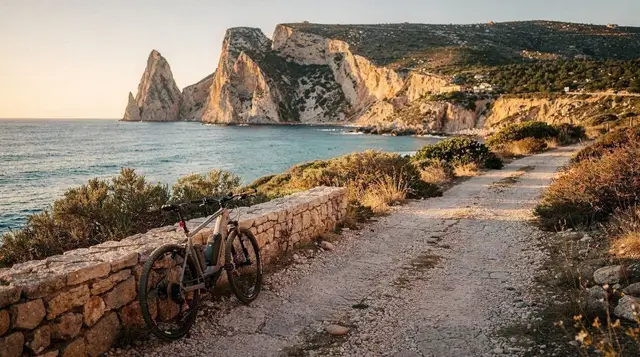
For a half-day on foot rather than water, Punta Giradili is the standout option nearby — a limestone promontory a few kilometres up the coast with sweeping views back over the gulf and down towards Goloritzé’s rock spire, reached via a marked trail that starts from a car park just outside the village. It’s steep in places and shadeless for most of the route, so an early start matters in summer. Longer hikes into the Supramonte plateau above Baunei are also within reach for anyone staying two or three nights; see the Supramonte hiking guide for routes and difficulty levels.
Where to stay and how long to spend
Most visitors treat Santa Maria Navarrese as a one- to three-night stop rather than a full week’s base — enough time for one or two boat trips and a walk or two, without running out of things to do. Accommodation is small-scale: family-run hotels and guesthouses close to the harbour or beach, a few agriturismi up towards Baunei, and limited self-catering compared to bigger resort towns. Book boat trips as early as you can once dates are fixed, particularly for July and August sailings, since the popular Goloritzé and Mariolu combinations sell out well ahead in peak season.
If you’re building a longer trip around the east coast, Santa Maria Navarrese slots naturally alongside Arbatax, Tortolì and Cala Gonone — see our seven-day east coast itinerary for a route that covers all of them without excessive driving. For a broader read on how the boat-tour options compare across operators and departure points, the best boat tour in Sardinia roundup and our piece on Sardinia’s beach quota rules explained are both useful before you book anything.
Frequently asked questions about boat trips and beaches near Santa Maria Navarrese
Do I need to book Cala Goloritzé and Cala Mariolu access in advance?
Yes, in practice. Both beaches operate under daily visitor quotas that are separate from the boat ticket, and while most reputable boat operators build the booking into your trip, the quota itself can fill up several days ahead in July and August. Book your boat trip as early as you have firm dates, and double-check with the operator that beach access is included.
Can I reach Cala Goloritzé on foot instead of by boat?
Yes — there’s a marked hiking trail down from the Golgo plateau above Baunei, which is the classic land route to the beach and doesn’t require a boat ticket at all. It’s a moderate, fairly steep descent (and a harder climb back up) rather than a stroll, so it suits fitter walkers more than a relaxed beach day. Cala Mariolu doesn’t have an equivalent easy walking route from this side, and is realistically boat-only for most visitors.
Is Santa Maria Navarrese itself walkable, or do I need a car?
The village is small enough to walk around in twenty minutes — harbour, beach, promenade and the handful of restaurants are all close together. You’ll still want a car to reach Tortolì or Arbatax for shops and services, to drive up to Baunei village, or to reach trailheads like Punta Giradili and the Golgo plateau, none of which are within walking distance.
Are the boat trips rough, and are they suitable for young kids?
Conditions vary by day and by how far the itinerary goes — the shorter Goloritzé-only trips stay closer to shore and tend to be calmer, while the longer Biriala and Sisine cruises spend more time in open water and can get choppier in wind. Most operators run family-friendly shorter options and will advise on the day if conditions aren’t suitable; anyone prone to seasickness should pick the shortest trip on offer rather than the full-day cruise.
What’s the closest airport to Santa Maria Navarrese?
Cagliari-Elmas is the most practical option for most itineraries, at roughly 140 km and 2 hours 15 minutes to 2 hours 30 minutes by car via the SS131 and SS125. Olbia Costa Smeralda is a similar driving time from the other direction and makes more sense if you’re combining this trip with the Costa Smeralda or Gallura — see our comparison of the Costa Smeralda versus the Gulf of Orosei if you’re deciding between the two areas.
Is there anywhere decent to eat right by the harbour?
Yes — the seafront has a small cluster of trattorias and pizzerias within a few minutes’ walk of the boats, mostly straightforward seafood and pasta places rather than anything ambitious. It’s not a food destination in its own right; if a serious meal matters to your trip, Tortolì and Arbatax have more choice.
What is the olive tree everyone mentions?
It’s a genuinely old solitary olive tree standing on a small rocky outcrop just off the main beach, connected to the shore, and it’s become the informal symbol of the village — most photos of Santa Maria Navarrese feature it somewhere in frame. There’s no deeper story or ritual attached to it; it’s simply old, distinctive, and conveniently placed for a photo before or after a boat trip.
Can I snorkel directly from the village, or do I need the boat for that too?
The water off the main beach is swimmable and fine for a casual dip, but it’s not the reason people bring snorkelling gear to this stretch of coast — the clearer water and more interesting rock formations are along the boat routes towards Goloritzé and the caves. A couple of local operators run shorter snorkelling-focused trips along the nearer coastline if you want something between a beach day and a full boat tour.