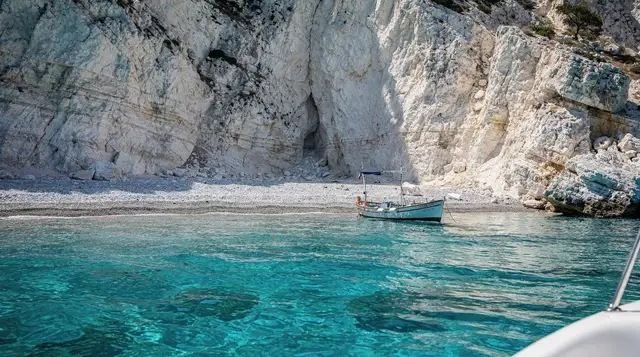
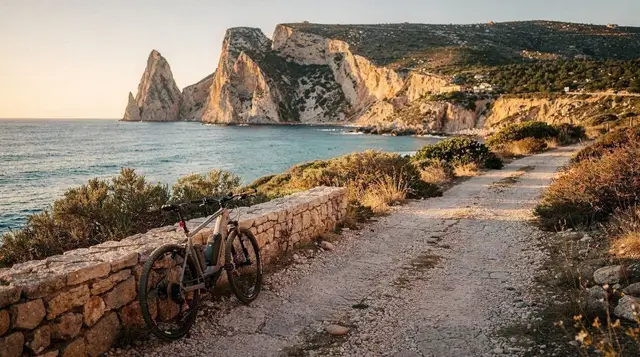
Ogliastra is the smallest of Sardinia’s provinces and, by most measures, the emptiest: fewer than 60,000 people spread across a strip of coast and a wedge of limestone mountains, with no motorway, no airport and until recently, barely any reason for outsiders to know its name. What put it on the map is a single run of coastline between Baunei and Santa Maria Navarrese, where white limestone cliffs drop straight into turquoise water and a handful of coves - Cala Goloritzé chief among them - have become some of the most photographed beaches in Italy.
This page is an orientation, not a deep dive into any one town. If you already know you want Baunei, Arbatax or Ulassai in detail, go straight to their own pages; what follows is how the towns fit together, how to choose a base, and what actually ties Ogliastra together as a place worth several days rather than a single day trip from Cala Gonone.
Ogliastra at a glance
| What | Detail |
|---|---|
| Area | Roughly 1,850km², Sardinia’s smallest province |
| Main towns | Tortolì, Arbatax, Baunei, Santa Maria Navarrese, Lanusei, Ulassai |
| Coastline | Baunei to Bari Sardo, part of the wider Gulf of Orosei |
| Nearest airports | Olbia (OLB), about 130km / 2h30 north; Cagliari (CAG), about 140km / 2h30-3h south |
| Getting there | Hire car via the SS125 Orientale Sarda - no motorway, no train line |
| Best time | May to September for the coast; April, October and Barbagia festivals work inland year-round |
| Days needed | 4 to 7, more if hiking the Selvaggio Blu |
What actually ties Ogliastra together
Three things define this province more than any single town does. The first is geography: a wall of Jurassic limestone, the Supramonte and the Tacchi, that runs almost to the waterline in places, which is why the coast road doesn’t really exist here and boats do most of the work that a coast road would elsewhere. The second is emptiness - Ogliastra has the lowest population density of any Sardinian province, and villages like Ulassai or Urzulei feel closer to the Gennargentu interior than to a beach holiday. The third is that shepherd culture, not tourism, is still the backbone of the inland economy: Barbagia-adjacent towns raise sheep and goats, make pecorino, and run agriturismi that were farms first and guesthouses second.
That combination - spectacular coast, minimal development, mountains a short drive from the sea - is Ogliastra’s whole pitch. It rewards people who want the visual drama of the Gulf of Orosei without the density of boats and day-trippers that Cala Gonone pulls in from the Nuoro side further north. It punishes people expecting a Costa Smeralda-style infrastructure of marinas, beach clubs and fast connections, because none of that exists south of Arbatax.
Ogliastra vs the Gulf of Orosei further north
It’s worth being precise about the geography, because the site treats these as two separate destinations for a reason. Gulf of Orosei as a page covers the northern half of this same limestone coastline, centred on Cala Gonone in Nuoro province - that’s where most boats to Cala Luna and Cala Sisine depart from, and it’s the more developed, more visited half. Ogliastra covers the southern half: Baunei, Arbatax, Santa Maria Navarrese and Tortolì, where boats reach Cala Goloritzé, Cala Mariolu and the same Cala Sisine from the opposite direction.
The two halves are connected by sea but not by any quick road - there’s no coastal drive linking Cala Gonone to Baunei, only a long inland loop through Dorgali, Oliena and Urzulei that takes the best part of two hours. Some boat tours run the full length between provinces in summer, but most operators stick to their own half. If your plan involves both, budget it as two separate coastal bases rather than one long drive-through.
Choosing a base: the four Ogliastra towns compared
| Town | Best for | Pros | Cons |
|---|---|---|---|
| Baunei | Hiking, the Golgo plateau, Selvaggio Blu access | Closest to Cala Goloritzé by road and trail, genuine mountain-village character | Hilltop location means everything coastal is a drive down a narrow road |
| Arbatax | Ferries, budget stays, boat departures | Working harbour with the most boat operators, cheapest beds, flat and easy to park in | Little charm beyond Le Rocce Rosse, beach itself is unremarkable |
| Santa Maria Navarrese | A proper resort feel with a real beach | Only town in Ogliastra with a genuine sandy town beach and a small marina | Busiest and priciest of the four in August, limited off-season life |
| Tortolì | Everyday services, longer stays, families | Supermarkets, pharmacies, the Thursday market, better value accommodation | Not on the coast itself - a short drive to any beach |
None of these is a wrong choice, and the distances between them are short enough - 15 to 30 minutes by car - that the choice matters less than it would in a bigger province. Santa Maria Navarrese suits anyone who wants to walk to a beach from their hotel. Baunei suits hikers and anyone basing themselves for the Golgo plateau or Selvaggio Blu trailheads. Arbatax and Tortolì suit budget-conscious travellers and anyone arriving or leaving by ferry, since Arbatax’s port has seasonal links to the mainland.
The quota beaches: Cala Goloritzé and Cala Mariolu
These two coves are the reason most people come to Ogliastra, and both require planning ahead rather than just turning up. Cala Goloritzé, reachable on foot from the Golgo plateau above Baunei or by boat from Arbatax and Santa Maria Navarrese, is a protected natural monument with a daily visitor cap enforced in summer - book the access permit online before you go if you’re hiking in, since walk-up numbers are limited and July-August slots fill up days in advance. The Cala Goloritzé guide covers the permit process, trail times and boat alternative in detail.
Cala Mariolu, reachable only by boat or by a long, technical hike, runs its own separate quota and is best treated as a boat-trip stop rather than a walk-in destination for most visitors - the Cala Mariolu guide has the specifics on which departure ports serve it and roughly how long the crossing takes. Both beaches enforce Sardinia’s island-wide ban on removing sand or pebbles, with fines that run from €500 to €3,000 and are actively checked at some departure ports and car parks - leave the beach exactly as empty-handed as you arrived. The beach access quotas guide has the full rundown of which Sardinian beaches require booking and how far ahead to do it.
a guided cruise covering Cala Goloritzé, Cala Mariolu, Cala Biriala and Cala Sisine from Santa Maria Navarrese is the most efficient way to see all four coves in a single day without worrying about permits yourself, since the operator handles the landing arrangements.
Getting around Ogliastra
There is no way around this: you need a hire car, and you need to accept that Ogliastra’s roads are slow. The SS125 Orientale Sarda that threads the province has no motorway sections here, plenty of hairpins through the Tacchi foothills, and a realistic average speed closer to 50-60km/h once you’re off the short straight stretches near Tortolì. The renting a car in Sardinia guide covers booking and insurance specifics that apply island-wide.
Concretely: Baunei to Arbatax is about 30km but takes 35-40 minutes. Arbatax to Ulassai is roughly 35km inland and closer to 45 minutes given the climb into the Tacchi. The road up from Baunei town to the Golgo plateau, the trailhead for Cala Goloritzé, is a narrow 8km mountain lane that regularly takes 20-25 minutes despite the short distance - do not treat map distances at face value anywhere in this province. ARST buses connect the main towns a handful of times a day but aren’t built around beach or trailhead access, so they work for getting between Tortolì, Arbatax and Lanusei, not for reaching the coves.
Inland Ogliastra: the Tacchi and Barbagia foothills
The coast gets the photographs, but the interior is where Ogliastra’s other identity lives. Ulassai, perched below its own limestone tower, is the best-known inland stop, known for the Su Marmuri cave system and for the site-specific artworks left by sculptor Maria Lai. Further into the Tacchi and Gennargentu foothills, villages built around sheep farming still run agriturismi serving porceddu and pecorino made a few hundred metres from where the sheep grazed that morning.
a jeep tour into the Barbagia foothills with a shepherd’s lunch is the easiest way to see this side of Ogliastra without navigating unmarked farm tracks yourself, typically a full day with stops at a nuraghe or two and a working sheep farm. It’s a genuinely different register from the coast: cooler, quieter, and a useful contrast if you’ve spent three days on boats and beaches already.
Hiking: the Selvaggio Blu and the Golgo plateau
Ogliastra is also Sardinia’s best hiking province, and the reason is the same limestone that makes the coast dramatic. The Selvaggio Blu, a multi-day trekking route along the cliffs above the Gulf of Orosei, starts and largely runs through Baunei territory and is widely rated Italy’s most demanding long-distance trail - it requires via ferrata equipment, a guide in most sections, and advance booking, and it is not a casual day walk. The Selvaggio Blu trek guide covers logistics, guide operators and what a shortened one or two-day version looks like for less committed hikers.
Shorter and far more accessible is the walk from the Golgo plateau down to Cala Goloritzé, roughly 1.5 hours down and closer to two hours back up in summer heat, with genuinely no shade for most of the route. a guided trekking tour to Cala Goloritzé takes the guesswork out of permits and pacing, and is worth the cost for anyone doing this hike for the first time in July or August heat.
Boats: the other way to see the coast
For anyone who’d rather not hike, boats from Arbatax, Santa Maria Navarrese and Baunei’s own small harbour cover the same coastline from the water, and they’re genuinely the better option if your goal is swimming stops rather than trail time. a full-day boat tour along the Baunei coast typically runs six to seven hours with three or four swim stops, priced around €80-100 per adult in 2026 depending on boat size and whether lunch is included.
Faster RIB and dinghy options exist from most of the same harbours if you’d rather cover more ground in less time. The Gulf of Orosei boat trips guide compares operators and boat types across the whole coastline, both Ogliastra and the Cala Gonone side.
Planning an Ogliastra trip
Four days is enough to see the highlights - one day on a boat, one hiking or driving to Cala Goloritzé, one inland into the Barbagia foothills, one spare for weather or a second beach day. A week lets you add the Selvaggio Blu’s shorter sections or a proper look at Ulassai and Lanusei without rushing. If Ogliastra is one stop on a longer east coast trip, the east coast Sardinia 7-day itinerary sequences it against the Gulf of Orosei to the north, which is the more common way visitors actually build a trip here.
Accommodation is genuinely limited compared with the north - Ogliastra has a fraction of the beds that Gallura or the Costa Smeralda area does, and July-August rooms in Santa Maria Navarrese and Baunei book out weeks ahead. Booking three to four months out for a summer trip isn’t excessive caution here, it’s close to necessary for the better-located places.
Frequently asked questions about Ogliastra
Which town should I stay in for a first visit to Ogliastra?
Santa Maria Navarrese if you want to walk to a beach and a small marina from your hotel; Baunei if hiking and the Golgo plateau are the priority; Arbatax or Tortolì if you want the cheapest, most practical base with the widest choice of boat departures and everyday services. All four are within a 30-minute drive of each other, so the choice affects convenience more than what you can actually see.
Is Ogliastra worth visiting if I’ve already done the Costa Smeralda?
Yes, and arguably more so - the two areas barely overlap. Costa Smeralda is about marinas, beach clubs and a certain kind of polish; Ogliastra is limestone cliffs, boat trips to protected coves, and mountain villages that still run on sheep farming. Travellers who found the north crowded or expensive tend to find Ogliastra’s slower pace and lower prices a relief rather than a downgrade.
How many days do I need for Ogliastra?
Four days covers the essentials: one boat trip, one visit to Cala Goloritzé, one inland excursion, one flexible day. A week allows time for a second beach, a short Selvaggio Blu section, or Ulassai and the Su Marmuri caves without rushing between stops.
Do I need to book Cala Goloritzé and Cala Mariolu in advance?
Yes, in the May-to-September season. Both beaches run daily visitor quotas as protected sites, and July-August slots for hiking permits and popular boat departures can sell out several days ahead. Outside that window quotas are relaxed or unenforced, but boat operators also run a reduced schedule from October to April.
Is there an airport in Ogliastra?
No. The nearest airports are Olbia (OLB) to the north and Cagliari (CAG) to the south, both roughly 130-140km and two and a half to three hours away by the SS125. This is one of the main reasons Ogliastra sees fewer visitors than provinces with their own airport.
Can I visit Ogliastra as a day trip from Cala Gonone or the Costa Smeralda?
Technically yes for the closest sights, but it wastes most of the appeal. A day trip from Cala Gonone to Baunei alone eats close to two hours each way on the inland loop road, leaving little time on the ground, and a day trip from the Costa Smeralda is a five-hour round trip before accounting for anything you actually do there. Ogliastra rewards a dedicated base of several nights far more than a rushed detour.
What’s the best time of year to visit Ogliastra?
May, June and September give the best balance of warm sea temperatures, open restaurants and manageable crowds. July and August bring the warmest water and the fullest quota beaches, plus noticeably higher accommodation prices. Spring and autumn outside that window suit hikers and the inland villages better than the coast, since many beach-facing businesses close for winter.
Is the drive into Ogliastra difficult?
It’s slow rather than difficult. The SS125 Orientale Sarda has no motorway sections through the province, with tight bends through the Tacchi foothills that keep average speeds down around 50-60km/h. Anyone used to motorway driving should simply budget more time than the map distance suggests, particularly for the mountain roads up to Baunei and the Golgo plateau.