Surfing in Sardinia
Does Sardinia have good surfing?
Yes, mainly on the west coast, which is exposed to Atlantic-fed Mediterranean swell in a way the sheltered east and northeast are not. Bosa, Porto Ferro, the Sinis peninsula and the Costa Verde around Buggerru see rideable waves most reliably in autumn and winter, with summer generally flatter and better suited to other water sports.
Surfing isn’t the first thing most people associate with Sardinia, and for good reason: the island’s most photographed coves, in the Gulf of Orosei and around the Costa Smeralda, sit on sheltered coastlines that rarely see rideable swell. The west coast is a genuinely different story, catching Mediterranean swell generated across open water toward the Balearics and beyond, and it’s home to a small but committed local surf scene that’s easy to miss if you’re only looking at the island’s tourist-brochure beaches.
That contrast between the island’s two coastlines is worth understanding before planning any trip around surfing specifically: arrive expecting to surf in July at a beach recommended for its beauty rather than its swell exposure, and you’ll likely find flat, glassy water perfect for swimming but useless for a surfboard. Arrive on the west coast in November with realistic expectations of a working swell, and Sardinia holds up well against far better-known European surf destinations, just without the crowds, the surf schools on every corner, or the marketing.
| Where | West coast: Bosa, Porto Ferro, the Sinis peninsula, Costa Verde around Buggerru |
| Best season | Autumn and winter for consistent swell; summer is mostly flat |
| Skill level | Beginner-friendly beach breaks exist, but exposed reef breaks need experience |
| Rental/lessons | Board rental from roughly €20-30/day; lessons €40-60 for a group session where available |
Why the west coast, specifically
Sardinia’s east coast, including the celebrated Gulf of Orosei, is largely sheltered from the swell directions that matter for surfing, which is exactly why its water stays glass-calm enough for the boat trips and kayaking covered elsewhere on this site. The west coast, by contrast, faces open water with a long fetch, and picks up swell that the east coast simply never sees. This is the core reason experienced surfers plan a west-coast base rather than assuming any beach on the island will do.
What makes a west-coast trip different from the rest of Sardinia
Travelling to Sardinia specifically for surfing means accepting a genuinely different rhythm from the sun-and-beach holiday most visitors picture. Days are built around checking forecasts and driving to wherever the swell and wind combination looks best rather than settling into one resort town, restaurants and accommodation options thin out considerably compared to the tourist-dense east and northeast coasts, and the reward is uncrowded, genuinely wild-feeling coastline that most of the island’s visitors never see at all. It’s a trade worth making consciously rather than discovering by surprise once you’ve already booked a fixed-base week in a west-coast town expecting resort-level amenities.
Bosa and the surrounding coast
Bosa, best known for its pastel riverside houses and castle, sits near some of the more consistent breaks on the island, with a small local surf community and enough swell exposure to make it a sensible first stop for visiting surfers. If the waves are flat when you’re there, the same stretch of coast offers a very different, calmer way to see its coves and inlets:
Snorkelling tour of the Bosa coastline and covesHow the swell forms
The Mediterranean’s relatively small size compared to the world’s oceans means its swell tends to be shorter-period and less powerful than the long-travelled ground swells that reach coasts like Portugal’s or Morocco’s, which in practice means Sardinia’s waves, even when firing, are generally more forgiving and better suited to intermediate surfers than the heavier, more powerful breaks found on genuine ocean coastlines.
Storm systems tracking through the western Mediterranean, often originating near the Balearics or moving down from the Gulf of Lion, generate the swell that eventually reaches Sardinia’s west coast, arriving with a noticeable lag of a day or two after the storm itself has passed, which is exactly why checking a forecast a few days ahead rather than just the morning of gives the most useful planning window.
Porto Ferro and the Alghero coast
Porto Ferro, a broad dune-backed bay south of Alghero, is one of the more accessible beach breaks on the island, with sand rather than reef underfoot, which makes it a reasonable choice for less experienced surfers when swell and wind align. It’s less consistent than the more exposed Sinis or Costa Verde breaks further south, but its proximity to Alghero’s airport and hire-car options makes it a convenient stop for anyone building a mixed-activity trip around the northwest.
The Sinis peninsula and Costa Verde
Further south, the Sinis peninsula and the Costa Verde around Buggerru and Piscinas are where Sardinia’s surfing reputation, modest as it is, really sits. These stretches face more directly into the swell window and see some genuinely well-regarded reef and beach breaks in the right conditions, known mostly through word of mouth among Italian and wider European surfers rather than international surf media. Facilities are minimal — this isn’t a resort surf scene with rows of surf schools — so visiting surfers typically arrive with their own boards, local knowledge from online forecast communities, and low expectations of infrastructure.
When the waves actually work
Swell is markedly more consistent from autumn through winter, roughly October to March, when Mediterranean low-pressure systems generate the fetch needed for rideable waves on the west coast. Summer, by contrast, is mostly flat — the same settled high-pressure weather that makes June to September ideal for beach holidays, boat trips and diving is precisely the condition that kills west-coast surf. This inverse relationship with the island’s main tourist season is worth understanding before planning a trip: a surfer visiting in August, when most of the island is at its warmest and busiest, will very likely find the west coast surf breaks flat.
What to do when the surf is flat
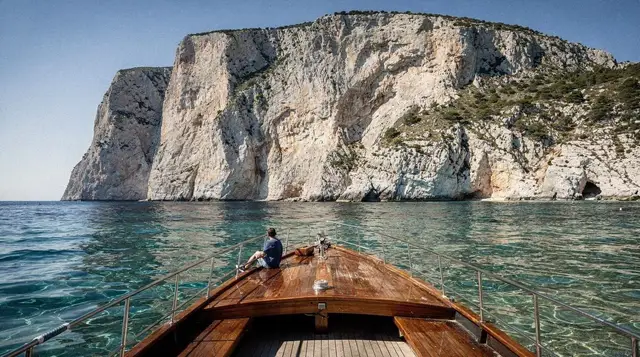
Given how often that happens in the popular travel months, it’s worth having a backup plan built into any west-coast trip. A boat tour combining snorkelling with stand-up paddleboarding is a straightforward way to spend a flat-surf morning around Alghero rather than watching an empty lineup:
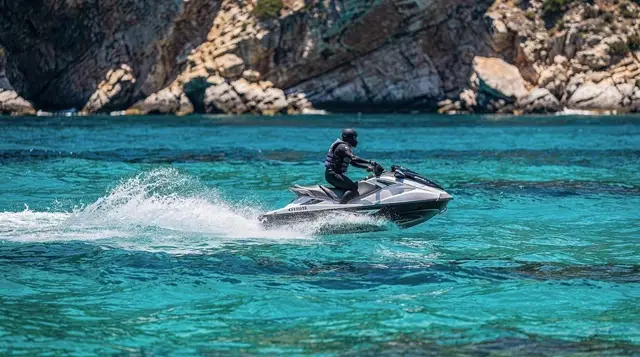
Boat tour with snorkelling and stand-up paddleboarding from AlgheroA jet ski tour along the same coastline is another wind-and-swell-independent alternative for a day when the waves simply aren’t cooperating:
Jet ski tour along the Alghero coastlineThe local surf culture
Italy’s surf scene as a whole is small compared to its Atlantic-coast neighbours, and Sardinia’s west coast reflects that: a tight-knit group of local surfers, often multi-generational families in towns like Bosa, who’ve been riding the same breaks for decades without much outside attention. Visiting surfers who show respect for lineup etiquette, don’t crowd a peak that clearly has a local pecking order, and take time to chat rather than simply paddling out and claiming waves tend to find the community welcoming; those who don’t will find the reception considerably cooler.
Online forecast and surf-report communities, mostly in Italian, are the best source of up-to-date, spot-specific conditions, and it’s worth using a translation tool if your Italian isn’t strong rather than relying purely on general international surf-forecast sites, which often model this coastline poorly given how few users check it.
Break characteristics worth knowing
Porto Ferro’s sand-bottom beach break is the most forgiving on the island, breaking in a fairly predictable pattern across a wide bay that spreads the crowd out even on a good day. The Sinis peninsula and Costa Verde breaks are more varied, with reef and rocky-bottom sections that produce more powerful, better-shaped waves but demand more respect and local knowledge — some spots here have submerged rock close enough to the surface to injure an inattentive surfer on a bigger swell.
Bosa’s breaks sit somewhere between the two, generally beach or sand-and-rock bottom with a range of wave sizes depending on the specific swell direction, making it a sensible first stop for a surfer new to the island’s west coast before pushing further south to the more committing Costa Verde spots.
Combining a west-coast trip with a road trip
Because the surf season here runs opposite to the main tourist season, a west-coast surf trip pairs naturally with a broader off-season road trip rather than a fixed beach-holiday itinerary. Autumn and winter bring fewer crowds everywhere on the island, lower accommodation prices, and the chance to combine surf checks with visits to inland towns and archaeological sites that get comparatively little attention outside summer, like the nuraghi scattered across the interior or the mining heritage towns of the southwest.
Building flexibility into the itinerary — a loose plan rather than fixed daily bookings — suits both the unpredictable swell and the quieter, more exploratory character of an off-season Sardinian trip.
Combining surfing with the rest of the west coast
The west coast beyond its surf breaks has plenty to fill a non-surfing day — Oristano and the Sinis peninsula’s quartz beaches, the industrial-heritage mining towns of Iglesias, Masua and Nebida, and the long dune beach at Piscinas are all within a reasonable drive. The west coast seven-day itinerary is built around exactly this stretch and works well for anyone planning a trip around swell windows rather than a fixed daily schedule.
Getting there and getting around
The west coast is served by no dedicated airport of its own; most visitors fly into Cagliari-Elmas in the south or Alghero-Fertilia in the northwest and drive from there. A hire car is essential for reaching the more remote breaks around Costa Verde, where public transport is minimal to non-existent; see driving in Sardinia for realistic journey times on roads that rarely exceed 60km/h away from the SS131 motorway.
Checking conditions before you travel
Because the west coast’s surf season runs opposite to the island’s main tourist calendar, it’s worth checking a proper swell forecast several days before travelling rather than simply booking flights around general seasonal averages. Italian surf forecasting communities and dedicated marine weather sites give a far more reliable picture than general tourist weather apps, which rarely model swell direction or period in enough detail to be useful for planning a surf-specific trip.
A realistic approach for visitors without total date flexibility is to book a week or ten days within the reliable autumn-to-winter window and treat any specific day’s conditions as a bonus rather than a guarantee, since even the most consistent season has flat spells lasting several days at a time.
When to go
October through March gives the most consistent swell, with the trade-off of cooler water, needing a full wetsuit, and far fewer open restaurants and accommodation options along this rural stretch of coast — see Sardinia in winter for what that means practically. Spring and early summer occasionally produce workable swell around low-pressure passages, but nothing as reliable as the autumn-winter window, so treat any warm-season surf session as a bonus rather than a plan.
Environmental conditions specific to west-coast surfing
Water temperature on the west coast follows the same broad seasonal pattern as the rest of the island but tends to run slightly cooler during the autumn-winter surf season than the sheltered east coast, generally 14-18°C between November and February, cool enough that most surfers wear a full wetsuit with boots and often gloves for longer sessions.
Wind direction matters enormously here: an offshore easterly, blowing from land toward the sea, cleans up wave faces and produces the best conditions, while an onshore westerly, common during the same storm systems that generate the swell in the first place, can make waves messy and difficult to ride even when swell size looks promising on a forecast. Experienced local surfers often wait for the wind to swing offshore a day or two after a swell peaks, accepting slightly smaller waves in exchange for far better shape.
Frequently asked questions about surfing in Sardinia
What’s the best surf season in Sardinia?
Autumn and winter, roughly October to March, when Mediterranean storm systems generate consistent west-coast swell.
Can beginners surf in Sardinia?
Yes at beach breaks like Porto Ferro when conditions are gentle, though lessons and beginner-specific infrastructure are limited compared to established surf destinations elsewhere in Europe.
Do I need to bring my own board?
It’s strongly recommended. Rental exists in a handful of spots but isn’t guaranteed, especially outside the small local surf towns.
Is the east coast ever surfable?
Rarely — the Gulf of Orosei and Costa Smeralda coastlines are sheltered from the swell directions that produce west-coast waves.
What wetsuit thickness do I need?
A 3/2mm suit generally suffices in autumn; a thicker 4/3mm or 5/4mm with boots is more realistic for winter sessions when water temperature drops.
Are there surf camps in Sardinia?
A small number exist around the more established west-coast spots, but nothing like the scale of Portugal or France; research specific operators in advance rather than expecting to find one on arrival.
What should I do if there’s no swell during my trip?
Switch to another water activity — snorkelling, stand-up paddleboarding or a boat tour are all viable alternatives that don’t depend on waves.
Is the local surf scene welcoming to visitors?
Generally yes, with respectful lineup etiquette; a tight-knit community exists in towns like Bosa, and showing consideration for local surfers goes a long way toward a friendly reception.
Are there dangerous marine creatures to worry about while surfing?
No more than typical Mediterranean waters — jellyfish are an occasional seasonal nuisance rather than a serious hazard, and there’s nothing comparable to the risks associated with some other surf destinations worldwide.
How far in advance should I check the surf forecast?
A few days out gives a reasonable indication, but conditions can shift with a change in the pressure system, so checking again the morning of a planned surf session is worthwhile before committing to a long drive to a specific break.
Water sports on GetYourGuide
Verified deep-linked GetYourGuide tours. Book through these links and we earn a small commission at no cost to you.
These are our own photographs of Sardinia, not the operator's pictures of this tour — open the tour page to see those.