The best caves in Sardinia, compared side by side
Which is the best cave to visit in Sardinia?
Neptune's Grotto near Alghero is the most dramatic and the easiest to reach with a boat option or dedicated cliff steps. Bue Marino near Cala Gonone is the best pairing with a Gulf of Orosei boat day. Ispinigoli near Dorgali suits a quick road-accessible stop, and Is Zuddas in the Sulcis rewards genuine cave enthusiasts prepared for a longer drive.
Sardinia’s limestone geology, especially through the Supramonte and the northwest coast, has produced an unusual density of accessible show caves for an island this size — around 7,000 nuraghi above ground, and beneath it a network of caves that includes some of the most visited natural attractions on the whole coastline. Not every visitor has time for all four of the main ones, so here’s how they actually compare, rather than a list that pretends they’re interchangeable.
| Cave | Region | Access | Standout feature |
|---|---|---|---|
| Neptune’s Grotto | Capo Caccia, northwest | Boat or 654 steps | Saltwater lake, huge chamber |
| Bue Marino | Cala Gonone, east | Boat only | Named for the extinct local monk seal |
| Ispinigoli | Dorgali, east | By road | 38m stalagmite column |
| Is Zuddas | Sulcis, southwest | By road | Rare aragonite “excentriche” crystals |
Neptune’s Grotto: the most dramatic setting
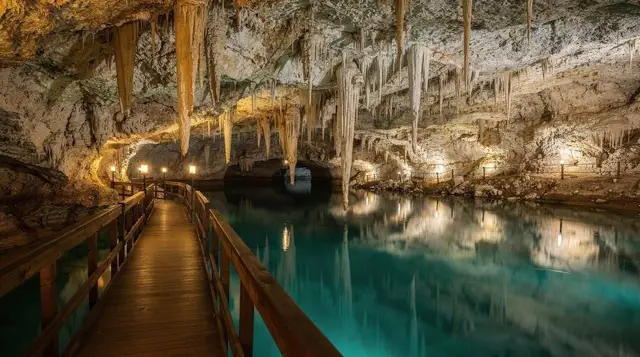
Neptune’s Grotto, on the cliffs of Capo Caccia near Alghero, is the cave most first-time visitors picture when they think “Sardinia cave” — a saltwater lake, cathedral-scale chambers, and the choice of a scenic boat ride or a genuinely tough 654-step descent as your way in. It’s also the most flexible of the four for visitors without a car, since the boat departs directly from Alghero’s harbour rather than requiring a drive into the countryside.
Bue Marino: the best boat-day pairing
Named for the Mediterranean monk seal that once bred in its inner pools, Bue Marino near Cala Gonone sits directly on the same boat routes that run further south to Cala Luna, Cala Mariolu and Cala Goloritzé, making it the easiest of the four caves to fold into a beach-focused Gulf of Orosei boat trip rather than a dedicated cave day:
Bue Marino cave guided tour with entry ticket, from Cala GononeIspinigoli: the quick, road-accessible stop
Ispinigoli, just outside Dorgali, is the only one of the four reached entirely by road, with no boat crossing or tide-dependent scheduling to plan around. Its single 38-metre stalagmite column is a genuinely impressive sight for a visit that takes about an hour, and it pairs naturally with a Gorropu gorge trek on the same day given how close the two sites sit to each other:
Gorropu canyon trek with panoramic viewpoints from DorgaliIs Zuddas: for genuine cave enthusiasts
Is Zuddas, out in the Sulcis-Iglesiente near Santadi, is the least visited and the most geologically distinctive, with rare crystal formations not replicated at the other three sites. It’s also the furthest from the main tourist bases, roughly an hour’s drive from Cagliari, and most easily reached as a shore excursion for cruise visitors without their own transport that day:
Is Zuddas caves shore excursion from CagliariNearby, the old mining tunnels at Porto Flavia near Masua add an industrial-heritage angle to the same corner of the island, guided as a more adventurous rope descent for visitors who want it:
Canyoning descent at the old Porto Flavia mine, MasuaHow Sardinia ended up with so many caves
The common thread behind all four caves is limestone — specifically the thick Mesozoic and Cenozoic limestone deposits that make up much of the Supramonte, the northwest coast around Capo Caccia, and pockets of the Sulcis-Iglesiente in the southwest. Limestone dissolves slowly in slightly acidic rainwater over geological time, and where that water finds a way underground, it carves the chambers, shafts and galleries that eventually become show caves once a passage opens to the surface or the sea.
Sardinia’s particular geological history — repeated changes in sea level over millions of years, combined with tectonic uplift that raised ancient seabeds into today’s mountains — created ideal conditions for this process across several separate pockets of the island rather than one continuous cave region, which is exactly why the four best-known caves sit so far apart from each other geographically despite sharing the same basic formation story.
Budgeting a caves-focused day or two
If caves are a genuine priority rather than an add-on, it’s worth budgeting realistically: expect to pay roughly €20-35 per person for a boat-and-cave combination at Neptune’s Grotto or Bue Marino once transport and entry are combined, and €10-15 for the road-accessible entry-only tickets at Ispinigoli and Is Zuddas. A two-cave day built around a single base — Dorgali or Cala Gonone pairing Ispinigoli with Bue Marino, for instance — is realistic for around €40-60 per person including transport, food and both entries, noticeably less than treating each cave as a separate dedicated excursion from different bases across multiple days.
Which one should you actually visit
If you only have time for one, base the decision on where you’re already staying rather than chasing all four across the island — the driving distances between them are real, and Sardinia rewards a slower pace over a checklist approach. Visitors based in the northwest around Alghero should default to Neptune’s Grotto; those in the east around Cala Gonone or Dorgali have Bue Marino and Ispinigoli both within easy reach and can realistically do both in a couple of days without much extra driving. Is Zuddas is worth the detour specifically if cave geology interests you beyond the standard show-cave format, or if you’re already exploring the Sulcis mining coast.
Fitting caves into a longer Sardinia itinerary
None of these four caves need a dedicated multi-day trip on their own, which makes them easy to slot into a wider itinerary rather than a reason to restructure your route around them. The east coast Sardinia in seven days itinerary naturally covers both Bue Marino and Ispinigoli from a Dorgali or Cala Gonone base, while the north Sardinia in seven days itinerary puts Neptune’s Grotto within easy reach of an Alghero stay.
Is Zuddas is the outlier logistically, sitting furthest from the other three and best combined with a dedicated Sulcis-Iglesiente day rather than squeezed into a itinerary built around the coast. If you’re planning a full circuit of the island, such as the fourteen-day road trip, all four caves can realistically be visited across the trip without any of them feeling like a significant detour from the main route.
What none of the four caves offer
Worth being clear-eyed about before you plan a day around any of them: none of Sardinia’s show caves offer the kind of extensive, multi-hour speleological exploration that dedicated caving enthusiasts might expect from a serious cave system. Every guided route covers a fixed, lit, walkway-equipped section of a much larger cave network that extends far beyond what’s open to general visitors, explored only by permitted speleologists with specialist equipment.
If you’re a serious caver rather than a casual visitor, these four are worth treating as an introduction to Sardinia’s karst landscape rather than the full experience — local speleology clubs, contactable through Sardinia’s regional caving federation, are the route into genuine deep-cave exploration if that’s specifically what you’re after.
A quick cost comparison across all four
For planning purposes, here’s roughly what each cave costs once transport is included: Neptune’s Grotto runs about €31-33 per adult with the boat, or around €13 alone via the free steps; Bue Marino runs €25-35 per adult combining boat and entry; Ispinigoli, being road-accessible, costs only the €10-12 entry ticket plus your own transport; and Is Zuddas similarly runs €10-12 entry plus transport, or is bundled into the Cagliari shore excursion price if booked that way. Families visiting more than one cave across a trip should budget accordingly rather than assuming a flat rate applies everywhere, since the boat-dependent caves in the northwest and east cost meaningfully more per person than the two road-accessible sites.
Caves versus the interior’s other karst landscape
The same limestone geology that produced these show caves also carved the Gola su Gorropu gorge and the wider Supramonte hiking terrain, so if caves have caught your interest, canyoning and hiking in the same landscape are natural next steps rather than a separate trip:
Is Zuddas caves shore excursion from CagliariCanyoning in Sardinia covers the technical, rope-based side of this same karst landscape, and Tiscali nuragic village — a Bronze Age settlement built inside a collapsed cave doline near Oliena — combines the archaeological and geological themes in one hike if you want something between a show cave and a full trek.
Pairing each cave with diving or snorkelling nearby
Three of the four caves sit close enough to strong diving and snorkelling to make a natural double booking on the same trip. Neptune’s Grotto shares its stretch of coast with some of the clearest water on the island, covered in diving at Alghero and Capo Caccia, so a morning cave visit and an afternoon dive from the same base is realistic without much extra driving.
Bue Marino sits directly on Cala Gonone’s boat routes, and the same operators or nearby dive centres running trips into the Gulf of Orosei cover some of Sardinia’s best wall diving, detailed in diving in Sardinia and best snorkelling spots in Sardinia. Is Zuddas, being inland near Santadi, doesn’t pair as naturally with diving, though the Sulcis coast around Carloforte isn’t far for visitors willing to extend the day. Ispinigoli, similarly inland, is best treated as a standalone stop rather than combined with water-based activities.
Frequently asked questions about Sardinia’s caves
Which cave is easiest to reach without a car?
Neptune’s Grotto, since the boat departs directly from Alghero’s harbour with no separate drive needed. Bue Marino similarly departs from Cala Gonone’s harbour by boat.
Which cave is best for children?
Ispinigoli and Bue Marino are both relatively manageable for children old enough to walk the guided distance steadily. Neptune’s Grotto’s 654-step option is genuinely hard for young children, though its boat route works fine for most families.
Can you visit more than one cave in a single day?
Realistically no, given how far apart they sit — Ispinigoli and Bue Marino are close enough to combine over two days from a Dorgali or Cala Gonone base, but Neptune’s Grotto and Is Zuddas each need a dedicated day from elsewhere on the island.
Are the caves open all year?
Ispinigoli and Is Zuddas, both road-accessible, generally run reduced but year-round schedules. Boat access to Neptune’s Grotto and Bue Marino contracts significantly, or stops, outside roughly May to October.
Do any of the caves require pre-booked tickets?
Boat crossings, especially to Neptune’s Grotto and Bue Marino, are worth booking ahead in peak season since sailings can sell out; cave entry tickets themselves are mostly sold on-site.
Is it worth hiring a private guide for the caves instead of the standard tour?
The standard guided tours included with entry are informative and generally sufficient; a private guide adds cost without meaningfully changing what you see, since the routes through each cave are fixed regardless of group size.
Why are Sardinia’s caves spread so far apart?
Because the limestone that makes cave formation possible occurs in several separate geological pockets across the island — the Supramonte, the northwest coast, and the Sulcis-Iglesiente — rather than one continuous band, so each cave sits within its own distinct region rather than clustered together.
Which cave has the most impressive single formation?
Ispinigoli’s roughly 38-metre stalagmite column is the standout single feature among the four, though Neptune’s Grotto’s overall scale and saltwater lake arguably make for the more impressive whole-cave experience.
Do any of the caves offer combination tickets covering more than one site?
Not as a rule — each cave is ticketed and operated independently, sometimes by different companies, so combination deals covering two or more caves in one booking aren’t standard; plan and book each visit separately.
If I only have one day in Sardinia for a cave, which should I pick?
Base it on where you’re staying rather than a fixed ranking: Neptune’s Grotto if you’re in the northwest around Alghero, Bue Marino if you’re on the east coast around Cala Gonone or Dorgali, since both integrate naturally with boat trips you’re likely already planning in those areas.
Are the caves accessible for visitors with mobility limitations?
Not fully at any of the four — all involve steps, uneven natural surfaces, or both, and Neptune’s Grotto’s staircase route in particular is genuinely demanding even for fit visitors. Contact each site directly in advance if mobility is a significant concern, since accommodations vary and none currently offer a fully step-free route.
Do local guides offer private, customised cave tours?
Some do, particularly around Cala Gonone and Alghero where demand is highest, though the route through each cave is fixed regardless of group size, so a private tour mainly buys flexibility on timing and pace rather than access to anything the standard guided group doesn’t see.
Cave & canyon tours on GetYourGuide
Verified deep-linked GetYourGuide tours. Book through these links and we earn a small commission at no cost to you.
These are our own photographs of Sardinia, not the operator's pictures of this tour — open the tour page to see those.