Beach mistakes to avoid in Sardinia
What's the biggest beach mistake visitors make in Sardinia?
Turning up at a quota-restricted beach like La Pelosa or Cala Goloritzé without a pre-booked slot. These beaches cap daily visitor numbers and sell out online, sometimes days ahead in August, and there is no way to buy access on-site if the quota is already full.
Sardinia’s beaches are genuinely spectacular, and also more regulated than most first-time visitors expect. A handful of specific, avoidable mistakes ruin more beach days here than anything else — showing up without a booked slot at a quota beach, taking sand as a souvenir, or simply misjudging how far a “nearby” beach actually is by car. None of these are complicated to avoid once you know about them.
| Mistake | What happens | How to avoid it |
|---|---|---|
| No pre-booked slot at a quota beach | Turned away, no on-site tickets | Book online days or weeks ahead |
| Taking sand or shells home | Fines from €500 to €3,000 | Leave everything on the beach |
| Arriving after 10am in August | No parking, no space on sand | Arrive before 9am or go late afternoon |
| Assuming all beaches have road access | Some need a boat or a hard hike | Check access before planning your day |
Missing the quota booking window
Several of Sardinia’s best-known beaches — La Pelosa at Stintino, Cala Goloritzé, Cala Mariolu, Cala Brandinchi and Lu Impostu, and Tuerredda — cap the number of daily visitors and require booking a slot in advance through the local comune’s official system.
This isn’t a formality; capacity genuinely sells out, sometimes days ahead in July and August, and there’s no way to buy your way in on the day if the quota’s full — staff at the entrance turn people away regardless of how far they’ve travelled. Our beach access quotas guide has the specific booking links and typical lead times for each site. Book as soon as your dates are fixed, not the night before.
Taking sand, shells or pebbles home
Sardinia enforces genuinely serious fines for removing sand, shells, pebbles or rocks from its beaches — figures of €500 to €3,000 are real and enforced, not an empty warning, with random bag checks at some airports, particularly Cagliari and Olbia during peak season. This applies even to a small jar of sand as a keepsake. The rule exists because decades of exactly that behaviour, multiplied across millions of visitors, was measurably eroding some of the island’s most fragile beaches, particularly the fine quartz sand at Is Arutas. Leave everything on the beach, photograph it instead, and buy a souvenir from a shop if you want a physical memento.
Underestimating driving times to “nearby” beaches
A beach that looks close on a map can easily be an hour’s drive away on Sardinia’s mostly single-carriageway roads, and this catches out visitors planning a multi-beach day more often than almost anything else covered here. Our driving times reality check covers why the island’s roads run so much slower than distance alone suggests. Plan on one, maybe two beaches per day rather than the ambitious three-beach itinerary that looks reasonable on a map but falls apart once you’re actually driving Sardinia’s winding coastal roads.
Arriving too late in peak season
By 10am in July and August, parking at popular beaches like Chia, Villasimius and the Costa Smeralda’s better-known coves is frequently full, and the beach itself is already crowded. The fix is simple but requires an early start: arrive before 9am, or flip your schedule entirely and go from 4pm onward, when the day’s heat has softened and much of the day-trip crowd has already left. Our quiet beaches in Sardinia guide also lists specific alternatives that don’t get anywhere near as busy even in peak season.
Not checking whether a beach needs a boat
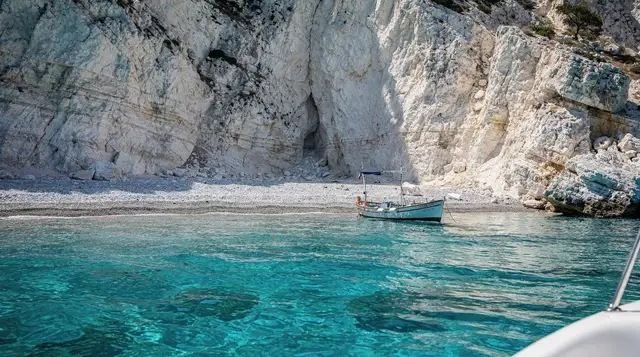
Some of Sardinia’s most photographed beaches — Cala Goloritzé, Cala Mariolu, Cala Luna — have no road access at all. Visitors who assume they can simply drive to any beach that appears in their search results sometimes discover this only after arriving in the wrong town entirely. A boat tour like the boat tour to Cala Goloritzé and Cala Mariolu from Arbatax is the practical way to reach these coves without a demanding hike — check access requirements before building a beach into your day’s plan, not after.
Not booking snorkelling or boat gear ahead
Popular beaches and boat departure points can run out of rental snorkelling gear, kayaks and paddleboards by mid-morning in peak season, particularly around Alghero and the Costa Smeralda. If a specific water activity matters to your day, book it — the hidden coves boat tour with aperitif and snorkelling includes gear as part of the trip, removing the uncertainty of on-site rental availability entirely.
Ignoring beach flags and swimming conditions
Sardinia’s coast, particularly the more exposed Gulf of Orosei and north-east stretches, can see genuinely rough conditions when the Mistral or Scirocco winds pick up, and lifeguard flag systems where present should be taken seriously rather than treated as advisory. Rip currents and sudden swell changes are real hazards on some of the more open beaches, and conditions can shift meaningfully within a single afternoon. Check conditions locally before swimming at any beach that looks rougher than expected, especially with children.
Not checking dog rules before bringing a pet
Rules on dogs at Sardinian beaches vary considerably by comune and even by specific stretch of sand within the same town, and enforcement is genuinely applied rather than casual — fines for bringing a dog to a restricted beach are common. Some towns designate specific dog-friendly beach sections, often at one end of a longer stretch, while leaving the rest fully restricted. If travelling with a dog, check the specific beach’s rules rather than assuming a general island-wide policy exists, since none does.
Confusing free beach sections with paid beach clubs
Nearly every popular Sardinian beach has both a free public section, guaranteed under Italian law, and one or more paid beach clubs occupying part of the same stretch of sand with sunbeds and service. Visitors sometimes assume an entire beach is either fully free or fully paid and are surprised either by an unexpected bill or by walking straight past a perfectly good free section while paying for a club. Look along the whole beach before settling — the free section is often just as good, particularly earlier in the day before club areas fill up. This is covered further in our Sardinia tourist traps guide.
Not respecting dress codes at religious or town sites near beaches
Some coastal towns, particularly around church squares near beach areas like Bosa or Castelsardo, expect shoulders and knees covered if you wander in from the beach in swimwear to explore. It’s a minor point but a genuinely common oversight — carrying a light cover-up in your beach bag avoids being turned away from a church or chapel you wanted to see on the same outing.
Overestimating how many beaches you can fit into a week
A week-long trip built around visiting a new beach every single day sounds appealing in planning but rarely survives contact with actual driving times, quota booking logistics and simple fatigue. A more realistic pace is two to three genuinely explored beaches per week alongside other activities, rather than a rushed checklist of a dozen — our best beaches in Sardinia guide helps prioritise which specific beaches are worth the dedicated day over others that are easily combined or skipped.
Parking mistakes at quota and popular beaches
Even with a valid booking, parking at quota beaches is often separately limited and sometimes requires its own reservation or a shuttle from a car park further away — this is the case at La Pelosa, where beach access and parking are managed as connected but distinct bookings. Read the specific booking confirmation carefully rather than assuming a beach-access ticket automatically includes parking, since arriving without having checked this can mean a long walk or a missed slot entirely.
Underestimating the sun and heat
July and August sun in Sardinia is genuinely intense, and the combination of reflective white sand, minimal shade at many beaches and a full day outdoors catches out visitors who underestimate it, particularly on the more exposed dune beaches around Costa Verde and Piscinas, which have little to no natural shade. Bring more sun protection than feels necessary, a proper hat, and plan strenuous activity like the walk in to Cala Goloritzé for the cooler morning hours rather than midday.
Not planning for seasonal facility closures
Toilets, showers and beach bars at many smaller, less commercial beaches close entirely outside the roughly May-to-October season, and even within season, opening hours at facilities can be shorter than expected on shoulder-season weekdays. If visiting in early May or October specifically, don’t assume every beach will have the full range of facilities open — check ahead, particularly for beaches further from the main towns, and bring your own water and supplies as a backup. Our Sardinia in October and Sardinia in May guides cover what’s realistically open at each end of the season.
Forgetting reef-safe sunscreen matters here too
Sardinia’s clearest, most swimmable water is concentrated in relatively enclosed coves and grottoes — around Capo Caccia, the Gulf of Orosei’s caves, and the archipelago waters near La Maddalena — where water exchange with the open sea is slower than on an exposed beach. Using reef-safe, mineral-based sunscreen rather than oxybenzone-heavy chemical formulas helps protect the marine life in these more enclosed spots, and some tour operators now specifically request it before snorkelling excursions like the catamaran cruise sailing day trip from Alghero.
Not carrying cash for informal beach parking
Many of the south and east coast’s less formal beach car parks, particularly around Chia, Villasimius and stretches of the Gulf of Orosei coast road, are managed by local attendants charging a flat daily fee in cash — typically €3-6 — rather than through a ticket machine or an app. Card payment is often simply not available at these informal setups, and turning up without cash can mean an awkward standoff or, more often, a longer walk to find an alternative spot. It’s a minor thing to plan around but catches out visitors used to card-only parking back home; keep a small stash of coins and small notes specifically for this rather than assuming every car park works like an official municipal one.
Formal paid car parks at the busier named beaches, by contrast, increasingly do accept cards, so this is mainly a rural and informal-lot issue rather than a rule across the whole island. Withdrawing a modest amount of cash at an airport or town ATM on arrival, rather than relying purely on cards for the whole trip, avoids this and several other small cash-only situations that come up around beach days more often than most visitors expect.
Frequently asked questions about beach mistakes in Sardinia
How far ahead do I need to book a quota beach?
For La Pelosa and the Gulf of Orosei’s quota coves in July and August, several days to a couple of weeks ahead is safest; outside peak season, booking a day or two ahead is usually sufficient.
Is the sand-removal fine really enforced?
Yes — checks happen, particularly at airports during peak season, and the fines are genuinely applied rather than symbolic. Treat it as a real rule, not an exaggerated warning.
What happens if a quota beach’s booking is full?
There’s no on-site ticket purchase option — arriving without a booking when the quota’s reached means you won’t be admitted, regardless of how far you’ve travelled.
Are all of Sardinia’s beaches quota-restricted?
No — quotas apply to a specific handful of the most environmentally sensitive or heavily visited beaches. Most of the island’s beaches have no booking requirement at all.
Can children’s sandcastle buckets accidentally cause a fine?
The rule targets sand actually leaving the island in luggage, not playing with it on the beach itself — just make sure nothing ends up packed into a suitcase or bag by accident before departure.
Is it safe to swim at beaches without lifeguards?
Many smaller and more remote Sardinian beaches have no lifeguard cover — check conditions carefully and swim cautiously, especially with children, at unsupervised spots.
Do quota bookings cost money?
Some do, others are free reservations that simply manage numbers — check the specific beach’s booking page, since this varies by comune and by beach.
What’s the best time of day to visit a popular beach without a quota?
Before 9am or after 4pm in July and August avoids the worst of both the crowds and the midday heat, and gives noticeably better light for photos too.
Are dogs allowed on Sardinian beaches?
It varies by comune and even by specific stretch of beach — some designate dog-friendly sections while restricting the rest, and enforcement of restrictions is genuine, so check locally rather than assuming.
Do I need to bring my own snorkelling gear?
Not necessarily — many boat tours and beach-adjacent rental stands provide it, but popular spots can run out by mid-morning in peak season, so booking a tour that includes gear removes the uncertainty.
Is it worth visiting Sardinia’s beaches outside the main summer season?
Yes, for quieter beaches and lower prices, though be aware that facilities like toilets and beach bars are more limited outside roughly May to October, and swimming water temperatures are noticeably cooler.
Beach & coastal tours on GetYourGuide
Verified deep-linked GetYourGuide tours. Book through these links and we earn a small commission at no cost to you.
These are our own photographs of Sardinia, not the operator's pictures of this tour — open the tour page to see those.