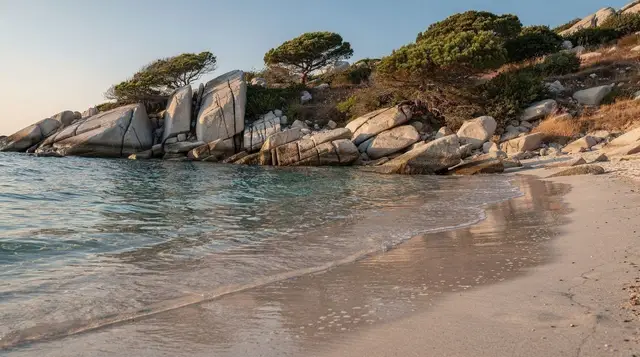
Cala Brandinchi and Lu Impostu, San Teodoro's twin sandbars
Do I need to book Cala Brandinchi in advance?
In peak season, yes for a guaranteed spot — the municipality caps daily visitor numbers and holidaymakers are encouraged to reserve online ahead of time. Lu Impostu, the dune-backed beach immediately north, has no such cap and is the practical fallback when Brandinchi fills up.
Cala Brandinchi earned the nickname “Little Tahiti” for the obvious reasons: white sand, shallow turquoise shallows that stay swimmably warm well into a child’s depth, and a backdrop of umbrella pines rather than concrete. It’s also, as a direct result of that reputation, one of the busiest beaches on Sardinia’s northeast coast, which is why San Teodoro council introduced a daily visitor cap for the peak weeks of summer. Lu Impostu, the longer dune-backed beach a short walk to the north, takes the overflow — and for a lot of visitors, it’s arguably the better choice anyway.
| Where | San Teodoro, northeast coast, 15-20 minutes south of Olbia |
| Cost | Free; paid parking nearby, sunbed hire optional |
| Time needed | Half a day to a full day |
| Getting there | Car from San Teodoro or Olbia; limited summer bus service |
| Best time | June and September for warmth without the cap being an issue |
Two beaches, one dune system
Cala Brandinchi and Lu Impostu sit either side of a low headland and share the same shallow, sheltered bay geology, which is why both have the same pale sand and gentle shelving that makes them so popular with families. Brandinchi is the smaller, more photogenic of the two — a compact crescent that’s easy to picture in a single frame, which is exactly why it ends up on so many “best beaches in Sardinia” lists and, in turn, why it fills up fastest. Lu Impostu stretches for close to a kilometre, backed by protected dunes, and simply has more physical space to absorb a busy August day.
Why San Teodoro turned into a resort town
San Teodoro was a modest fishing and farming settlement until well into the second half of the twentieth century, developing later as a tourist destination than either Olbia to the north or the established resorts of the Costa Smeralda. That later start is part of why it still reads as more genuinely lived-in than some of the northeast’s more manufactured resort towns — a working harbour, a permanent local population, and a town centre that functions year-round rather than shuttering completely outside summer.
The beaches themselves were largely undeveloped until tourism infrastructure caught up in the 1980s and 90s, which is also roughly when Cala Brandinchi’s international reputation as “Little Tahiti” began to take hold in travel writing and, eventually, on social media.
The Cala Brandinchi access cap
San Teodoro’s municipality manages Cala Brandinchi as a protected coastal area, and during the busiest weeks of July and August it caps the number of visitors allowed on the beach at any one time to protect the dune vegetation and keep the beach from becoming unusably crowded.
In practice this has meant an online reservation system for guaranteed access during peak dates, alongside free walk-in access outside those hours or the cap simply not being reached — the exact mechanism and dates are set by the comune each season, so checking San Teodoro’s official tourism site before you go is the only reliable way to know current rules. See Sardinia’s beach access quotas for how this compares with La Pelosa’s stricter paid system and Cala Goloritzè’s booking platform.
Lu Impostu: the practical alternative
Lu Impostu has no quota system, more parking capacity, and — because of its length — noticeably lower density even on the busiest days. The dunes behind it are protected and off-limits to walking, but wooden boardwalks provide beach access without damaging the vegetation, a common setup across Sardinia’s protected beaches. The trade-off is a slightly more exposed, windier feel than Brandinchi’s more sheltered crescent, which some visitors actually prefer for the cooling effect in peak summer heat.
Getting there and parking
Both beaches are a short, well-signed drive from the centre of San Teodoro, with paid car parks (typically a few euros for a full day) serving each. A limited summer shuttle bus connects San Teodoro town to the beaches in peak season, useful for visitors staying centrally without a car, though renting a car in Sardinia remains the more flexible option for reaching the wider northeast coast, including Tavolara views and the boat departures further along the shore. Driving times on this stretch are short compared with the rest of the island, but the same 60km/h realistic average applies once you’re off the SS131 corridor — see driving in Sardinia.
Beyond the sand: boat trips into the Tavolara archipelago
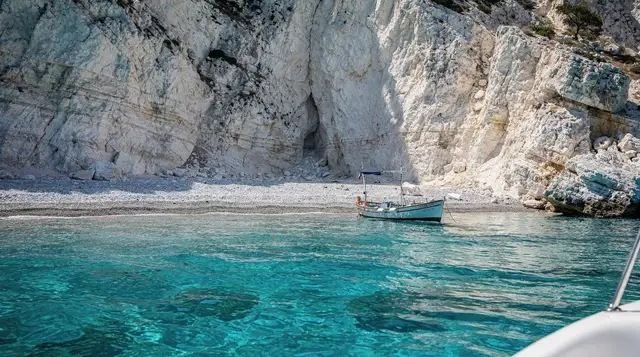
San Teodoro’s real advantage over other northeast beach towns is what’s just offshore: the limestone massif of Tavolara and the smaller island of Molara, both part of a marine protected area with some of the clearest snorkelling water on this side of Sardinia. A dinghy excursion out to both islands is one of the more efficient ways to combine a beach morning at Brandinchi or Lu Impostu with an afternoon on the water:
Tavolara and Molara islands dinghy excursion from San TeodoroFor a calmer, lower-cost option, a guided snorkelling trip focuses specifically on the shallow rock pools around Molara:
Snorkelling at Molara’s natural pools from San Teodoro or PuntaldiaAnd for something that pairs well with either beach as an evening finish, a sunset kayak tour with a stop for snorkelling and a local aperitif runs directly from San Teodoro’s shore:
Sunset kayak tour with snorkelling and aperitif, San TeodoroSee Tavolara boat tours for the fuller range of operators and departure points if you want to plan the boat half of the day separately from the beach half.
The dune system, and why it’s protected
Both beaches sit behind a genuine, still-functioning dune system, held together by marram grass and juniper scrub whose root systems are what keep the sand in place against the near-constant northeasterly wind that shapes this stretch of coast.
Dunes like these are increasingly rare on Sardinia’s more developed beaches, where decades of unrestricted trampling flattened equivalent systems elsewhere on the island; San Teodoro’s decision to fence and boardwalk the Lu Impostu dunes specifically, rather than let informal paths multiply, is a big part of why the beach still looks the way it does. Walking off the marked boardwalks, even for a shortcut of a few metres, damages root systems that take years to recover — which is the practical reason behind a rule that can otherwise feel like unnecessary bureaucracy on a hot day.
Snorkelling and the water off Tavolara
The clearest water in the San Teodoro area isn’t directly off Brandinchi or Lu Impostu — both have a sandy, gently sloping seabed better suited to swimming than snorkelling — but a short boat ride away around Tavolara and Molara, where rocky reefs and the marine protected area’s fishing restrictions have kept marine life noticeably richer. A dedicated snorkelling trip to Molara’s natural pools is one of the more accessible ways to see that difference in a single morning, departing directly from the San Teodoro coast rather than requiring a longer transfer:
Tavolara archipelago dinghy grand tour from San TeodoroFood and where to eat nearby
San Teodoro town, a short drive from both beaches, has a proper range of restaurants for a place this size — a reflection of its status as one of the northeast’s more established resort towns rather than a purely seasonal beach stop.
Fresh fish and seafood pasta dominate most menus close to the harbour, while a handful of more traditional Sardinian trattorie inland from the seafront serve the malloreddus and porceddu found across the island; Sardinian food and wine and what to eat in Sardinia cover the wider culinary picture if this is one stop on a longer trip. Neither beach has more than a seasonal kiosk directly on the sand, so a proper meal means the short drive back into town.
A realistic day plan
Arrive at Brandinchi or Lu Impostu for the morning, before 10am if you want a guaranteed spot on the smaller beach without checking the cap. Swim and relax through late morning, then either continue with a boat trip into the Tavolara archipelago in the afternoon or head back into San Teodoro for lunch — the town has a proper range of restaurants for a beach town this size, reflecting its status as one of the northeast’s more established resorts. For where else to base a longer northeast stay, Olbia and Costa Smeralda are both within easy reach; see day trips from Olbia for how San Teodoro fits into a wider northeast itinerary.
Why San Teodoro is different from a Costa Smeralda beach town
San Teodoro sits just south of the Costa Smeralda proper, close enough to reach in a short drive but priced and paced quite differently — a genuinely working resort town rather than a curated luxury enclave, with a livelier, more accessible restaurant and bar scene that doesn’t carry the same premium as Porto Cervo just up the coast.
That makes it a popular base for visitors who want easy access to the northeast’s beaches and the Tavolara archipelago without committing to Costa Smeralda pricing for every meal and drink. Is the Costa Smeralda worth it covers that comparison from the other direction, and north versus south Sardinia has the wider regional context.
Getting further afield: Olbia and the rest of the northeast
San Teodoro’s location, roughly 20-25 minutes south of Olbia, makes it a convenient base for exploring the wider northeast coast without constant repacking. Olbia’s airport handles a large share of Sardinia’s summer flight traffic, making San Teodoro a realistic first- or last-night stop for visitors flying in or out rather than only a mid-trip beach stop. Day trips from Olbia covers how San Teodoro and the Tavolara archipelago fit alongside Costa Smeralda and the inland Gallura countryside for a longer stay based in the northeast.
When to go
June and September are, as with most of Sardinia’s quota-affected beaches, the sweet spot: swimmable water, far less pressure on the Brandinchi cap, and considerably easier parking. July and August bring warmer water and a livelier town but also the highest chance of the quota mattering. Outside the main season the beaches themselves remain freely accessible but the water is a cold-swim proposition rather than a lounging one; see best time to visit Sardinia for the island-wide picture.
Water quality and Blue Flag status
San Teodoro’s beaches, including Cala Brandinchi and Lu Impostu, sit within a stretch of coastline that has repeatedly earned Bandiera Blu (Blue Flag) recognition in recent years, the European standard covering water quality, safety provision and environmental management. In practice this means regular water testing through the season and a baseline level of beach management — marked swimming zones, some lifeguard coverage in peak months — that isn’t guaranteed at every beach on the island.
It’s not a reason on its own to choose Brandinchi or Lu Impostu over another northeast beach, since several nearby stretches hold the same standard, but it’s a useful data point for anyone weighing water quality specifically, particularly when travelling with young children who’ll be in the shallows for hours at a time.
Frequently asked questions about Cala Brandinchi and Lu Impostu
Is Cala Brandinchi free to visit?
Yes, the beach itself is free — the access cap limits numbers rather than charging an entry fee, and parking is the only cost most visitors encounter.
Which beach is better for young children?
Both work well thanks to the shallow, gently shelving sand, but Lu Impostu’s extra space makes it slightly easier to manage with small children in peak summer, since there’s less pressure to arrive early to secure room.
Can I walk between Cala Brandinchi and Lu Impostu?
Yes, they’re connected by a short coastal path over the headland separating them, an easy 10-15 minute walk.
Is there shade at either beach?
Some natural shade from umbrella pines exists at Brandinchi in particular; Lu Impostu is more exposed. Both allow rented sunbeds with umbrellas in season.
What’s the best way to see Tavolara without a full boat charter?
A shared dinghy excursion or guided snorkelling trip from San Teodoro is the most cost-effective option, typically running a few hours rather than a full day.
Do I need a car to reach these beaches from Olbia?
A car is the most practical option — the drive is short, roughly 20-25 minutes — though a summer bus service does connect Olbia and San Teodoro if you’re travelling without one.
Is San Teodoro worth staying in rather than just visiting for the day?
Yes for a lot of visitors — its proximity to Olbia airport, the Tavolara archipelago and both beaches makes it a practical, less expensive base than the Costa Smeralda proper, without sacrificing much in the way of restaurants or atmosphere.
Why are the dunes at Lu Impostu fenced off?
The dune vegetation’s root systems hold the sand in place against the area’s near-constant wind; walking off the marked boardwalks damages that system and slows its recovery, which is why access is restricted to specific paths.
Beach & coastal tours on GetYourGuide
Verified deep-linked GetYourGuide tours. Book through these links and we earn a small commission at no cost to you.
These are our own photographs of Sardinia, not the operator's pictures of this tour — open the tour page to see those.