Is the Costa Smeralda worth it
Is the Costa Smeralda worth visiting if I'm not on a luxury budget?
Yes, for a single day trip — the granite coastline itself is genuinely beautiful and much of it is free to access. It's a harder sell as a multi-night base, where accommodation, restaurant and beach club prices run 30-50% above the rest of Sardinia for a broadly similar coastline elsewhere.
The Costa Smeralda has the strongest brand recognition of any part of Sardinia — decades of celebrity yacht photos and glossy magazine spreads have made it synonymous with the island itself for a lot of travellers who’ve never been. That reputation comes with prices to match, and the honest question worth asking before committing several days and a large chunk of your budget to it is whether the coastline actually delivers something you can’t get elsewhere on the island for considerably less.
| The Costa Smeralda | The honest comparison | |
|---|---|---|
| The coastline | Genuinely attractive pink granite coves | Comparable scenery exists elsewhere for less |
| Accommodation | 30-50% above island average in peak season | Similar quality nearby in Olbia costs less |
| Beach access | Free at many beaches, paid clubs at the best-known ones | Free public sand alongside every paid club |
| What you’re really paying for | Polish, brand, marina infrastructure | Not necessarily better beaches than elsewhere |
What the Costa Smeralda actually is
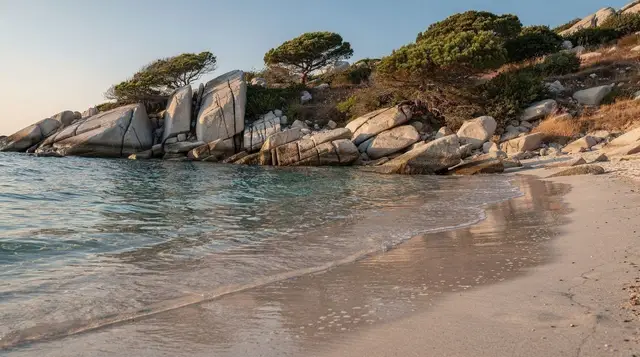
Developed from the early 1960s by a consortium led by the Aga Khan, the Costa Smeralda transformed a then-undeveloped stretch of coast around Porto Cervo into a purpose-built luxury resort area, with strict architectural rules that still govern building today — low-rise, muted colours, no visible advertising. That deliberate design is part of why it still looks polished rather than overbuilt, unlike some resort coastlines elsewhere in the Mediterranean. The granite coastline itself, with coves like Spiaggia del Principe, is genuinely beautiful — smooth pink-tinged rock formations and clear turquoise water that are not marketing exaggeration.
What you’re actually paying extra for
The honest answer is: infrastructure, brand and density of high-end services, not necessarily better beaches than you’ll find elsewhere on the island. A sunbed at a beach club near Porto Cervo runs €40-80 for the day in August; restaurant mains commonly run €35-55; and hotel rooms in peak season frequently exceed €400-600 a night for properties that would cost half that with similar quality in Olbia 20 minutes away. You’re paying for marina moorings full of serious yachts, boutiques carrying the same brands you’d find in Monaco, and a general atmosphere of polish — genuinely appealing to some travellers, and simply unnecessary spending to others who came to Sardinia for the coastline rather than the retail.
What the free alternative looks like
Much of the Costa Smeralda coastline is, in fact, freely accessible — Italian law guarantees public beach access, and plenty of coves have long stretches of sand with no club at all, just bring your own umbrella and towel. Our Costa Smeralda beaches guide points to the specific free stretches alongside the paid clubs at each beach.
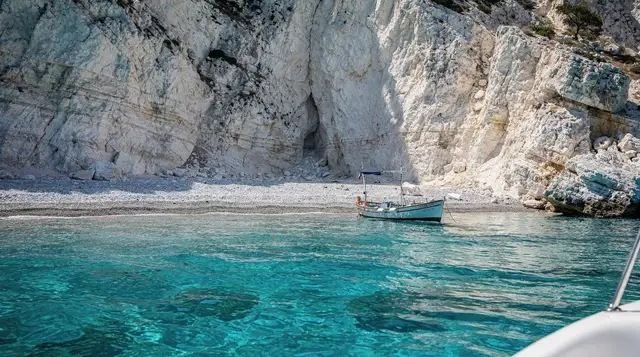
Boat tours are another way to see the coastline’s best angles without the marina-side spending — the private boat tour with snorkelling and the half-day guided tour of Costa Smeralda from Olbia both cover the coastline’s coves from the water at a fraction of what a beach-club day would cost.
Comparing the coastline itself to alternatives
Scenically, the Costa Smeralda’s granite coves are attractive but not objectively superior to the north-west’s coastline around Capo Caccia, or the Gulf of Orosei’s limestone cliffs further south, both covered in depth in our Costa Smeralda versus the Gulf of Orosei comparison. If your priority is raw natural scenery rather than infrastructure and brand, those alternatives deliver comparably or more dramatically for considerably less money.
Who genuinely gets value from staying longer
Travellers specifically drawn to yacht culture, high-end shopping and a concentrated luxury-resort atmosphere do get real value from a multi-night Costa Smeralda stay — that’s precisely what the area was built to deliver, and it does it well within its category. Anyone celebrating a special occasion with a clear budget for the experience, or simply wanting a few days of that specific atmosphere, will find it delivers on the brand. The Costa Smeralda genuinely isn’t a scam or an empty facade — it’s a well-executed luxury product that happens to be priced like one.
Who should skip staying overnight
If your budget is closer to mid-range, or the trip’s priority is maximising beach and scenery time rather than marina culture and shopping, staying elsewhere and visiting for a day makes far more financial sense. Basing in Olbia or Palau keeps you within 20-30 minutes of the same coastline at a fraction of the accommodation cost, and both towns give easier access to La Maddalena and the wider north-east coast beyond just the Costa Smeralda strip.
A detailed price breakdown
To make the “worth it” question concrete rather than abstract, here’s what a genuine day and a genuine overnight stay actually cost in August 2026 terms.
| Item | Costa Smeralda (Porto Cervo) | Olbia (20-30 min away) |
|---|---|---|
| Double hotel room, peak season | €400-700/night | €150-280/night |
| Beach club sunbeds for two | €80-150/day | €20-40/day at a comparable standard |
| Dinner for two, mid-range restaurant | €140-220 | €70-110 |
| Coffee and pastry, marina café | €12-18 for two | €6-9 for two |
| Boutique shopping | International luxury brand pricing | Standard Italian retail pricing |
The gap on accommodation and dining alone typically runs 2-3x for a broadly comparable standard of comfort, and it’s this compounding effect across several nights — not any single purchase — that makes the Costa Smeralda a genuinely expensive multi-night choice relative to basing just outside it.
Shopping and the marina scene
Porto Cervo’s boutique strip carries the same roster of international luxury houses you’d find in Milan, Monaco or St Tropez, and browsing it costs nothing — it’s a legitimate part of the area’s appeal even for visitors with no intention of buying anything. The yacht-watching along the marina is similarly free and, depending on your interests, one of the more genuinely entertaining people-watching spots on the island during peak season, when some serious vessels moor there. If shopping and yacht culture are part of what you’re curious to see, a day trip delivers this experience fully without needing an overnight stay to justify it.
How the history shapes what you’ll actually find
Because the entire area was master-planned rather than organically grown, the Costa Smeralda lacks the layered, centuries-deep history you’ll find in towns like Alghero or Bosa — there’s no old town, no medieval quarter, no long local backstory beyond the last sixty-odd years.
This matters for expectation-setting: visitors hoping for an authentic historic Sardinian town alongside the beaches will find Porto Cervo and Porto Rotondo feel more like a designed resort than a real Italian town, because that’s precisely what they are. If that authentic-town experience matters to your trip, look to San Pantaleo a short drive inland, a genuine hill village with a real, un-manufactured Sardinian atmosphere and a well-regarded Thursday market.
Families and the Costa Smeralda
Families weighing whether to base here should know that while the beaches themselves are calm and generally good for children, the area’s restaurants and general atmosphere skew adult and formal in the evenings, particularly in Porto Cervo itself. Family-oriented resorts do exist along the coast, and the half-day guided tour of Costa Smeralda from Olbia works well as a family day trip without committing to the area’s evening pricing and atmosphere for the whole stay. See our Sardinia with kids guide for broader family-trip planning across the island.
The nightlife and atmosphere question
Porto Cervo’s nightlife scene — beach clubs, late-night bars, some genuinely famous venues — is a real draw for a certain type of trip and does deliver a level of polish and energy you won’t easily find elsewhere on the island. If that specific scene is a priority, staying closer, even for just a night or two, avoids a late drive back. Our nightlife in Sardinia guide covers how the Costa Smeralda’s scene compares with Cagliari’s, which is larger and considerably more affordable, if that’s the deciding factor.
Booking timing and shoulder-season value
Prices on the Costa Smeralda swing more dramatically by season than almost anywhere else on the island. June and September see meaningfully lower hotel and restaurant pricing than the July-August peak, often 30-40% below the top of the range, while the weather remains genuinely warm enough for swimming. If a Costa Smeralda stay appeals but the peak-season price doesn’t, shifting your dates even two or three weeks either side of the school-holiday peak changes the value calculation considerably. Booking well ahead also matters here more than most parts of Sardinia — the area’s limited hotel stock relative to demand means the best-value rooms at any given price point disappear early, particularly for August.
Comparing to other Mediterranean luxury coastlines
Positioned against St Tropez, the Amalfi Coast or Mykonos, the Costa Smeralda is genuinely competitive on both scenery and, in some respects, value — its beaches are less crowded and its coastline arguably less developed than any of those three, despite carrying similar pricing at the top end. If you were already considering one of those destinations for a luxury coastal trip, the Costa Smeralda holds up well in the comparison and offers a genuinely different, distinctly Sardinian character rather than feeling like an imitation of the others. This context matters for the “worth it” question: relative to its actual luxury-coastline peers rather than to the rest of Sardinia, the Costa Smeralda’s pricing is not unusual.
A realistic one-day plan
Arrive by mid-morning, park near Porto Cervo and walk the marina and the small piazzas built into the hillside above it — genuinely worth seeing even without spending anything.
Head to one of the free stretches of Spiaggia del Principe or a nearby cove for a few hours’ swimming with your own gear, then book an afternoon boat trip like the sunset aperitif cruise from Porto Rotondo to see the coastline from the water as the light turns gold. Head back to your Olbia or Palau base for a considerably cheaper dinner. This covers the coastline’s genuine highlights for a fraction of what a multi-night stay would cost.
Frequently asked questions about whether the Costa Smeralda is worth it
Is the Costa Smeralda overrated?
Not entirely — the coastline itself earns its reputation scenically. What’s overrated is the idea that you need to stay there overnight to experience it properly; a day trip covers the highlights well.
Are there free beaches on the Costa Smeralda?
Yes — Italian law guarantees public beach access, and most coves have a free public stretch alongside any paid beach club section.
Is Porto Cervo worth visiting even without a big budget?
Yes, for a walk around the marina and piazzas — it costs nothing to look, and the setting and architecture are worth seeing regardless of whether you spend anything there.
How does the Costa Smeralda compare to the Amalfi Coast on price?
Broadly comparable at the high end, though the Costa Smeralda has more genuinely free beach access than the Amalfi Coast’s more built-up, less naturally accessible coastline.
Is a boat tour a good budget alternative to a beach club day?
Yes — a shared boat tour covering several coves typically costs less than a single day at a beach club with sunbeds and lunch, while showing you more of the coastline.
Should I stay on the Costa Smeralda for a honeymoon?
It’s a reasonable choice if the luxury-resort atmosphere specifically appeals and budget isn’t the deciding factor; if it is, Olbia or Palau offer nearly the same coastline access for considerably less.
Is the Costa Smeralda busy outside July and August?
Noticeably quieter, and prices drop meaningfully in June and September while the weather remains warm — a better-value window if your dates are flexible.
What’s the biggest misconception about the Costa Smeralda?
That the beaches themselves are somehow better than elsewhere on the island. They’re beautiful, but comparably beautiful coastline exists around Alghero and the Gulf of Orosei for considerably less money.
Is it worth renting a boat to explore the Costa Smeralda independently?
For confident, experienced boaters, yes — many smaller boats can be rented without a licence, covered in our renting a boat without a licence guide, and it gives you full control over which coves to visit and for how long.
Does the Costa Smeralda get overcrowded in peak season?
The best-known beaches and Porto Cervo’s marina do get busy, though less so than more built-up Mediterranean resort areas — arriving early in the day still finds real space at most coves.
Is San Pantaleo a good alternative for a more authentic experience nearby?
Yes — it’s a genuine hill village a short drive inland with a real local atmosphere, a well-regarded weekly market, and considerably lower prices than the coastal resorts, while still being close enough for an easy coastal day trip.
Honest planning tips on GetYourGuide
Verified deep-linked GetYourGuide tours. Book through these links and we earn a small commission at no cost to you.
These are our own photographs of Sardinia, not the operator's pictures of this tour — open the tour page to see those.