Porto Cervo is the village the Aga Khan’s consortium built as the showpiece of the whole Costa Smeralda project, and more than sixty years later it’s still doing exactly the job it was designed for. The marina holds some of the largest privately owned yachts in the Mediterranean every August, the shopfronts above it read like a Milan fashion week guest list, and the Piazzetta — a small, stepped square wedged between the harbour and the hillside — has been the coast’s see-and-be-seen spot since the 1960s.
None of that means it’s essential viewing, and it’s worth being upfront about who it’s actually for. If you’re not staying on a boat or in one of the marina hotels, Porto Cervo is a look-around destination rather than a place to build a day around — genuinely worth an hour or two, genuinely expensive the moment you sit down anywhere, and easily paired with a cheaper base a short drive inland.
| What | Where | How long | When to go |
|---|---|---|---|
| The marina and superyachts | Porto Cervo harbour | 30–60 minutes | June–September for the biggest boats |
| The Piazzetta | Above the marina, central Porto Cervo | 30–60 minutes | Evenings, June–August |
| Designer boutiques | Piazzetta and Promenade du Port | 1–2 hours | Year-round, most close October–April |
| Cheaper meal alternative | Cannigione or Arzachena, 15–20 minutes away | Half day | Year-round |
A short history: how a rocky headland became this
Before the Aga Khan’s consortium arrived in 1962, this stretch of coast had essentially no infrastructure — no proper road, no running water for much of it, just granite headlands and a scattering of shepherds’ summer huts. The master plan that created Porto Cervo dictated everything from roof pitch to paint colour, deliberately avoiding straight lines and uniform blocks to make the village look like it had grown organically over centuries rather than been built in a single decade. It worked well enough that first-time visitors often assume the Piazzetta is genuinely old.
The marina followed in stages through the 1960s and 70s, expanding as the yachts calling here got larger, and today it’s one of the few Mediterranean marinas equipped to berth vessels over 100 metres. The Costa Smeralda Yacht Club, founded in 1967, still runs the Maxi Yacht Rolex Cup regatta out of Porto Cervo every September, which is worth timing a visit around if racing yachts interest you more than shopping does.
The marina and the Piazzetta
Walking the marina promenade costs nothing and is genuinely the best free activity in Porto Cervo — even without any interest in boats, the sheer scale of some of the vessels moored here in August is worth seeing once. The Piazzetta itself, a tight cluster of steps and terraces above the harbour, is where the evening scene concentrates: outdoor tables at the cafés here charge €8 to €12 for an espresso and considerably more for a cocktail, which buys you people-watching as much as a drink.
The boutiques lining the Piazzetta and the Promenade du Port read like a directory of European luxury houses — Prada, Gucci, Loro Piana and similar, most open only from roughly May to September and shuttered the rest of the year. Even if buying anything is off the table, the window displays and the crowd they draw are part of what Porto Cervo is actually selling, and there’s no charge for looking.
a guided tour of Porto Cervo and the wider Costa Smeralda with hotel pickup included is a sensible option if you’d rather not deal with parking, which is genuinely difficult near the marina in peak season and costs €4 to €6 an hour where it’s available at all.
Seeing the coast from the water
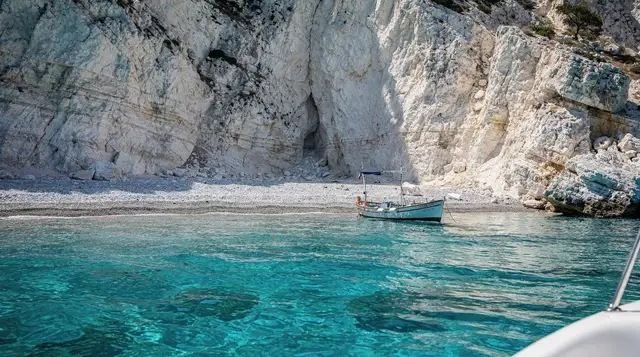
Porto Cervo’s own beaches are limited — most of the well-known coves like Liscia Ruja and Capriccioli sit a short drive south, covered in our best beaches in Costa Smeralda guide — but a boat trip departing nearby is the easiest way to see them without fighting for parking. a RIB boat tour of Porto Cervo’s beaches departing Porto Rotondo covers several coves in a few hours and gets you swimming in bays that have no road access at all.
For a broader look at boat trip formats and pricing across the whole coast, our Costa Smeralda boat tours guide compares group sizes, durations and what’s actually included, since the marketing photos for most of these trips look near-identical and the real differences are in the details.
Nearby villages that do the same coast for less
Fifteen minutes inland, San Pantaleo offers a genuinely different, and cheaper, version of the same granite-and-pine Gallura scenery, with a well-regarded Thursday craft market and restaurant prices well below the marina front. It’s the village several Porto Cervo hotel staff will quietly recommend for dinner on a night off, which tells you most of what you need to know about the price gap between the two.
Cannigione works similarly — a small working harbour town on the Golfo di Arzachena rather than a resort village, with fresh seafood at honest prices and a much shorter walk from your parking spot to your table. Porto Rotondo, a few kilometres south, offers a scaled-down version of Porto Cervo’s own marina glamour for travellers who want yacht-watching without quite the same price tag, and is also where several of the RIB boat tours to Porto Cervo’s beaches actually depart from.
Getting there, and where to actually eat
Olbia Costa Smeralda airport is roughly 30 to 40 minutes’ drive, longer in August traffic on the SS125. a standard airport transfer between Olbia airport and Porto Cervo is worth booking ahead if you’re staying at a hotel here and don’t want to deal with car hire logistics on arrival day; a business-class version with a larger, more comfortable vehicle is also available for the same route if you’re travelling with more luggage or as a small group.
Eating on the marina front in Porto Cervo means paying resort prices — a simple pasta dish can run €25 to €30, and a full dinner with wine easily clears €80 to €100 a head. The honest workaround, which plenty of people staying nearby already use, is to drive 15 to 20 minutes to Cannigione or Arzachena for a meal at roughly half the price and comparable quality — our guide to where to eat in Sardinia by area covers this trade-off across the whole island, not just here.
Frequently asked questions about Porto Cervo
Do I need to dress up to visit the Piazzetta?
Not strictly, but smart-casual fits the scene better than beachwear — most cafés and boutiques expect covered shoulders and shoes rather than flip-flops, particularly in the evening.
Is parking difficult in Porto Cervo?
Yes, especially in July and August. Paid car parks near the marina fill by midday, and street parking is scarce; arriving before 10am or booking a transfer avoids the problem entirely.
Are there budget-friendly places to eat right in Porto Cervo?
A handful of takeaway and casual spots away from the marina front charge closer to €10 to €15 for a light meal, but for a proper sit-down dinner at reasonable prices, driving to Cannigione or Arzachena is the better move.
When do the yachts in the marina look their best?
Late July through August, when the largest superyachts are moored for the season and the Maxi Yacht Rolex Cup regatta brings racing boats into the harbour in September.
Is Porto Cervo open and lively outside summer?
No, not really. Many boutiques, restaurants and hotels close between October and April, and the marina itself is far quieter — visit June to September for the full experience.
Can I visit Porto Cervo without a car?
It’s difficult without one, since public transport along the Costa Smeralda is limited. Most visitors either drive, book a private transfer, or arrive on an organised tour from Olbia.
Is it worth staying overnight in Porto Cervo, or better as a day visit?
For most travellers, a day visit is the better move. Hotel rates inside Porto Cervo run well above the Sardinia average, and bases like Olbia, San Pantaleo or Cannigione put you 15 to 40 minutes from the marina at a fraction of the cost.
What’s the September regatta everyone mentions?
The Maxi Yacht Rolex Cup, hosted by the Costa Smeralda Yacht Club since 1980, brings large racing yachts into Porto Cervo’s waters each September — a good time to visit if you’re specifically interested in sailing rather than shopping.
Is the Costa Smeralda as a whole worth building a trip around?
It’s a fair question, and our honest take in is the Costa Smeralda worth it covers the wider coastline beyond just Porto Cervo — short version: worth a day or two, not the whole trip. Combining it with a wider first visit works well too, as in our 3-day Olbia and Costa Smeralda itinerary.