How to avoid the crowds in Sardinia
How do you avoid crowds in Sardinia?
Travel in June or September rather than July-August, arrive at quota beaches like La Pelosa before 9am, book boat trips to coves that have no road access, and treat weekends near Cagliari and the Costa Smeralda as the busiest days of the week, not just the summer months as a whole.
Sardinia isn’t crowded the way Venice or the Amalfi Coast are crowded — there’s no single choke point where everyone converges. The problem is narrower and more specific: a handful of famous beaches, ports and old towns get genuinely uncomfortable for about eight weeks a year, while the rest of the island barely notices the difference between June and February. Knowing which eight weeks, which beaches, and which two or three hours of the day matters more than any general rule about “avoiding summer”.
| Worst crowding | Last two weeks of July through the third week of August |
| Worst spots | La Pelosa, Cala Goloritzé, Costa Smeralda ports, Poetto on weekends |
| Best fix | Shift to June or September, or go before 9am / after 5pm at the famous beaches |
| Backup plan | Reach quieter coves by boat instead of by road |
| Still busy off-season | Sant’Efisio (Cagliari, 1 May) and the Sartiglia (Oristano, carnival) draw crowds regardless of month |
Why Sardinia gets crowded in July and August
Italian school holidays run from early June to mid-September, but the real squeeze is Ferragosto — the week around 15 August, when the whole of Italy takes its main summer break at once. Add French, German and Swiss visitors on the same calendar and you get roughly six weeks, from mid-July to the first week of September, where car ferries need booking months ahead, restaurants in Porto Cervo and Alghero’s old town turn away walk-ins, and the access-controlled beaches sell out their daily quota before 10am.
Outside that window, even in high summer by other Mediterranean standards, Sardinia is genuinely manageable. Sardinia in July and August breaks down exactly what to expect week by week if those dates are unavoidable, and best time to visit Sardinia covers the trade-offs across the full year.
Shift two or three weeks either side of peak
The single most effective move is timing, not tactics. June — specifically after the 10th, once the water has warmed up but before Italian schools break up — gives you the same 28-30°C sea temperatures as August with a fraction of the people. September is even better: the sea holds its heat well into October, the light softens, and the beach bars and boat operators that survive to the end of the month do so because business is still worth having, just without the queues.
Sardinia in June and Sardinia in September go into the specifics of what’s open and what the sea temperature actually is, week by week. May works for hiking and archaeology but the sea is still cool for most visitors — see Sardinia in May if a spring trip is on the table instead.
Get to quota beaches before 9am, not after breakfast
La Pelosa near Stintino caps entries at around 1,500-1,600 people a day and the online booking slots for July and August routinely sell out a week or more in advance. The trick that guidebooks rarely spell out clearly: the daily quota resets each morning, and a meaningful share of visitors don’t arrive until mid-morning after breakfast at their hotel. Turning up at opening time — the beach opens around 9am in peak season — means shorter queues at the ticket booth and a beach that’s still two-thirds empty, even in August.
The same logic applies at Cala Goloritzé and Cala Mariolu, both reachable only by boat or a long hike, where the first boats of the day land on sand that photographs completely differently from the same spot at 1pm. Sardinia beach access quotas lists every quota beach on the island with current booking links, and La Pelosa beach guide covers the booking process step by step.
Use boats to reach coves that cars can’t
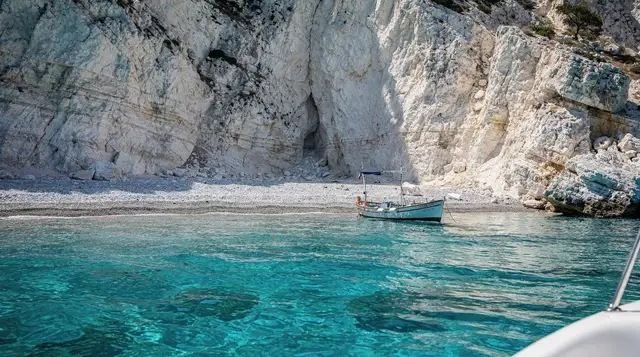
Sardinia’s most photographed coastline — the Golfo di Orosei between Cala Gonone and Baunei — has no coast road at all. Every visitor who isn’t hiking the multi-day Selvaggio Blu trail arrives by boat, which means the crowding pattern is completely different from a road-accessible beach: it’s capped by how many boats operate that day, not by how many cars can fit in a car park. Arbatax, further south on the same coast, gives a quieter departure point for the same stretch of water.
Boat tour from Arbatax to Cala Goloritzé and Cala MarioluThe same principle works around Alghero on the north-west coast: the Porto Conte and Capo Caccia coves are largely inaccessible by road, so a boat trip reaches sheltered water and pale limestone cliffs that the beach-going crowds queuing for La Pelosa never see.
Alghero hidden coves boat tour with aperitif and snorkellingAlghero Capo Caccia boat trips and Gulf of Orosei boat trips cover operators, prices and what each route actually shows you in more depth.
The Costa Smeralda is crowded by design — go elsewhere for quiet
The Costa Smeralda around Porto Cervo and Porto Rotondo was built for a specific kind of visitor and does exactly what it’s meant to in August: yacht traffic, full marinas, restaurants that need booking days ahead. If the goal is avoiding crowds rather than being seen, this stretch of coast in peak season isn’t the place, regardless of how the guidebooks photograph it. Is the Costa Smeralda worth it makes the honest case for and against, and quiet beaches in Sardinia lists genuine alternatives elsewhere on the island that don’t get the same attention.
A sunset sailing trip out of Alghero, on the opposite side of the island, gives a similar boat-and-aperitivo evening without the Costa Smeralda’s marina crush.
Alghero sunset sailing aperitif experienceWeekends near Cagliari and Olbia are busier than weekdays in summer
Away from the international-tourist beaches, a second, quieter crowding pattern kicks in: Sardinian residents. Poetto beach in Cagliari and the beaches around Olbia and the Gallura coast fill up with local families and day-trippers from the mainland on Saturdays and Sundays throughout summer, on top of the tourist numbers. A Tuesday visit to Poetto in July looks nothing like a Sunday visit to the same stretch of sand. If the itinerary allows any flexibility, scheduling city time — Cagliari’s old town, a museum, things to do in Cagliari — for the weekend and beach days for midweek evens out both.
Retreat inland when the coast is packed
The interior — Barbagia, the Gennargentu massif, villages like Orgosolo and Oliena — sees a fraction of the coast’s tourist numbers even in August, because it has no beaches. It’s also markedly cooler at altitude, which makes it a genuinely good escape on the hottest days rather than just an alternative. A day or two hiking around the Supramonte or visiting Orgosolo’s murals breaks up a coast-heavy itinerary and dodges the crowds entirely, rather than just finding a slightly quieter version of them.
Ferries and airports are their own kind of crowd
Crowding in Sardinia doesn’t start at the beach — it starts at the ferry port and the airport arrivals hall. Olbia’s port sees several car ferries dock within the same hour on peak summer Saturdays, the traditional changeover day for both hotel bookings and camper van rentals, which means the road out of town can back up for well over an hour before it clears. Cagliari-Elmas and Olbia Costa Smeralda airports both see a similar surge on Friday and Saturday afternoons in July and August as charter and budget flights land in clusters.
Choosing a mid-week arrival day, or simply building an extra hour into the drive away from the port or airport on a Saturday, avoids a frustration that has nothing to do with beaches at all. Ferries to Sardinia and getting to Sardinia by air both cover which routes and airports see the heaviest peak-season traffic.
Restaurants: book ahead in named towns, less so elsewhere
The restaurant-booking squeeze that guidebooks warn about is real, but it’s concentrated in a short list of places rather than being a general island-wide rule. Alghero’s old town, Porto Cervo and Porto Rotondo on the Costa Smeralda, and Cala Gonone’s harbourfront all see restaurants fully booked days ahead through the peak weeks, particularly for outdoor seating at dinner. Away from those specific spots — inland villages, the west coast around Oristano, most of the Sulcis-Iglesiente in the south-west — walking in without a reservation is still usually fine, even in August. Knowing which towns need advance planning and which don’t saves both stress and a wasted evening spent restaurant-hopping.
Alternatives to the postcard beaches, by region
Every one of Sardinia’s most-photographed beaches has a quieter equivalent nearby that rarely appears in the same “top 10” listicles. Near La Pelosa, the beaches around Argentiera further down the coast see a fraction of the visitors. Near the Costa Smeralda’s crowded coves, the beaches around Budoni and San Teodoro offer similar sand and water quality without the marina-town premium.
In the south, the coastline around Teulada gets far less traffic than neighbouring Chia, despite being a short drive further. Quiet beaches in Sardinia has the fuller regional breakdown, and overrated and underrated Sardinia makes the direct comparisons between the famous spots and their lesser-known neighbours.
A practical week that avoids the worst of it
For a concrete example: arriving on a Tuesday in early September rather than a Saturday in August already cuts ferry and airport congestion by more than half. Spending the first two days inland around the Supramonte or Barbagia, where crowding was never a factor, lets jet lag or travel fatigue settle before tackling the coast.
From there, hitting La Pelosa or a Gulf of Orosei boat trip on a weekday morning, booked a few days ahead rather than on arrival, and scheduling city time in Cagliari or Alghero for a Saturday when the beaches are busiest with local weekend visitors, keeps the whole week closer to the shoulder-season experience than the August one, even on the fixed two-week trip most visitors are working with.
Peak season vs shoulder season, side by side
| Mid-July to late August | June or September | |
|---|---|---|
| Sea temperature | 25-28°C | 22-26°C |
| La Pelosa booking window | Sells out days to weeks ahead | Usually available with a day or two’s notice |
| Restaurant bookings | Essential in Alghero, Porto Cervo, Cala Gonone | Recommended but rarely mandatory |
| Car hire prices | Highest of the year | 20-40% lower than August |
| Ferry booking | Book 2-3 months ahead for a car | 3-4 weeks is usually enough |
| Interior villages | Quiet regardless of season | Equally quiet, cooler for hiking |
When crowding isn’t about the calendar at all
Two dates crowd Sardinia regardless of what month they fall in: Sant’Efisio in Cagliari on 1 May, a procession that draws visitors from across the island, and the Sartiglia in Oristano during carnival. Both are worth seeing precisely because of the crowd, not despite it — but plan accommodation and parking well ahead if either coincides with a trip. Sardinia festivals calendar lists every date worth knowing about, crowded or not.
Frequently asked questions about avoiding crowds in Sardinia
What is the single quietest month to visit Sardinia?
October offers the fewest visitors combined with still-swimmable sea temperatures for most people; November through March is quieter still but many coastal restaurants and boat operators close for the season.
Is it worth visiting Sardinia only in August if that’s the only time available?
Yes, but book everything — accommodation, ferries, quota beaches, restaurant tables — weeks rather than days ahead, and build early starts into the itinerary for the famous spots.
Are the beaches near Cagliari always busy?
Poetto gets busy on summer weekends with local visitors as much as tourists; weekday visits, especially before 11am, are noticeably calmer.
Do boat tours to the Gulf of Orosei get fully booked in summer?
Yes, particularly departures from Cala Gonone in the first half of August; booking two to three days ahead is sensible, a week ahead is safer.
Is the north of the island less crowded than the south?
Not inherently — Alghero and the Costa Smeralda get just as busy as Cagliari and the south in peak season; crowding tracks specific beaches and towns, not broad regions.
Does travelling by ferry instead of flying avoid crowds?
No, but booking a ferry with a car well in advance avoids the separate problem of turning up to a sold-out sailing, which is its own kind of summer headache in Sardinia.
Is the interior worth visiting just to escape the coastal crowds?
Yes — villages like Orgosolo and the Supramonte hiking trails see a small fraction of coastal visitor numbers even in August, and the cooler altitude is a genuine benefit in peak summer heat.
Does arrival day matter for avoiding congestion?
Yes — Saturdays see the heaviest overlap of ferry, flight and hotel changeover traffic in peak season; arriving mid-week spreads out both the port and airport queues and the first day or two of driving.
Are there quieter alternatives to the most famous beaches?
Most of Sardinia’s headline beaches have a less-photographed neighbour nearby with similar sand and water quality — Teulada near Chia and San Teodoro near the Costa Smeralda are two straightforward examples.
Honest planning tips on GetYourGuide
Verified deep-linked GetYourGuide tours. Book through these links and we earn a small commission at no cost to you.
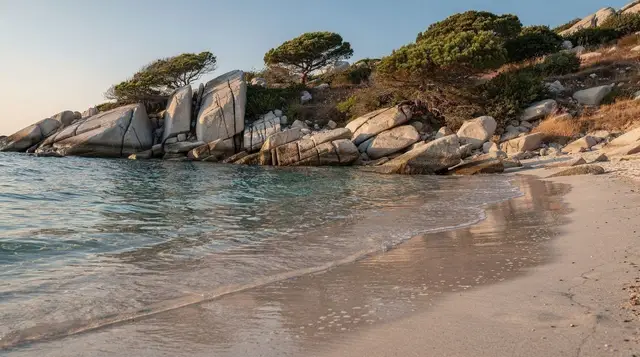
These are our own photographs of Sardinia, not the operator's pictures of this tour — open the tour page to see those.