Things to do in Cagliari
What are the best things to do in Cagliari?
Walk the hilltop Castello district for the views from its two medieval towers, spend a half-day at Poetto beach a short bus ride from the centre, and take a slow afternoon around the Molentargius saline park to see its resident flamingos — the three together cover the city's history, its beach and its wildlife in a single day.
Cagliari is the one city in Sardinia that works as a destination on its own rather than just a gateway airport. It has a genuine old town on a hill, a proper city beach a bus ride from the centre, and a wetland reserve inside the city limits where wild flamingos gather year-round — a combination that no other Sardinian town offers in one place. Most visitors give it a day between flights; two to three days lets the city actually open up.
| Where | South Sardinia, around Cagliari-Elmas airport (CAG) |
| Cost | Most sights are free to walk; guided tours run €20-45pp |
| Time needed | A full day covers the highlights; 2-3 days for the city and Poetto properly |
| Getting there | Cagliari-Elmas airport is 15 minutes from the centre; walkable old town |
| Best time | Year-round; May to October adds the beach, September avoids the worst heat |
The Castello district, on foot
Cagliari’s old town sits on a hill above the harbour, ringed by walls and reached through gates that still carry their medieval names. The two towers that define its skyline — Torre dell’Elefante and Torre di San Pancrazio — were both built in the 14th century as part of Pisan-era fortifications, and both can be climbed for views over the city and the gulf beyond. A guided walking tour through Castello’s alleys is the easiest way to get the district’s layout straight before wandering it alone.
Guided tour of the historic Castello districtThe Cattedrale di Santa Maria sits at the district’s centre, its baroque facade added centuries after the original Pisan Romanesque church beneath it — worth stepping inside for the crypt alone. For a longer, more structured overview of the whole old town rather than just Castello, a small-group city tour covers the main sights in a single morning.
Cagliari highlights small group city tourUnderground Cagliari, the city most visitors miss
Beneath Castello runs a network of tunnels, cisterns and air-raid shelters carved into the hill’s soft limestone over centuries, including a Roman-era amphitheatre-adjacent gallery and shelters used during the bombing of Cagliari in 1943. It’s the one Cagliari experience genuinely unlike anything else on the island, and it needs a guide — the tunnels aren’t open for casual wandering.
Underground Cagliari walking tourThe Cittadella dei Musei and the archaeological collection
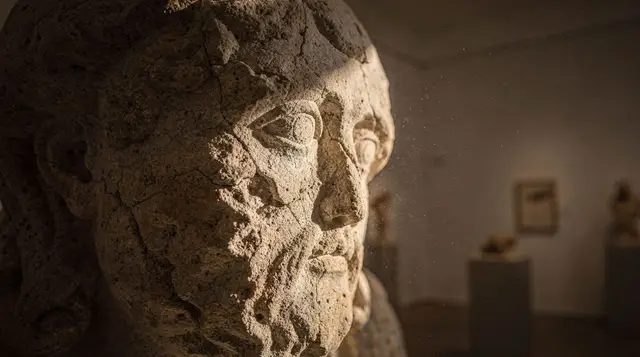
Inside Castello’s walls, the Cittadella dei Musei complex houses Cagliari’s National Archaeological Museum, the single best place on the island to see finds from across Sardinia’s nuragic sites gathered in one building rather than scattered across small local museums. The bronzetti — small bronze figurines depicting warriors, boats and everyday scenes, made by nuragic craftspeople over three thousand years ago — are the collection’s highlight, alongside a second, smaller set of the Giants of Mont’e Prama statues whose larger group is displayed in Cabras. It’s an easy hour or two indoors, useful on a day when the sun or wind rules out spending more time outside.
Villanova, Cagliari’s quieter old quarter
East of Castello, down the hill and outside the old fortified walls, Villanova is a working residential quarter that sees far fewer visitors than Castello or the Marina — narrower still in places, with its own church, Sant’Anna, rebuilt after wartime bombing damage, and a genuinely local feel that’s easy to miss if the whole visit stays inside the walls. It’s worth a slow half-hour wander for anyone who’s already covered Castello and wants to see a side of the city that isn’t built around tourism.
Poetto beach, the city’s other half
South-east of the centre, Poetto is an eight-kilometre stretch of sand that starts more or less where the city ends — bus lines run there directly from Castello in under 20 minutes, and it’s genuinely used by Cagliari residents rather than being a tourist strip. Full detail on which stretch to pick, parking, and the beach clubs versus the free sections is in Poetto beach Cagliari.
The flamingos of Molentargius
Between the city and Poetto, the Molentargius-Saline regional park is a former salt works turned wetland reserve, and it hosts a resident population of pink flamingos visible from several points around the park’s paths without needing a guide or a boat. It’s an easy, free add-on to a Poetto day — see flamingos at Molentargius Cagliari for the best viewing spots and times of day.
By e-bike or segway, for a faster overview
If two or three hours is genuinely all the time available, an e-bike or segway tour covers more ground than walking, taking in Castello, the Marina district and the seafront in a single loop.
Cagliari old town guided e-bike tourThe Marina district, for dinner
Below Castello, the Marina district is where most of the city’s restaurants concentrate — narrow streets running between the harbour and Via Roma’s arcaded frontage, worth wandering with no fixed plan around 7-8pm when the aperitivo crowd is out. Seafood dominates the menus here more than anywhere else in the city, given the harbour on the doorstep, though it’s also where to find fregola, malloreddus and the island’s other pasta staples done well without needing to drive out to a rural agriturismo. For what to actually order, see what to eat in Sardinia.
Getting around the city
Cagliari’s centre is compact enough to cover almost entirely on foot — Castello, the Marina and Villanova all sit within a 20-minute walk of each other, with the steepest stretch being the climb up into Castello itself, which has lifts (ascensori) built into the hillside at a couple of points for anyone who’d rather skip the stairs. CTM runs the city’s bus network, with tickets bought from tabacchi shops or via app rather than on board, and the same network covers the route out to Poetto. A car is genuinely more hindrance than help within the city itself, given narrow streets and limited parking, and is worth picking up only once day trips further afield are on the plan.
What a day in Cagliari costs
Cagliari is one of the more affordable stops on this coast. A morning walking Castello costs nothing beyond a coffee; the Castello guided tour or small-group city tour run €20-30pp, the underground tunnels €18-25pp, and the archaeological museum around €8-10. Bus tickets to Poetto cost around €1.50 each way, and the beach itself is free to use outside the paid beach-club sections, which typically charge €10-20 for a sunbed and umbrella for the day. A realistic full day covering Castello, a museum stop and an afternoon at Poetto runs somewhere between €35 and €60pp including transport and lunch, noticeably less than a comparable day in Alghero or on the Costa Smeralda.
When to visit
Cagliari works year-round in a way that fewer coastal towns further north manage. Winter keeps mild, low-season temperatures that suit sightseeing without the summer heat, and most of the old town’s restaurants and museums stay open through the colder months, unlike the seasonal shutdowns common along the coast further north. May to September adds Poetto into the mix properly, with July and August the busiest and hottest, when an early start on Castello before the heat builds is worth planning for. September and early October are a reasonable compromise, with warm enough water for swimming and noticeably thinner crowds than peak summer.
Sant’Efisio, if the dates line up
If visiting on 1 May, Cagliari runs Sant’Efisio, one of Sardinia’s biggest religious festivals — a procession in traditional Sardinian costume that runs from the city out to Nora and back over four days. It’s worth planning a trip around deliberately rather than stumbling into it; full detail is in Sant’Efisio festival Cagliari.
Smaller beaches beyond Poetto
Poetto isn’t the only stretch of sand within reach of the centre. Calamosca, tucked into a small cove below the Sella del Diavolo headland at Poetto’s western end, is quieter and more sheltered, reachable by a short bus ride or a longer coastal walk that takes in the headland’s views along the way. It’s a better choice than the main Poetto strip for anyone after a calmer swim without driving further afield, though it has far less in the way of bars and beach clubs.
Shopping on Via Roma and beyond
Via Roma’s 19th-century arcades run along the harbourfront at the edge of the Marina district, a mix of clothing shops, cafés and the odd souvenir stall selling Sardinian crafts alongside more generic tourist items. For anything genuinely Sardinian rather than mass-produced, the covered San Benedetto market, one of the largest in Europe, is a better stop — fresh fish, local cheese and produce rather than souvenirs, and a useful window into how the city actually shops day to day.
Day trips from the city
Cagliari’s position makes it a genuinely useful base for day trips rather than just a stopover — Nora archaeological site near Pula and Su Nuraxi di Barumini are both under an hour’s drive, and the full spread of options is covered in day trips from Cagliari. Nightlife runs later here than most of the island once the sun goes down — see nightlife in Cagliari for where it actually happens.
Where to base yourself
Castello or the Marina district both put everything on this page within walking distance, with Castello quieter after dark and Marina closer to restaurants. Quartu Sant’Elena, just east along the coast, works as a calmer alternative with easier access to Poetto’s quieter end. For a fuller comparison of Cagliari against the island’s other two main bases, see Cagliari vs Alghero vs Olbia, and for the museums worth prioritising beyond the old town itself, museums worth visiting in Sardinia. A full day-by-day plan is in 3 days in Cagliari.
| Castello | Marina | Villanova | Quartu Sant’Elena | |
|---|---|---|---|---|
| Character | Hilltop, historic, quieter at night | Restaurants, harbour, busiest evenings | Local, residential, few tourists | Coastal, calmer, closer to Poetto’s quiet end |
| Best for | History-focused stays, views | Dinner and nightlife on the doorstep | A quieter, more local base | Beach-first stays, longer visits |
| Walk to Poetto | 30-40 minutes, or a short bus ride | 25-35 minutes, or a short bus ride | 20-30 minutes, or a short bus ride | 10-15 minutes on foot in places |
| Parking | Scarce, mostly outside the walls | Limited, paid street parking | Easier than Castello or Marina | Generally easier than the city centre |
Frequently asked questions about things to do in Cagliari
Is one day enough to see Cagliari?
One full day covers Castello and the old town’s highlights, but it doesn’t leave time for Poetto or Molentargius — two days is a more realistic minimum for the fuller picture.
Do I need a car in Cagliari?
No — the old town is walkable, Poetto is reachable by bus, and day trips further afield are the only reason to consider a hire car while based in the city.
Is Poetto beach worth visiting outside summer?
The sand and the flamingo park nearby are pleasant year-round for a walk, but swimming really only makes sense from May to October.
What’s the best viewpoint over Cagliari?
Torre di San Pancrazio and Torre dell’Elefante both offer climbable viewpoints over the city and the gulf; the Bastione di Saint Remy’s terrace, free and open-air, is the easiest to reach without a ticket.
Is Cagliari safe to walk around at night?
Yes, broadly — Castello and the Marina district are well lit and busy with restaurant traffic into the evening; standard city caution applies rather than any specific risk.
How do I get from the airport into the city centre?
Cagliari-Elmas airport is around 15 minutes from the centre by taxi, bus or the ARST shuttle train; full detail is in Cagliari-Elmas airport guide.
Can I see flamingos without a tour?
Yes — Molentargius park is free to enter and walk, with flamingos visible from several public paths without needing to book anything.
What’s the best museum in Cagliari?
The National Archaeological Museum inside the Cittadella dei Musei, for its collection of nuragic bronzetti and a second set of the Giants of Mont’e Prama statues alongside the larger group displayed in Cabras.
Is Cagliari a good base for exploring the rest of Sardinia?
Yes for the south — Nora, Su Nuraxi di Barumini and the Sulcis-Iglesiente coast are all under 90 minutes away — though it’s a long drive to the north-east coast, where basing in Olbia makes more sense.
Where is the best place to watch the sunset in Cagliari?
The Bastione di Saint Remy’s terrace and the walk up toward Castello both catch a good sunset over the gulf; for a view that includes Poetto’s full length, the Sella del Diavolo headland near Calamosca is the better option, reached on foot from the Marina Piccola end of the beach.
Culture & history tours on GetYourGuide
Verified deep-linked GetYourGuide tours. Book through these links and we earn a small commission at no cost to you.
These are our own photographs of Sardinia, not the operator's pictures of this tour — open the tour page to see those.