| Where | Northwest coast, roughly 30 minutes from Alghero |
| Known for | Abandoned 19th-century silver-mine buildings on a small bay |
| Time needed | 2-4 hours; longer with a coastal walk |
| Cost | Free to visit; boat and quad tours from the Alghero-Capo Caccia area from around €40-90 |
| Best time | Late afternoon light; shoulder season for a quieter, cooler visit |
A mining village the sea never fully reclaimed
Argentiera takes its name directly from its purpose: argento means silver, and this small bay was mined for silver and lead-zinc ore from Roman times through to the mine’s closure in 1963. What’s left today is one of the more striking pieces of industrial archaeology in Sardinia — the mine’s processing buildings, workers’ housing, and washing plant sit in various states of ruin directly on the waterfront, their concrete and stone facades weathered by decades of salt air, with a genuinely dramatic backdrop of cliffs and sea behind them.
Unlike most abandoned industrial sites, Argentiera hasn’t been fenced off and forgotten. A handful of restaurants and a small stretch of pebble-and-sand beach operate right among the ruins, so you get the unusual experience of swimming and eating lunch a few metres from a genuinely derelict 19th-century mine complex — an odd juxtaposition that photographs extremely well and gives the village a character unlike anywhere else on this coast.
Walking the ruins
The mine buildings are freely accessible for walking around and photographing, though several structures are unstable enough that you shouldn’t attempt to enter them — admiring from outside is the sensible approach, and it’s also where the best photographs come from anyway, with the full scale of the buildings visible against the cliffs. The old miners’ village above the bay is a short, easy walk and gives a good sense of how self-contained this settlement once was, with its own church, school, and housing for a workforce that at its peak numbered in the hundreds.
Interpretive information at the site is limited, so it helps to know the basics going in: mining here dates back over two thousand years, but the industrial-scale operation that left the current ruins ran mainly from the mid-19th century until the mine’s closure in 1963, after which the village was largely abandoned within a generation.
The cove and the swimming
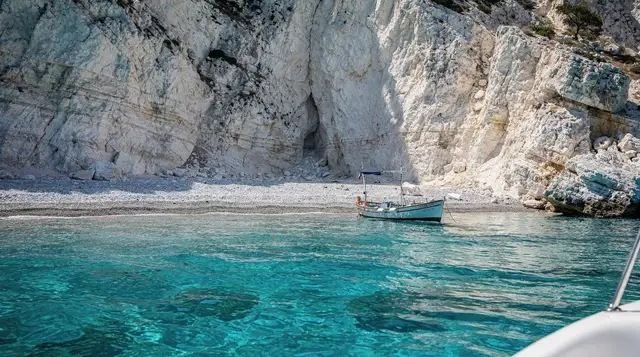
The small beach at Argentiera is a mix of sand and pebble, sheltered by the bay’s shape, and genuinely pleasant for swimming despite — or perhaps partly because of — the unusual industrial backdrop. It’s rarely crowded compared to Alghero’s beaches or the more famous coves further north, largely because it isn’t signposted as heavily and doesn’t have the same brand recognition. That relative quiet is a large part of Argentiera’s appeal.
Walking in on the coastal path
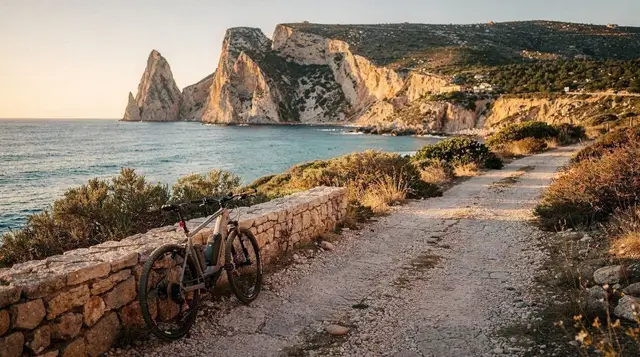
For hikers who’d rather arrive on foot than by car, a coastal trail links Argentiera to the countryside above Porto Conte, following the route once used by miners commuting between villages before most had cars of their own. It’s not a demanding walk by Supramonte standards — no serious elevation, mostly open coastal scrub and views back over the cliffs — but there’s minimal shade, so an early start or a cooler shoulder-season visit makes it considerably more comfortable than an August midday attempt. Bring more water than you think you’ll need; there’s nothing to buy along the way.
Combining Argentiera with Capo Caccia and Porto Conte
Argentiera sits on the same stretch of coast as Capo Caccia and Porto Conte Natural Park, and most visitors combine it with one or both on the same day rather than making a dedicated trip. A guided Capo Caccia tour covers the dramatic limestone headland and its lighthouse, a natural pairing with Argentiera’s very different, industrial character.
For a longer day on the water covering more of this coastline, a 6-hour catamaran tour in Porto Conte Park takes in the bay’s full sweep from the sea, including views back toward Argentiera’s cliffs that you can’t get from land. See our Capo Caccia and Porto Conte destination pages for more on both.
Getting active on the coastal road
For a more energetic way to see this stretch of coast, an 4-hour guided quad bike tour from Alghero typically threads through the countryside toward Argentiera and the Porto Conte area, covering ground a standard car tour wouldn’t reach. An e-bike tour inside Porto Conte Natural Park offers a quieter, self-powered alternative that covers similar terrain at a gentler pace, useful if you’d rather not deal with a quad’s noise and dust. Our cycling in Sardinia guide covers e-bike and road cycling options more broadly across the island.
Diving near the cliffs
The cliffs and underwater terrain around Argentiera and Capo Caccia offer some of the better diving on this coast, with underwater visibility that regularly exceeds what you’d find further south. A diving trip for professionals at Capo Caccia is aimed at experienced divers looking for the more demanding sites along this stretch, including depths and formations not suited to beginners. Our diving in Alghero and Capo Caccia guide covers options for less experienced divers as well.
The mine’s history in more detail
Silver and lead-zinc extraction at Argentiera actually predates the 19th-century boom by close to two thousand years — Roman-era workings have been identified in the surrounding hills, though the buildings visible today almost entirely date from the industrial-scale operation that ran from the 1860s through to the mine’s final closure in 1963.
At its peak, the settlement housed several hundred workers and their families, complete with its own church and school, making the current stillness genuinely striking: this was a functioning, populated industrial village within living memory of some residents’ grandparents, not an ancient ruin. The contrast between that recent, human-scale abandonment and the timelessness of the cliffs and sea around it is a large part of why photographers in particular are drawn here.
Getting to Argentiera
There’s no public transport to Argentiera worth relying on — this is a hire-car destination, reached via a winding but well-maintained road from Alghero (around 30 minutes) or from Porto Conte via a more rural route through the countryside. Parking is available near the village itself, close enough to walk directly to the ruins and beach. See our driving in Sardinia guide for general road conditions on the island’s smaller routes.
Frequently asked questions about Argentiera
Is Argentiera safe to walk around given the mine ruins?
The exteriors and paths around the buildings are safe to walk, but several structures are structurally unstable and shouldn’t be entered. Admiring from outside is both the safer and, generally, the more photogenic approach.
How long do I need at Argentiera?
Two to four hours covers the ruins, village, and a swim comfortably. It pairs naturally with a half or full day that also includes Capo Caccia or Porto Conte.
Is there a beach at Argentiera?
Yes, a small sand-and-pebble beach in the bay, right among the mine buildings. It’s rarely crowded compared to Alghero’s beaches or the coast further north.
Can I visit Argentiera without a car?
Not practically — there’s no reliable public transport, and the road in is winding countryside. A hire car or organised tour from Alghero is the standard way to reach it.
Is Argentiera worth visiting if I’m short on time in Alghero?
If you have half a day free and enjoy quieter, less conventional sights, yes. If your time in the Alghero area is genuinely limited to a day or less, prioritise the old town and Capo Caccia first, and treat Argentiera as a bonus if time allows.
What should I bring for a visit?
Comfortable shoes for uneven, sometimes gravelly ground around the ruins, sun protection given the limited shade, and swimwear if you’re planning to use the cove. There’s little in the way of shops beyond the small restaurants by the beach, so bring cash for parking and any purchases.
Can I walk to Argentiera instead of driving?
Yes, via a coastal path from the Porto Conte area, following the old miners’ commuting route. It’s not technically demanding but has little shade, so time it for the morning or a cooler month rather than midday in summer.
Are there restaurants at Argentiera?
Yes, a handful of small restaurants operate right by the beach and ruins, serving straightforward seafood and local dishes — enough for a lunch stop, though the choice is naturally more limited than in Alghero itself.