A seven-day food and wine itinerary across Sardinia
Sardinia’s food doesn’t travel the way its beaches do in the popular imagination, which is exactly why a wine-and-eating trip through the island feels like a genuine discovery rather than a rerun of somewhere else in Italy. This route runs a loop from the south through the interior to the west coast, up to the northwest, and back across to the Vermentino hills of the northeast — roughly 550km of driving over seven days, timed around wineries, working fisheries and a handful of towns where a single dish defines the place.
| Route | Cagliari → Barumini → Oristano/Cabras → Alghero → Dorgali → Olbia/Gallura |
| Distance | Around 550km over 7 days, none of it on motorway once you leave Cagliari |
| Best for | Wine lovers, serious eaters, anyone bored of a beach-only itinerary |
| Budget | Mid-range: wine tastings run €20-45pp, tasting menus €35-55, agriturismo dinners often better value than town restaurants |
| When to go | September for the Cannonau harvest, or May-June before the summer heat and crowds |
Day 1-2: Cagliari and its bars
Cagliari is where this trip should start and end, since it has Sardinia’s densest concentration of proper wine bars — the Marina and Castello districts alone hold a dozen worth a stop, most pouring Cannonau and Vermentino by the glass alongside a plate of pecorino and bottarga. Spend the first afternoon simply walking the old town, then book a structured introduction to the island’s wine regions before heading further afield:
Cagliari wine tasting at Tenute MaestraleOn the second day, a guided food and wine experience through the Marina district covers the difference between coastal and inland Cannonau styles, plus a proper introduction to Vermentino before you taste it fresh at source further north:
Cagliari food and wine tasting experienceFor a more hands-on session, a culurgiones-making workshop out in Quartu Sant’Elena teaches the pasta-pinching technique locals learn as children, and gives you the recipe to take home:
Culurgiones workshop near Quartu Sant’ElenaA wine bar crawl in the old town’s alleys the same evening, paired with an old-town wine tasting focused on small local producers, rounds off Cagliari before the drive inland the next morning:
Old town wine tasting with local products in CagliariDay 3: Barumini and the Marmilla
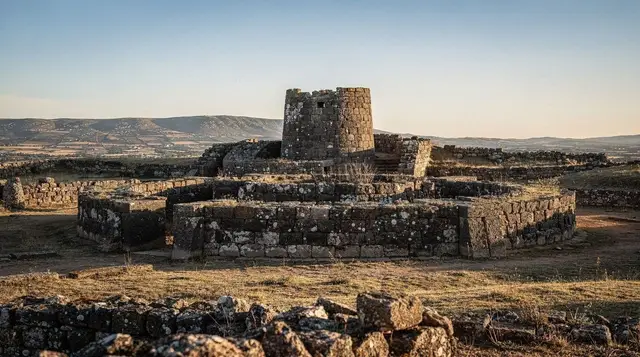
The drive to Barumini, around an hour on the SS131 and local roads, takes you into the Marmilla, a rolling agricultural region that produces most of the wine poured in Cagliari’s bars without much of the attention. Morning belongs to Su Nuraxi, the UNESCO-listed nuraghe complex that’s the reason most visitors come here at all — see our Su Nuraxi guide for visiting details. In the afternoon, a combined tour pairs the nuraghe with a stop at the Giara plateau, home to Sardinia’s wild horses, and a proper wine tasting at a local winery:
Barumini nuraghe, Giara park and wine tastingThe Marmilla’s reds lean lighter and more acidic than the Cannonau you’ll find further east, a difference worth noting before the Dorgali leg later in the week gives you the opposite end of the spectrum. See our Marmilla and Giara guide for more on the wider archaeological landscape here.
Day 4: Oristano and the bottarga of Cabras
An hour’s drive west brings you to Oristano and, ten minutes further, Cabras, the small lagoon town that produces most of Sardinia’s bottarga — cured grey mullet roe, grated over pasta or sliced thin with olive oil, and one of the island’s genuinely distinctive products. Our bottarga of Cabras guide covers where to buy it directly from producers rather than a tourist shop markup.
Oristano’s own wine, Vernaccia di Oristano, is a dry, sherry-like white aged in a solera system unlike anything else made on the island, and worth seeking out specifically since it rarely travels beyond the region. Spend the afternoon on the Sinis peninsula, where the quartz sands of Is Arutas make a scenic detour before dinner.
Day 5: Alghero’s seafood and Sella & Mosca country
The drive to Alghero runs about two hours north along mostly single-carriageway roads, budget the full time rather than trusting a map estimate — see our driving in Sardinia guide for why. Alghero’s Catalan heritage shows up on the plate as much as in the old town’s architecture, with lobster and langoustine dishes that owe more to Barcelona than Rome. A city-centre food and wine tour covers both threads properly in one afternoon:
Alghero city centre food and wine tourThe surrounding countryside, particularly toward Sella & Mosca’s vineyards, is Sardinia’s best-known wine-producing area by export volume, even if the tastings in town give a more varied cross-section of small producers. Our Alghero old town guide has restaurant recommendations by price bracket.
Day 6: Dorgali and proper Cannonau country
The drive from Alghero to Dorgali is the longest single leg of the week, close to three hours crossing the island’s interior — worth breaking up with a stop in Nuoro if the timing allows. Dorgali is Cannonau’s serious heartland, with soils and altitude that produce a noticeably darker, more structured wine than the coastal versions tasted earlier in the trip. A dedicated Cannonau Classica tasting at a Dorgali winery makes the comparison explicit:
Dorgali Cannonau Classica wine experiencePair the tasting with a plate of porceddu, Sardinia’s slow-roasted suckling pig, at one of the town’s family-run restaurants — our porceddu guide explains what separates a properly cooked version from a tourist-menu one.
Day 7: Olbia and the Vermentino di Gallura hills
The final leg north to Olbia, around two hours, takes you into Gallura, the only Sardinian wine region with DOCG status — Vermentino di Gallura — thanks to granite soils that give the white a mineral edge the same grape doesn’t develop elsewhere on the island. A guided winery tour and tasting in the Gallura hills is the obvious way to close the trip:
Olbia and Gallura winery guided tour and tastingOlbia’s airport makes a practical departure point, or extend the trip with our three-day Olbia and Costa Smeralda itinerary if time allows a coastal add-on before flying home.
What a typical wine tasting actually involves
Most guided tastings on this route run 60 to 90 minutes and cover four to six wines, usually moving from lighter whites through to the heavier reds, with a plate of local cheese, cured meat or bread worked in rather than served as a separate course. Producers generally explain their winemaking approach briefly before pouring — whether they’re working with traditional large oak botti or newer steel tanks, and how that choice shows up in the glass — which matters more in Sardinia than in some better-known Italian wine regions, since the island’s producers span both old-school and modern styles within the same DOCG zones.
Spitting is entirely normal and provided for at every tasting on this route; nobody will think less of you for using it, and it’s the only sensible approach if you’re driving on to the next stop the same afternoon.
A one-day version if a week isn’t possible
A single day based in Cagliari can cover a meaningful slice of this itinerary: a morning wine tasting in the Marina district, lunch built around bottarga or culurgiones at one of the old town’s family-run trattorie, and an afternoon drive out to Barumini for Su Nuraxi and a winery stop on the way back — roughly the Day 1 and Day 3 content of the full itinerary compressed into one long day. It skips the Gallura DOCG and the Dorgali Cannonau heartland entirely, which is the real trade-off of the shorter version, but it still delivers a genuine introduction to Sardinian wine and food rather than a diluted afternoon tasting menu aimed purely at tourists.
Regional dishes to look for beyond the headline wines
Beyond culurgiones and porceddu, a handful of dishes are worth actively seeking out rather than waiting to stumble across: fregola con arselle, a toasted pasta pearl dish with small clams found mainly around the coast; zuppa gallurese, a rich bread-and-cheese bake from the Gallura region that shows up on menus around Olbia and the north-east; and seadas, the fried pastry filled with fresh pecorino and drizzled with honey, which appears as a dessert almost everywhere on the island but varies noticeably in quality — a properly made version has a cheese filling that’s still slightly stretchy, not a dense, over-baked one.
See our what to eat in Sardinia guide for the fuller list beyond this route’s stops.
Driving this route in reverse
Flying into Olbia rather than Cagliari works just as well by simply running this route in reverse — Gallura and Dorgali first, then Alghero, Oristano, Barumini, finishing in Cagliari for a last night of wine bars before an onward flight or ferry. The distances and drive times stay the same either direction; the only real consideration is which airport your flights actually use, since backtracking across the island to match this itinerary’s original order rarely makes sense once your arrival and departure points are fixed.
Where to eat and drink along the way
Agriturismi — working farms that also serve meals — consistently outperform standalone restaurants on value across this route, particularly around Barumini, Oristano and Dorgali, where a fixed-price dinner of five or six courses with house wine often costs less than a single main course in a coastal resort town. Booking a day or two ahead is sensible outside peak August, since many run limited seating and prioritise regular local customers over walk-ins.
What to pack for a food and wine trip
A cooler bag for the car is genuinely useful if you plan to buy bottarga, cheese or wine to take home, since Sardinia’s summer heat will ruin a good pecorino left in a hot boot for a few hours. Most wineries ship internationally for a fee, which is worth asking about for anything beyond a bottle or two, given airline luggage limits. See our Sardinia packing list for the rest.
Frequently asked questions about a Sardinia food and wine trip
Is September really the best time for this itinerary?
For the Cannonau harvest atmosphere, yes, though the wine itself is available year-round; May and June give the same tastings with fewer crowds and cooler driving conditions.
Do I need to book wine tastings in advance?
Yes for the guided tours listed here, ideally a few days ahead in summer; smaller independent producers are more flexible but can also simply be closed without notice.
Can I do this route without a car?
Not realistically — the wineries and agriturismi are spread across the interior and west coast with minimal public transport connecting them; see our visiting Sardinia without a car guide for what’s genuinely feasible without one.
What’s the difference between Cannonau from different regions?
Coastal and southern Cannonau tends lighter and more approachable; the Dorgali and Barbagia versions are darker, higher in alcohol and more structured, reflecting the altitude and poorer soils.
Is Vermentino di Gallura different from other Sardinian Vermentino?
Yes — it’s the island’s only DOCG wine, and the granite soils around Gallura give it a mineral character that coastal Vermentino elsewhere on the island doesn’t share.
How much should I budget for wine tastings across the week?
Roughly €150-250 per person for five or six guided tastings, plus whatever you choose to buy and ship home.
Wine tasting tours on GetYourGuide
Verified deep-linked GetYourGuide tours. Book through these links and we earn a small commission at no cost to you.
These are our own photographs of Sardinia, not the operator's pictures of this tour — open the tour page to see those.