Alghero old town guide
What makes Alghero's old town different from the rest of Sardinia?
Alghero was a Catalan-Aragonese stronghold from the 14th century, and its old town still carries that legacy — street signs in Catalan alongside Italian, a fortified sea wall built for defence rather than promenading, and a coral-working tradition that goes back centuries and is unique to this stretch of coast.
Alghero is the one Sardinian town where the old town itself, not just the coastline around it, is worth building a stay around. It was held by the Crown of Aragon from 1354, resettled with Catalan colonists after a plague and rebellion emptied the original population, and the result is still visible today — street names in Català alongside Italian, a defensive sea wall built to keep ships out rather than to look pretty, and a coral-working tradition that runs back to the same period and still supports working goldsmiths in the old town’s back streets. It’s compact enough to walk end to end in twenty minutes, yet dense enough with history that most visitors underestimate how much time it actually deserves.
| Where | North-west Sardinia, around Alghero-Fertilia airport (AHO) |
| Cost | Free to walk; guided tours €20-40pp; coral jewellery from around €30 |
| Time needed | Half a day for the old town itself; 2-3 days with Capo Caccia and the coast |
| Getting there | Alghero-Fertilia airport is 10 minutes from the centre; old town is walkable |
| Best time | Year-round for the town; May to October for the beaches either side of it |
Walking the sea walls
Alghero’s bastions run almost the full length of the old town’s seaward edge, built up over the 16th and 17th centuries and now a genuinely pleasant evening walk rather than a fortification to admire from a distance — cafés and bars line much of the inner side, and the sunset over the Golfo di Alghero from here is one of the north-west coast’s better free views. A guided walking tour through the historic centre covers the walls alongside the cathedral and the old Jewish quarter in around two hours.
Alghero historic centre walking tour with a local guideThe Catalan quarter and the cathedral
Alghero’s cathedral, dedicated to Santa Maria, mixes a Catalan Gothic base with a later neoclassical facade added after a 19th-century restoration — worth stepping inside as much for the contrast as for the building itself. The surrounding streets still carry bilingual signage, and L’Alguerès, the local Catalan dialect, is spoken by a shrinking but genuine number of older residents — one of only two places outside Catalonia itself where a form of Catalan survives as a living community language. For a slower, more personal route through these streets, a private walking tour with a local guide runs at a pace that groups tours don’t allow.
Alghero 2.5-hour private walking tour with a local guideThe old Jewish quarter
Tucked into the streets between the cathedral and the sea walls, Alghero’s old Jewish quarter is one of the less obvious layers of the town’s history — a community present here from at least the 14th century until the expulsion of Jews from Spanish territories in 1492, which included Sardinia as an Aragonese possession at the time. Little remains in the way of visible physical markers today, but the street layout itself, narrower and more tightly packed than the surrounding blocks, still traces the quarter’s original boundaries, and several walking tours through the historic centre point out where specific buildings and gates once stood.
The Torre di Sulis and the harbour
At the old town’s northern tip, the Torre di Sulis rises directly above the fishing harbour, one of several defensive towers built into the bastion system and, unlike some of the others, open to climb for a view straight down the length of the sea walls back toward the cathedral. Below it, Alghero’s harbour is still a working fishing port rather than a marina built purely for tourism — the boats tied up in the morning are the same ones that supply much of what shows up on old-town menus that evening, lobster in particular, which Alghero built a genuine local reputation on long before coral jewellery became the town’s better-known export.
Where to eat in the old town
Alghero’s kitchen leans heavily on the Catalan side of its history as much as the Italian one — aragosta alla catalana, lobster served cold with tomato and onion in a style that traces directly back to Catalan cooking, is the dish most associated with the town, and it isn’t cheap, typically €50-70 per lobster depending on size and season. For a more everyday meal, the old town’s smaller trattorie serve the same fregola and malloreddus found across the island, usually with a heavier hand on seafood given the harbour on the doorstep. Streets just back from the sea walls tend to have better value than the restaurants directly on the bastions themselves, which charge a premium for the view.
Coral, Alghero’s other trade
The Coral Riviera stretches along this coast, and Alghero has worked red coral into jewellery since at least the 14th century — a trade that nearly collapsed under overfishing before quotas brought it back under control in recent decades. Several workshops in the old town still hand-carve pieces on site rather than importing finished jewellery, and it’s worth watching the process even for visitors with no plan to buy — see filigree and coral jewellery in Sardinia for which workshops actually still craft on the premises.
The Museo del Corallo, just back from the harbour, traces the trade’s history in more depth than a single workshop visit offers — old carving tools, historic pieces and the story of how overfishing nearly ended the trade before quotas brought it back under control. It’s a reasonable addition on a wet or overcast day, though most visitors still give more time to the working workshops than to the museum itself.
By e-bike, along the coast either side
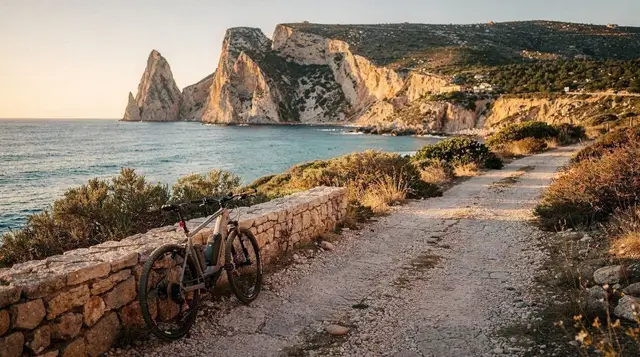
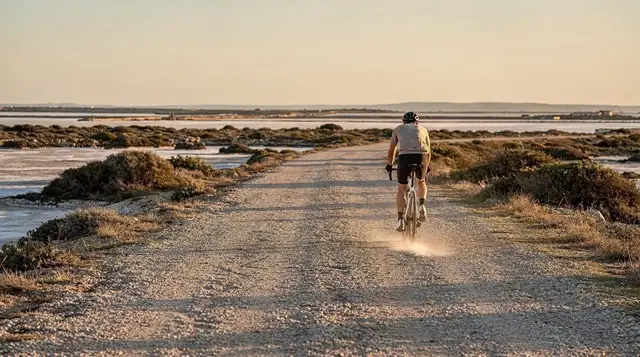
Alghero’s coastline runs flat in both directions from the old town, which makes it one of the easier parts of the island to cover by e-bike rather than car — a coral coast route heading toward Capo Caccia with a stop for aperitivo is a good way to see more of the coast than a walking day allows.
Coral Coast e-bike tour with aperitivoFor the boat-based version of exploring the same stretch of coast, including Neptune’s Grotto and Porto Conte park, see Alghero Capo Caccia boat trips and Neptune’s Grotto Alghero.
Nuraghe Palmavera, without leaving town far
Just outside the centre on the road toward Porto Conte, Nuraghe Palmavera is close enough to combine with an old-town morning without committing a full separate day — one of the largest nuragic complexes on the island after Su Nuraxi di Barumini, covered in the wider context of a nuragic route across Sardinia and nuraghe Palmavera Alghero.
Alghero city centre tour and visit to the Palmavera NuragheBeaches within walking distance
Alghero’s old town has an advantage few Sardinian historic centres share: genuine sandy beaches within easy walking or cycling distance rather than requiring a drive. Lido di Alghero, right at the edge of town, is the closest and busiest option; Le Bombarde and Maria Pia, both a short ride further along the coast toward Fertilia, offer clearer water and noticeably fewer crowds, particularly outside the core of the summer season. None of the three carry an access quota, unlike some of the island’s more restricted coves further north, which makes them a reliably easy add-on to an old-town day without needing to plan ahead.
Lake Baratz, Sardinia’s only natural lake
Inland from Fertilia, Lake Baratz is the island’s sole natural lake, sitting in a pine-forested basin behind the dune system of Porto Ferro beach. A guided horseback ride around its shore is one of the more distinctive half-day options this close to a town centre, and it pairs naturally with a stop at Porto Ferro’s beach afterwards.
Lake Baratz guided horseback rideFertilia, the town built by decree
Between Alghero and the airport that shares its name, Fertilia is a small planned town built in the 1930s to resettle farming families — its rationalist architecture stands out oddly against the medieval feel of Alghero proper, and it’s worth a quick look on the way to or from the airport rather than a dedicated trip. An e-bike route along the coastline here connects back into Alghero for those who prefer to arrive at the old town from the sea side rather than by road.
Guided e-bike tour of Alghero’s coastline from FertiliaGetting around the old town and beyond
Alghero’s old town is entirely walkable and largely pedestrianised, which makes it one of the more relaxed Sardinian centres to explore without worrying about traffic. For the coast beyond the walls — Capo Caccia, Porto Conte, Fertilia and the beaches either side of town — a hire car or e-bike is the practical option, since local bus coverage thins out quickly once away from the centre. Alghero’s own airport, unusually for a town this size, means many visitors arrive without ever needing to drive through Cagliari or Olbia at all, one of the coast’s genuine logistical advantages for a trip based here.
Diving off the same coast
The waters around Capo Caccia are among the clearest on this side of the island, largely thanks to the marine protected area’s limits on boat traffic — see diving Alghero Capo Caccia for sites and operators if the old town is only half the plan.
Alghero against the coast’s other historic towns
Alghero isn’t the only old town on this coast with a distinct identity, and it’s worth knowing how it compares before deciding how to split time between them.
| Alghero | Bosa | Castelsardo | |
|---|---|---|---|
| Defining trait | Catalan heritage, coral trade | Coloured houses, Temo river | Genoese castle, basket weaving |
| Size | Largest of the three, full resort town | Small, quieter | Smallest, compact hilltop centre |
| Best for | A multi-day base with beaches nearby | A half-day or overnight detour | A half-day stop on a coast drive |
| Airport nearby | Yes, Alghero-Fertilia (AHO) | No | No |
Alghero is the only one of the three with its own airport and a genuine resort infrastructure, which is why it works as a full base rather than just a stop on the way to somewhere else, with Bosa and Castelsardo both better suited to a day or two folded into a longer stay based here.
Where this fits in a wider trip
Alghero-Fertilia is its own airport, a genuine advantage for anyone basing the whole trip on this coast rather than flying into Cagliari or Olbia — see Alghero-Fertilia airport guide for connections, and Cagliari vs Alghero vs Olbia for how the three compare as a base.
Bosa, covered in Bosa town guide, is under an hour south along the coast road and a natural add-on day. For beach options beyond the town itself, best beaches north-west Sardinia and La Pelosa beach guide cover what’s within reach, and the full spread of day-trip options is in day trips from Alghero.
Frequently asked questions about Alghero’s old town
Is Alghero’s old town walkable in a day?
Yes — the core is compact enough to see on foot in half a day, though a full day allows time for the coral workshops and a proper sea-wall walk at a slower pace.
Do people in Alghero really speak Catalan?
A form of Catalan, L’Alguerès, is still spoken by some older residents, and street signage is bilingual, though Italian is the language most visitors will actually hear day to day.
Is Alghero coral jewellery expensive?
Prices start around €30-50 for smaller pieces and rise sharply for larger, hand-carved work; quality and origin vary a lot between shops, so it’s worth asking before buying.
How far is Alghero from Capo Caccia?
Around 30 minutes by car, or covered by several of the boat and e-bike tours that depart directly from the old town’s marina.
Is Alghero-Fertilia airport actually in Alghero?
No — it sits close to Fertilia, about 10 minutes’ drive from Alghero’s old town centre.
What’s the best time of year to visit Alghero’s old town?
Spring and early autumn combine mild weather with a workable balance of open restaurants and manageable crowds; the old town itself is pleasant even in winter, when the coast empties out.
Is Lake Baratz worth visiting if I’m short on time?
It’s a worthwhile half-day add-on rather than a must-see — go if horseback riding or a quieter, forested landscape appeals, skip it if the priority is squeezing in more coastline.
Is aragosta alla catalana worth the price?
For most visitors, yes at least once — it’s a genuine local speciality with real historical roots rather than a tourist markup on an ordinary dish, though it’s worth checking the price per hundred grams before ordering since lobster is sold by weight.
How does Alghero compare to Bosa and Castelsardo?
Alghero is larger, has its own airport and works as a full multi-day base, while Bosa and Castelsardo are smaller, quieter towns better suited to a half-day or overnight detour from a base elsewhere on this coast.
Historic towns & villages tours on GetYourGuide
Verified deep-linked GetYourGuide tours. Book through these links and we earn a small commission at no cost to you.
These are our own photographs of Sardinia, not the operator's pictures of this tour — open the tour page to see those.