Best beaches in north-west Sardinia
What is the best beach near Alghero?
Le Bombarde and Lazzaretto, inside Porto Conte Natural Park, are the best all-round beaches close to Alghero for clear water without a long drive. For the region's single best beach, La Pelosa near Stintino, about 45 minutes further north, is worth the extra distance.
Coral coast in name, quieter in practice
The north-west corner of Sardinia, anchored by Alghero, calls itself the Coral Coast for the red coral once harvested offshore, and it delivers a run of small, clear-water coves without the crowds of the south or the prices of the Costa Smeralda. This region also holds the island’s single best-known beach — La Pelosa, near Stintino — though that one gets its own dedicated guide given how strict its access rules now are. Here we cover everything closer to Alghero itself: the beaches inside Porto Conte Natural Park, the coves near Capo Caccia, and how to see several by e-bike rather than fighting for parking.
| Beach | Distance from Alghero | Access | Notes |
|---|---|---|---|
| Le Bombarde | 15 min | Road, paid parking in summer | Shallow, family-friendly |
| Lazzaretto | 15 min | Road | Wide bay, watersports |
| Mugoni | 20 min | Road | Long sandy stretch |
| Porto Conte coves | 20-30 min | E-bike or boat best | Inside the natural park |
| La Pelosa (Stintino) | 45 min | Road, quota booking | Sardinia’s most photographed beach |
Le Bombarde and Lazzaretto: the easy first stop
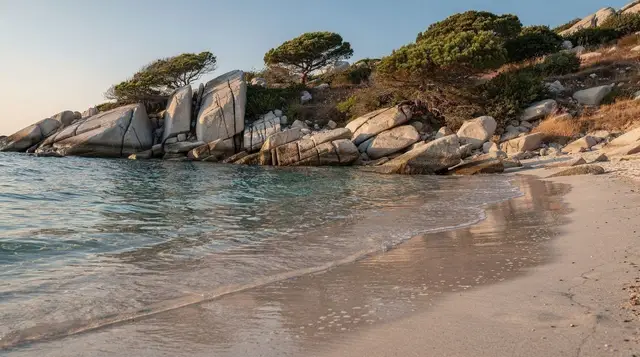
Le Bombarde, 15 minutes from Alghero’s centre, is a small, sheltered cove with genuinely shallow, calm water that suits families and anyone who wants an easy first swim without much driving. Lazzaretto, next along the coast, is wider and slightly more exposed, which makes it the better choice for windsurfing or paddleboarding when there’s a breeze. Both fill their car parks by late morning in July and August, so an early start or the e-bike option below avoids the worst of the parking scramble.
The small beaches e-bike tour with aperitivo links several of these coves along a dedicated cycle path without any parking stress, finishing with a drink as the sun drops — genuinely one of the better value afternoons on this coast for the price. If a longer ride along the coastline appeals more, the Coral Coast e-bike tour with aperitivo covers more distance and reaches a couple of the smaller coves that the shorter route skips.
Porto Conte Natural Park: the region’s best cluster of coves
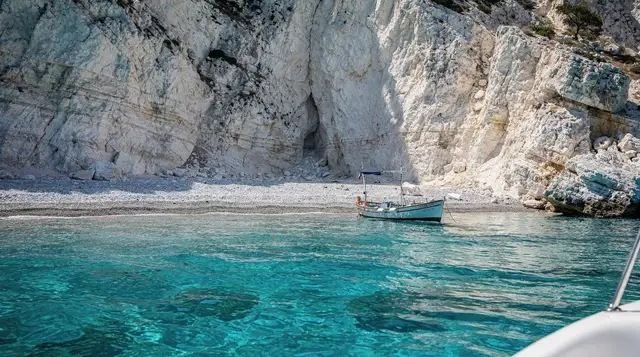
West of Alghero, Porto Conte Natural Park protects a horseshoe bay and the limestone headland at Capo Caccia, and inside its boundary sit some of the region’s clearest, least developed swimming spots — reachable by the park’s cycle paths, by boat, or with a short walk from a handful of small car parks. The park is also where Neptune’s Grotto, a vast sea cave accessible by boat or by the 654-step Escala del Cabirol staircase, sits at the base of the Capo Caccia cliffs.
The e-bike tour inside Porto Conte Natural Park is the most efficient way to see several coves in one outing without a car, and it typically includes enough stops to swim at two or three different spots. For a view of this same coastline from the water, the six-hour catamaran tour of Porto Conte Park reaches sea caves and cliff-base coves that the cycle paths can’t touch. Our Alghero and Capo Caccia boat trips guide compares every operator running this stretch.
Porto Ferro and Lake Baratz: dunes and a rare freshwater lake
North of Porto Conte, Porto Ferro is a longer, wilder beach backed by tall dunes and considerably less crowded than the beaches closer to Alghero itself — it takes a bit more effort to reach, which does most of the crowd-filtering for you. A short distance inland, Lake Baratz is Sardinia’s only natural freshwater lake, and combining the two on horseback is one of the more distinctive half-days on this coast.
The horseback riding tour on Porto Ferro beach covers the dunes and the beach itself, while the guided horse ride at Lake Baratz and Porto Ferro adds the lake into the same route for a longer outing.
La Pelosa: worth the extra 45 minutes
If you have a full day free, La Pelosa near Stintino is worth the drive north — shallow, near-white sand and turquoise water that genuinely looks tropical, with the Torre della Pelosa watchtower rising out of the sea just offshore. It’s also the strictest beach on the island for access: a capped daily quota, mandatory advance booking in peak season, and a ban on towels directly on the sand to protect the dune system. Full detail on booking and timing is in our dedicated La Pelosa beach guide.
Alghero’s own town beach and getting there
Alghero’s town beach at Maria Pia, a walk or short bus ride from the old town, is a reasonable option if you don’t want to leave the city at all, though it’s busier and less scenic than anything inside the natural park. For getting to the region in the first place, see Alghero-Fertilia airport guide, and for making the most of a stay here beyond the beaches, things to do around Alghero’s old town and day trips from Alghero round out a longer stay.
Bosa and Castelsardo: worthwhile detours beyond the beaches
If a full day off the sand appeals, Bosa, roughly an hour south of Alghero along a scenic coast road, is one of Sardinia’s most photogenic towns — a jumble of pastel houses climbing to a hilltop castle above the Temo river, Sardinia’s only navigable river. North of Alghero, Castelsardo sits on its own dramatic headland and is known for traditional basket-weaving alongside its medieval centre. Both work well as a half-day break between beach days, and our Bosa town guide and Castelsardo guide cover what else to see in each.
Diving and snorkelling around Capo Caccia
The cliffs and sea caves around Capo Caccia make this stretch one of the better diving areas in Sardinia, with visibility that regularly exceeds what the south coast offers and a genuinely dramatic underwater landscape near the base of the headland. Neptune’s Grotto itself, reached by boat, is as striking below the waterline as it is inside the cave system. Our diving at Alghero and Capo Caccia guide covers operators and the best sites for both beginners and experienced divers, and pairs naturally with a beach day at Le Bombarde or Lazzaretto.
Getting to and around this coast
Most visitors reach the region through Alghero-Fertilia airport, a short drive from both the town centre and the beaches covered in this guide. A hire car remains the most flexible way to string together several beaches in a day, though the e-bike tours covered above are a genuinely good alternative for the closer coves if you’d rather not drive at all. For trips further afield from this base, see day trips from Alghero for options beyond the immediate coastline.
Eating and staying between beach days
Alghero’s old town has one of the better restaurant scenes on this coast, with a strong Catalan influence in the local cuisine — a legacy of the town’s history under Aragonese rule — showing up in dishes like paella-style seafood rice alongside more typically Sardinian fare. Prices sit comfortably below the Costa Smeralda and are broadly comparable to Cagliari.
For a base that keeps you closest to the beaches covered in this guide, staying in or near Alghero’s centre puts Le Bombarde, Lazzaretto and Porto Conte all within a 20-30 minute drive, while a stay further out toward Stintino trades that convenience for proximity to La Pelosa. Our where to stay in Sardinia guide has more detail on choosing between the two.
Wind and the best time to visit
This coast catches the mistral more directly than the sheltered south, particularly through spring and autumn, which can make the more exposed beaches like Porto Ferro choppier than the calmer coves inside Porto Conte on a windy day. It’s rarely a problem for a straightforward beach visit in summer, but it’s worth checking conditions before booking a catamaran tour or an e-bike day specifically planned around calm water and good visibility for snorkelling. June and September remain the sweet spot here as elsewhere on the island — warm enough to swim comfortably, without July and August’s parking pressure at Le Bombarde and Lazzaretto.
What a day on this coast actually costs
Beach days here are cheaper than the south coast’s more famous stretches, largely because fewer of the coves have managed stabilimenti with sun loungers. Le Bombarde and Lazzaretto both have paid parking in peak season, typically €5-10 for a full day, and a handful of beach bars selling drinks and simple food rather than full restaurant service. Porto Conte’s coves inside the natural park have even less infrastructure — bring your own umbrella and food, since shops thin out fast once you’re past Alghero’s edge.
The e-bike tours that link several beaches typically run €45-75pp for a half day including the bike, guide and the closing aperitivo, which compares well against renting a car for the day once fuel and parking are added up, particularly for a single traveller or a couple rather than a family needing more storage for gear. La Pelosa is the exception on cost as well as everything else — the mandatory booking fee is modest, but factor in fuel and, in peak season, the time lost to the 45-minute drive each way.
Snorkelling gear and sun protection worth packing
The clearest water on this coast sits inside Porto Conte Natural Park and around Capo Caccia, and a mask and snorkel bought or brought from home go a long way further here than at the busier southern beaches, since rental options thin out the further you get from Alghero’s centre.
Reef-safe sunscreen is worth prioritising specifically around Porto Conte and Capo Caccia, where the water quality that makes the diving and snorkelling worthwhile is part of what the natural park exists to protect. Shade is genuinely limited at Le Bombarde, Lazzaretto and Porto Ferro — none has the tree cover of some southern beaches — so a beach umbrella or a rented one at the stabilimenti is close to essential for a full day, particularly with children, from June through August.
Toilets, showers and facilities along this coast
Facilities are more basic here than on Cagliari’s Poetto or the busier southern beaches — Le Bombarde and Lazzaretto have public toilets and showers near the car parks, but Porto Conte’s more remote coves and Porto Ferro often don’t, particularly outside the main stabilimenti. It’s worth planning around this rather than assuming every stop has running water, especially on an e-bike route that covers several beaches in one outing where the next facility might be a while away. Alghero’s town beach at Maria Pia is the best-equipped option on this list if facilities matter more than scenery, with full promenade infrastructure a short walk from the old town.
Frequently asked questions about north-west Sardinia’s beaches
What’s the best beach close to Alghero without driving far?
Le Bombarde, about 15 minutes from the centre, for shallow, calm water with easy parking most of the day outside peak summer.
Is La Pelosa part of the north-west or a separate region?
Geographically it’s part of the north-west coast, near Stintino, but it has its own dedicated guide given its strict quota system — see La Pelosa beach guide.
Can I see Porto Conte Natural Park’s beaches without a car?
Yes, via e-bike tours from Alghero that follow the park’s dedicated cycle paths, or by boat from Alghero’s marina.
Is Neptune’s Grotto worth combining with a beach day?
Yes — it sits at the base of Capo Caccia inside the same natural park, reachable by boat (which pairs naturally with a coastal boat trip) or via the 654-step staircase from the clifftop road.
How windy is this coast, and does it affect beach days?
The north-west catches the mistral more than the sheltered south coast, particularly in spring and autumn; it rarely ruins a beach day in summer but can make boat trips choppier. Check conditions before booking a catamaran or e-bike day specifically for calm water.
Which beaches here suit families with young children best?
Le Bombarde and Mugoni, both with gently shelving sand and shallow entry, are the easiest for small children compared with the rockier coves further into Porto Conte.
Is there shade at the beaches near Alghero?
Very little at Le Bombarde, Lazzaretto or Porto Ferro — bring your own umbrella or rent one, since none of these beaches has significant natural tree cover.
Do I need to bring snorkelling gear, or can I rent it locally?
Rental options are limited outside Alghero’s centre, so bringing your own mask and snorkel is worth it if snorkelling around Porto Conte or Capo Caccia is a priority for your trip.
Beach & coastal tours on GetYourGuide
Verified deep-linked GetYourGuide tours. Book through these links and we earn a small commission at no cost to you.
These are our own photographs of Sardinia, not the operator's pictures of this tour — open the tour page to see those.