Sardinian crafts and what to bring home
What is Sardinia actually known for making?
Filigree silver jewellery, hand-woven wool textiles (Samugheo, Aggius, Nule), the pattadese folding knife, coral jewellery from Alghero, ceramics, and food and drink — pecorino, bottarga, mirto, Cannonau and Vermentino wine. Most is made in small workshops rather than factories, so quality varies more by shop than by region.
Sardinia’s craft traditions are genuinely still alive rather than kept going for tourists — filigree workshops in Cagliari and Bosa, weavers in the interior villages of Samugheo and Aggius, and knife-makers around Pattada and Guspini all still produce for a local market as much as a visiting one. That also means quality and authenticity vary a lot between a shop selling handmade work and one selling imported stock with a Sardinian label stuck on it. This guide covers what’s worth buying, roughly what it costs, and how to tell the difference.
| Craft | Where it’s made | What to expect to pay | Where to buy |
|---|---|---|---|
| Filigree jewellery | Cagliari, Bosa, Alghero | €40-300+ depending on piece | Workshop jewellers, not souvenir stalls |
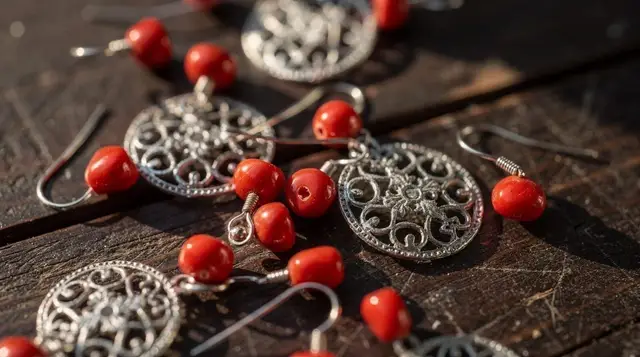
| Coral jewellery | Alghero | €30-500+ depending on size and setting | Certified Alghero coral workshops |
| Hand-woven textiles | Samugheo, Aggius, Nule | €50-400 for rugs and tapestries | Village cooperatives, ISOLA outlets |
| Pattadese knife | Pattada, Guspini (Arbus knife) | €40-200+ depending on maker | Specialist knife shops, village workshops |
| Ceramics | Assemini, Sardara, Oristano | €15-100 | Ceramics studios, markets |
| Mamuthones-style masks | Mamoiada | €80-400 for hand-carved pieces | Mamoiada workshops directly |
Filigree jewellery: Sardinia’s signature craft
Filigree — fine silver wire twisted and soldered into intricate lace-like patterns — is the craft most associated with Sardinia, made in workshops across Cagliari, Bosa and Alghero. The classic piece is the fede sarda, a traditional Sardinian wedding ring built from twin bands of woven filigree, but the technique also produces earrings, brooches and buttons for traditional dress.
Genuine workshop pieces are hand-soldered and cost accordingly; mass-produced versions sold in tourist areas are usually machine-stamped and noticeably flatter. See our full guide to filigree and coral jewellery in Sardinia for how to tell the difference and where the genuine workshops actually are.
a hidden-gems walking tour of Cagliari often passes some of the city’s working filigree studios in the Marina and Castello districts, a good way to see the craft in progress rather than just the finished shop display.
Hand-woven textiles from the interior
Villages in the Sardinian interior have distinct, centuries-old weaving traditions still producing genuine work: Samugheo (Barbagia’s edge) is known for wool tapestries and traditional women’s shawls with geometric patterns specific to the village, Aggius (in Gallura, near Tempio Pausania) for tightly woven wool rugs called tapeti aggesi, and Nule for a similarly distinct rug tradition using natural undyed wool alongside coloured pieces.
These aren’t quick souvenirs — a genuine hand-woven rug takes weeks to make and prices reflect it — but they’re among the most distinctively Sardinian objects available, and cooperatives in each village sell directly. ISOLA, the regional craft body with outlets in Cagliari and elsewhere, curates certified genuine work from across these traditions if visiting the villages themselves isn’t practical.
The pattadese knife
The resolza (or pattadese knife, named for the town of Pattada) is Sardinia’s traditional folding pocket knife, historically a shepherd’s tool and still made by hand by specialist knife-makers, with a horn handle and a locking mechanism distinct from mainland Italian folding knives. A parallel tradition centres on Guspini and the Arbus area, producing the leppa or Arbus knife, typically a larger fixed-blade design. Genuine pieces from a named maker cost considerably more than the generic “Sardinian knife” sold in coastal souvenir shops, and are worth it if you actually want a working knife rather than a decorative one — check any airline hand-luggage restrictions before buying, since these need to travel in checked bags.
Ceramics, masks and smaller pieces
Ceramic traditions around Assemini (near Cagliari), Sardara and parts of the Oristano area produce both functional glazed pottery and decorative pieces with traditional Sardinian motifs, generally the most affordable genuine craft on this list. In Mamoiada itself, workshops carve the wooden masks worn by the Mamuthones at carnival — full-size, hand-carved versions are a serious purchase at several hundred euros, but smaller decorative pieces are more accessible and still genuinely made by the same carvers who supply the festival’s actual performers.
a walking tour of Alghero’s old town covers the coral-working quarter where much of the city’s jewellery tradition is still visibly practised in small studios.
Basketry and cork
Castelsardo, on the northwest coast, has its own distinct basketry tradition, weaving locally gathered dwarf palm and asphodel into baskets whose patterns are specific enough that experienced buyers can identify a piece’s approximate age and maker by the weave alone. It’s slower, more physically demanding work than it looks, and genuine Castelsardo baskets — sold directly from the workshops that line the old town’s steep lanes below the castle — cost accordingly more than machine-woven imports sold elsewhere on the coast.
Cork, harvested sustainably from cork-oak forests concentrated in the Gallura region, turns up in a wide range of products from wallets and bags to trays and coasters — a genuinely renewable Sardinian material, since the trees aren’t cut down but periodically stripped of bark without lasting harm.
a guided walking tour of Cagliari often passes craft shops in the Marina quarter selling a broad cross-section of these traditions in one browsing session, useful if your itinerary doesn’t reach Castelsardo or the weaving villages directly.
Shipping, customs and getting things home
Most workshops selling higher-value pieces — filigree jewellery, larger textiles, hand-carved masks — are used to shipping internationally and can arrange it for a fee, worth asking about directly if a piece is too large or fragile for luggage.
Within the EU, bringing purchases home involves no customs formalities; travellers heading outside the EU should keep receipts for any single item over their home country’s duty-free allowance, since customs officers do occasionally ask, particularly for higher-value jewellery. Liquids — wine, mirto, olive oil — must go in checked luggage regardless of value, and it’s worth wrapping glass bottles in clothing inside a hard-sided suitcase rather than relying on a shop’s paper wrapping alone to survive baggage handling.
Budgeting a craft-shopping day by traveller type
A traveller on a tight budget can still bring home something genuinely Sardinian for well under €50 — a small piece of ceramics, a jar of local honey or a bottle of mirto covers that easily. A mid-range budget of €100-200 opens up entry-level filigree earrings or a good bottle of aged Cannonau from a named producer. For anyone treating a purchase as closer to an investment piece — a substantial filigree necklace, a genuine coral piece, or a large hand-woven rug from Samugheo or Aggius — budgeting €300 and upward is realistic, and it’s worth taking the time to compare two or three workshops before committing at that level, since prices and quality both vary more than first-time buyers expect.
A shopping-focused day in Cagliari or Alghero
If craft shopping is a priority rather than an afterthought, both Cagliari and Alghero reward a dedicated half-day rather than a rushed browse between other activities. In Cagliari, the Marina and Castello quarters hold the highest concentration of genuine filigree and general craft shops within walking distance of each other; in Alghero, the old town’s lanes near the cathedral are the equivalent for coral and filigree together.
Pairing either with things to do in Cagliari or Alghero’s old town guide makes for a full, well-rounded day that mixes sightseeing with genuinely productive shopping rather than treating the two as separate errands.
Food and drink to bring home
The most practical souvenirs from Sardinia are edible: vacuum-packed pecorino sardo, bottarga di Cabras (dried mullet roe, best bought in the Oristano area — see the bottarga of Cabras), bottled mirto liqueur, and bottles of Cannonau or Vermentino di Gallura from a producer rather than a supermarket shelf. Most airports and reputable delis vacuum-pack cheese and cured items for travel; check current airline liquid-in-hold-luggage rules if bringing wine or mirto home, since checked bags are the only option for liquids over 100ml.
How Sardinia’s craft traditions survived
Part of why Sardinia’s crafts feel more genuinely alive than souvenir traditions in many other Mediterranean destinations comes down to the island’s long relative isolation — mainland industrial competition arrived later and less completely here than in much of Italy, and many village-level trades continued serving a local market well into the 20th century rather than being replaced entirely by mass production.
Regional bodies like ISOLA, the Sardinian craft and design consortium, have also played a role since the mid-20th century in certifying genuine artisan work and connecting village workshops with wider markets, which is part of why looking for an ISOLA mark or a named workshop is a reasonably reliable shortcut when you don’t have time to visit a producing village directly. That said, certification schemes aren’t infallible, and the surest way to judge a piece remains asking direct questions about how and where it was made.
Distinguishing a genuine workshop from a resale shop
A recurring theme across every craft on this page is the difference between a workshop that actually produces what it sells and a shop that simply resells stock bought in from elsewhere, sometimes imported from outside Sardinia entirely with only a loose local connection. A genuine workshop will usually have visible signs of production — tools, half-finished pieces, a workbench — and staff who can talk in specific detail about technique, materials and where a piece was made.
A resale shop’s staff, by contrast, often struggle to answer specific questions beyond price, and the stock tends toward a narrower range of generic “Sardinian” designs repeated across multiple shops in the same town. Neither type of shop is dishonest by default, but the price difference between the two is usually significant enough that it’s worth the extra few minutes of conversation before buying, particularly for anything above a casual souvenir price point.
A practical shopping route across the island
For visitors with time to shop across multiple regions rather than in a single city, a rough route works well: start in Cagliari for filigree and ceramics in the Marina and Castello quarters, head north through Barumini and Oristano for smaller archaeological and food-related souvenirs, continue to Alghero for coral and filigree together, and finish in the north around Castelsardo for basketry and Tempio Pausania or nearby villages for textiles if your route runs through Gallura.
This roughly mirrors a standard clockwise or anticlockwise loop of the island anyway, so it rarely requires major detours purely for shopping.
Bargaining and pricing norms
Unlike some Mediterranean destinations, bargaining isn’t a standard part of buying crafts in Sardinia — prices at genuine workshops and established shops are generally fixed and displayed, reflecting the real cost of materials and labour rather than an opening position expecting negotiation. That said, for larger purchases, particularly hand-woven textiles or substantial jewellery pieces bought directly from a workshop rather than a shop, it’s not unreasonable to ask politely whether any flexibility exists, especially if you’re buying more than one piece at once. Approach it as a normal, low-pressure question rather than an expected ritual, and be prepared for the answer to simply be no.
Frequently asked questions about Sardinian crafts
Is filigree jewellery expensive in Sardinia?
Genuine handmade pieces start around €40 for small earrings and rise well past €300 for elaborate necklaces or wedding rings; it’s a real craft purchase, not a cheap souvenir.
Where’s the best place to buy authentic Sardinian textiles?
Directly from village cooperatives in Samugheo, Aggius or Nule if you’re passing through the interior; otherwise ISOLA’s outlets in Cagliari curate certified work from these same traditions.
Can I bring a Sardinian knife home on a flight?
Only in checked luggage — folding and fixed-blade knives are never allowed in carry-on bags under standard airport security rules.
Is Sardinian coral jewellery ethically sourced?
Reputable Alghero workshops use coral harvested under strict regional quotas and can usually explain provenance; ask directly, and be wary of unusually cheap “coral” with no explanation of origin.
What food souvenirs travel well from Sardinia?
Vacuum-packed pecorino and bottarga travel well in checked luggage; bottled wine and mirto need checked bags too because of liquid restrictions in carry-on.
Are Mamuthones masks sold outside Mamoiada?
Smaller decorative versions turn up in craft shops across the island, but the full hand-carved pieces are best bought directly from workshops in Mamoiada itself, where the tradition is centred.
Can workshops ship larger purchases home for me?
Many can, for a fee, particularly for larger textiles, furniture-scale ceramics or fragile pieces — ask directly at the point of sale rather than assuming it’s not an option.
Do I need to declare craft purchases at customs?
Within the EU, no formalities apply. Travelling onward outside the EU, keep receipts for higher-value items such as substantial jewellery pieces in case your home country’s customs asks about duty-free allowances.
What’s the most distinctively Sardinian souvenir for a tight budget?
A small piece of Assemini or Sardara ceramics, or a jar of Sardinian honey or bottled mirto, all deliver genuine local character for well under €50.
Shopping & craft tours on GetYourGuide
Verified deep-linked GetYourGuide tours. Book through these links and we earn a small commission at no cost to you.
These are our own photographs of Sardinia, not the operator's pictures of this tour — open the tour page to see those.