Mamoiada and the Mamuthones
What are the Mamuthones of Mamoiada?
The Mamuthones are masked figures at the centre of Mamoiada's carnival tradition — twelve men in black sheepskin, carrying up to 30kg of cowbells on their backs, moving in a slow, synchronised rhythm through the village alongside the white-clad Issohadores, in a ritual believed to predate Christianity on the island.
Mamoiada, a small Barbagia village a short drive from Nuoro, is the home of the Mamuthones — the black-masked, cowbell-laden figures that appear at the centre of Sardinia’s most distinctive carnival tradition. Unlike most Sardinian carnival events, which lean toward costume and colour, Mamoiada’s version is slow, heavy and deliberately unsettling, with roots that most scholars trace to pre-Christian shepherd rituals rather than any conventional carnival origin. The village itself is small enough to see fully in half a day, but the tradition it’s built its identity around rewards far more attention than its size might suggest.
| Where | Barbagia region, central Sardinia, a short drive from Nuoro |
| Cost | Museum entry around €5-8; guided workshop and winery visits €25-50pp |
| Time needed | Half a day for the museum and a workshop visit |
| Getting there | Car required; around 20 minutes from Nuoro |
| Best time | Year-round for the museum; January and Carnival period for the actual procession |
Who the Mamuthones and Issohadores are
The Mamuthones perform in groups of twelve, dressed in black sheepskin and carved wooden masks, with up to 30kg of bronze cowbells, sas carrazzas, strapped across their backs — the weight is deliberate, part of the physical endurance the role demands rather than incidental costume. They move through Mamoiada’s streets in a slow, synchronised rhythm, stamping in time to make the bells sound as one rather than a random clatter. Alongside them, the Issohadores dress in white with red sashes and carry a rope, sa soha, which they use to lasso onlookers from the crowd — traditionally seen as a gesture of good fortune rather than aggression, despite how it can look to a first-time visitor.
Where the tradition comes from
No single theory fully explains the Mamuthones’ origins, and that’s part of what makes the tradition genuinely interesting rather than a settled piece of folklore. Some researchers connect the black masks and animal-skin costumes to pre-Christian fertility rites tied to the agricultural and pastoral calendar, marking the transition from winter into the productive part of the year.
Others point to the ritual’s structure — the Mamuthones effectively “captured” by the Issohadores’ ropes — as a possible echo of prisoner or conquest rituals dating back to conflicts with Phoenician, Punic or Roman forces on the island. What’s not in dispute is the timing: the procession’s core dates, tied to Sant’Antonio Abate and Carnival, sit at points in the calendar long associated with seasonal transition rituals across pre-Christian Mediterranean cultures generally, well before Catholicism reached the island.
The Museum of Mediterranean Masks
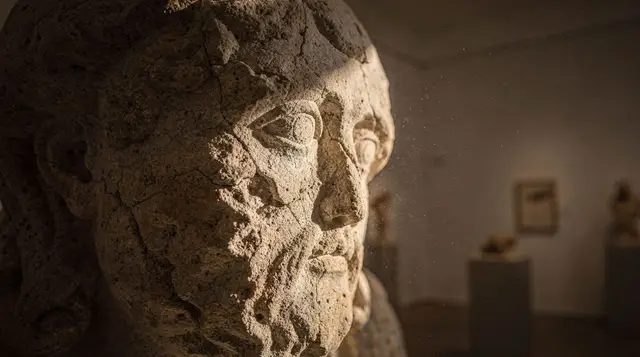
Mamoiada’s Museo delle Maschere Mediterranee sets the Mamuthones tradition in a wider context, displaying masks from carnival and ritual traditions across the Mediterranean alongside the village’s own, and explaining the theories — none fully settled — about the Mamuthones’ origins, whether tied to ancient fertility rites, animal cults, or captured-enemy rituals from the island’s pre-Roman past. The museum’s comparative approach is a genuine strength: seeing Mamoiada’s costumes displayed alongside broadly similar ritual masks from Greece, the Balkans and elsewhere in the Mediterranean makes a stronger case for the tradition’s ancient roots than any single explanation on its own could.
Museum of Mediterranean Masks entry voucher and tourWatching the masks get made
The masks themselves are carved from pear or wild olive wood by a small number of artisans in the village, a skill passed down through families rather than taught formally, and a workshop visit gives a rare look at that process in progress rather than only the finished pieces on display in the museum.
Carving a single mask can take days of work, starting from a rough block of wood and slowly refined toward the elongated, expressionless face that defines the Mamuthone look — dark, weathered and deliberately unindividuated, since the tradition treats the mask as a collective symbol rather than a portrait of any specific figure. Finishing usually involves darkening the wood with smoke or a natural stain, adding to the unsettling, aged appearance that makes the finished masks so recognisable even outside Sardinia.
Visit to a mask artisan’s laboratoryCannonau country
Mamoiada sits at the heart of what many consider Sardinia’s original Cannonau territory — the grape has been grown on these Barbagia hillsides for centuries, and some producers here argue the variety originated in Sardinia rather than arriving from Spain, a debate that’s never been fully resolved. The vineyards themselves sit at a genuinely higher altitude than most Sardinian wine country, which several local producers point to as the reason for the wines’ distinct, often more structured character compared with Cannonau grown closer to sea level. A winery visit with tasting is a natural pairing with the mask museum for an afternoon that covers both sides of the village’s identity.
Winery visit with wine tasting in MamoiadaSee Cannonau wine guide for the wider picture of the grape across the island, and wine tours in Sardinia for how a Mamoiada tasting fits alongside the island’s other main wine regions. Mamoiada’s wines are frequently linked to Barbagia’s reputation as one of the world’s recognised longevity hotspots, or “blue zones” — researchers studying the region’s exceptional rates of healthy ageing have pointed to moderate, regular Cannonau consumption as one plausible factor among several, alongside diet and the physically active pastoral lifestyle still common in villages like Mamoiada itself.
The physical weight of the role
Performing as a Mamuthone is a genuine physical undertaking, not a costume worn lightly for an afternoon. The cowbells alone can weigh 25-30kg, strapped tightly across the back and shoulders, and the slow, deliberate stamping rhythm the group maintains through the procession — designed to make dozens of individual bells ring as a single, synchronised sound — takes real stamina to sustain over a route through the village that can run for hours.
Performers are almost always Mamoiada natives, often following family members who held the role before them, and being chosen to perform carries real social weight within the community rather than being open to casual participation. The role is generally passed down within specific families, and it isn’t unusual for a performer to have watched a father or uncle in the same costume years before taking it up themselves.
Seeing the Mamuthones in person
The Mamuthones traditionally appear twice a year in Mamoiada itself — on 17 January for the feast of Sant’Antonio Abate, when bonfires are lit around the village, and again during Carnival in the weeks before Lent, when the procession is at its largest. Outside those dates, the masks and their history are still fully accessible through the museum and workshop visits above, but the atmosphere of the procession itself is worth planning a trip around if the calendar allows — see Sardinia festivals calendar for exact dates, which shift year to year with the Carnival calendar.
The January date is the more intimate of the two, tied closely to the bonfires and blessing rituals associated with Sant’Antonio Abate across rural Sardinia generally, with the Mamuthones’ appearance forming one part of a broader evening of village celebration. Carnival, by contrast, draws visitors from further afield and sees the fullest procession, often with the Mamuthones and Issohadores from Mamoiada appearing alongside groups from neighbouring villages performing their own distinct traditions on the same day — a genuine opportunity to see several of Barbagia’s masked rituals within a single visit, for anyone able to time a trip around it.
Getting there and around the village
Mamoiada sits around 20 minutes from Nuoro by car on a well-surfaced road, with no reliable public bus service that makes a car-free visit practical for most itineraries. The village itself is small and easily walkable, with the mask museum, several artisan workshops and the central square all within a few minutes of each other on foot. Parking is straightforward outside the very centre of the village, and there’s little reason to move the car again once arrived unless heading out to one of the wineries slightly further from the centre.
Where to eat in Mamoiada
Mamoiada’s food culture runs on the same Barbagia staples found across the interior — roast lamb or kid, pane carasau, and pecorino, typically served in generous, unfussy portions at family-run restaurants rather than anywhere styled for tourists. Given the village’s Cannonau heritage, wine lists here lean heavily local, and it’s worth asking specifically for a Mamoiada-grown bottle rather than a more generic regional Cannonau, since the difference in character between producers this close together can still be noticeable.
Mamoiada alongside the rest of Barbagia
Orgosolo, a short drive from Mamoiada, carries its own very different cultural tradition — political murals rather than carnival masks — and the two make a natural pairing for a day spent exploring Barbagia’s interior, covered in the murals of Orgosolo. For the region’s hiking side, a hiking guide to the Supramonte covers the trailheads reachable from a Nuoro or Mamoiada base.
Photographing the Mamuthones
The procession is one of the most photographed events in Barbagia, and it’s generally fine to photograph from the street alongside everyone else, though pushing right in front of a moving group to block the route isn’t appreciated by locals who’ve come to watch rather than pose for cameras. The bells and the stamping rhythm are as much the point as the visual, so audio, if the camera allows it, captures something a still photo alone misses. Flash close to a performer’s face is worth avoiding on principle, both as a courtesy and because it does little useful at typical procession distances; a longer lens from a few metres back generally produces better results than pushing to the front of the crowd.
Mamoiada’s tradition compared to the island’s other masked festivals
Sardinia’s carnival calendar carries several distinct masked traditions, each specific to its own village rather than variations on a shared theme.
| Mamoiada (Mamuthones) | Ottana (Boes and Merdules) | Orotelli (Thurpos) | |
|---|---|---|---|
| Costume | Black sheepskin, carved wooden masks | Bull and herder-figure masks | All-black, soot-covered costume and mask |
| Movement | Slow, synchronised stamping | More animated, chase-like interaction | Slower, deliberately eerie procession |
| Symbolism | Widely debated: fertility, capture ritual | Animal-versus-herder struggle | Association with death and the underworld |
| Main dates | 17 January, Carnival | Carnival | Carnival |
Mamoiada’s version is generally considered the most internationally recognised of the group, largely thanks to the mask museum’s role in documenting and explaining it, but the other Barbagia villages’ traditions are worth knowing about even if a visit only allows time for one.
Where to base yourself
Nuoro, the provincial capital, offers the most practical base for visiting Mamoiada, with a fuller range of accommodation than the village itself and easy access to the wider Barbagia region. Mamoiada works well as a half-day stop from there rather than requiring an overnight stay, unless timed specifically around one of the two mask processions.
Frequently asked questions about Mamoiada and the Mamuthones
When can I see the Mamuthones perform?
The main dates are 17 January, for the feast of Sant’Antonio Abate, and during the Carnival period before Lent, which shifts year to year with the Easter calendar.
Is the Museum of Mediterranean Masks worth visiting outside Carnival season?
Yes — it’s open through most of the year and gives full context on the tradition regardless of whether the actual procession is happening during a visit.
How far is Mamoiada from Nuoro?
Around 20 minutes by car, making it an easy half-day trip from a Nuoro base.
Are the Issohadores’ ropes dangerous to onlookers?
No — being “lassoed” by an Issohadore during the procession is traditionally seen as a gesture of good luck, not a real hazard.
Is Mamoiada’s Cannonau different from Cannonau elsewhere on the island?
The grape is the same variety, but Mamoiada producers often point to the altitude and older vine stock of this specific Barbagia terrain as giving their wines a distinct character.
Can I buy a Mamuthones mask as a souvenir?
Some artisan workshops sell smaller decorative pieces, though the full ceremonial masks used in the procession are generally made to order for performers rather than sold as tourist souvenirs.
Is Mamoiada suitable for a family visit?
Yes — the museum and workshop visits are calm, indoor activities suitable for most ages; the actual procession, with its noise and crowds, suits older children better than very young ones.
How is Mamoiada’s tradition different from Ottana’s or Orotelli’s?
Each Barbagia village’s masked tradition uses its own distinct costume and symbolism — Mamoiada’s Mamuthones are widely considered the most internationally recognised, but Ottana’s Boes and Merdules and Orotelli’s Thurpos are separate traditions worth knowing about rather than variations of the same one.
Why do people connect Mamoiada to Sardinia’s reputation for longevity?
Barbagia sits within one of the world’s recognised “blue zones” for exceptional healthy ageing, and researchers studying the pattern point to factors including a pastoral, physically active lifestyle, a diet built around local staples, and moderate Cannonau consumption, all still visible in villages like Mamoiada today.
Culture & history tours on GetYourGuide
Verified deep-linked GetYourGuide tours. Book through these links and we earn a small commission at no cost to you.
These are our own photographs of Sardinia, not the operator's pictures of this tour — open the tour page to see those.