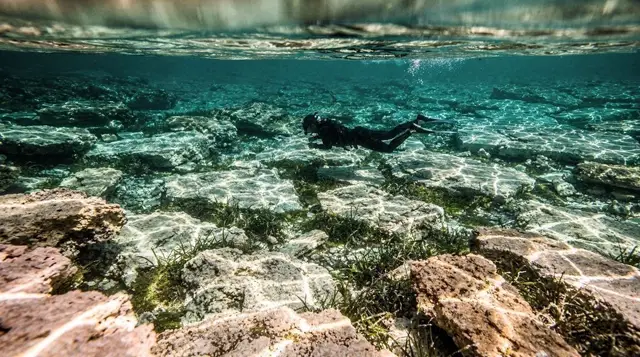
When the water is clearest for diving in Sardinia
Sardinia’s water looks clear in almost every photo, but visibility for diving specifically varies more through the year than the marketing suggests. Our general diving in Sardinia guide covers the main sites; this one is about timing — when visibility genuinely peaks, when it drops, and which areas hold up best even outside the ideal window.
Why July and August aren’t automatically the best months
Peak summer brings the warmest water, but also the most boat traffic, more suspended sediment stirred up by beach activity near popular sites, and the thermal winds that build choppy afternoon conditions on much of the west and south coast. Visibility in high summer is good but rarely the best of the year — the clearest water at most sites actually comes in the shoulder months either side of peak season, when the sea has settled but hasn’t yet cooled significantly.
May to June: the first strong window
Late spring is when many local dive operators consider conditions to peak for clarity, with water temperatures already reaching the low-to-mid 20s°C by June and noticeably calmer seas than the July-August afternoon chop. Fewer boats and divers in the water at this time of year also means less disturbed sediment around popular sites. It’s a genuinely underrated window, and one where you can dive without the queuing at popular entry points that builds up in August.
September and into October: the second, quieter window
September holds much of June’s clarity advantage while keeping the warmest water of the year — sea temperatures typically stay around 24-25°C through the month, only marginally below the August peak, as covered in our September in Sardinia guide. Crowds thin out substantially once European school holidays end, and this is genuinely one of the best times to dive sites like Tavolara or the waters around La Maddalena without competing for boat space. Visibility generally holds well into early October before autumn weather starts to make conditions less predictable.
Where clear water holds up best: La Maddalena and the north-east
The La Maddalena archipelago consistently has some of the clearest water on the island, protected by its marine park status and less affected by coastal development runoff than busier tourist areas. Diving here suits both beginners and experienced divers, with sites ranging from shallow granite formations to deeper wreck dives:
La Maddalena scuba diving experience for beginnersThe Gulf of Orosei: dramatic, but weather-dependent
The Gulf of Orosei offers some of Sardinia’s most dramatic underwater scenery, with limestone caves and walls dropping steeply from the cliffs above Cala Gonone, but conditions here are more exposed to swell than the sheltered north-east, so it’s worth checking forecasts a day or two ahead rather than booking rigidly in advance:
Full-day diving trip in the Gulf of Orosei from Cala GononeVillasimius and the south-east marine protected area
Villasimius sits within a marine protected area around Capo Carbonara, and the protection status genuinely shows in both marine life density and water clarity compared with unprotected stretches of coast nearby. This is a strong choice for divers who want a mix of reef life and easy access from a well-developed tourist base:
Villasimius scuba diving excursion in the marine protected areaAlghero and Capo Caccia: caves and clear water year-round
The limestone cliffs at Capo Caccia near Alghero offer some of the most consistent conditions on the island thanks to relatively sheltered positioning, with cave and wall diving that holds decent visibility across a longer stretch of the year than more exposed sites:
Alghero diving experience at Capo CacciaWater temperature and visibility by month
| Period | Water temperature | Visibility |
|---|---|---|
| May-June | 18-23°C | Very good, often the year’s clearest |
| July-August | 24-27°C | Good, more boat traffic and afternoon chop |
| September | 24-25°C | Very good, thinning crowds by mid-month |
| October | 20-22°C | Good, but less predictable weather |
| November-April | 13-16°C | Variable, drysuit conditions |
What certification and equipment cost on top of the dive
A try-dive or discover scuba session for complete beginners typically runs €70-100 including all equipment, while a two-tank dive for certified divers is usually €80-130 depending on the site and boat distance. If you’re not already certified and want to dive seriously rather than as a one-off, an Open Water course booked locally generally costs €350-500 over three to four days — worth planning as a dedicated block of your trip rather than squeezing it between other activities, since the classroom and pool sessions take real time.
Winter diving: possible, but a genuinely different trip
Diving continues through winter for those with the right exposure protection, and some experienced divers prefer it for the near-total absence of other boats, but water temperatures drop into the mid-teens°C and many dive centres reduce their schedules or close outright between November and March. This isn’t a season to plan a first Sardinia dive trip around unless you’re specifically chasing quiet sites and don’t mind a drysuit.
Marine life you’re likely to actually see
Sardinia’s waters support groupers, moray eels, barracuda in the warmer months, and occasional sightings of larger pelagic species around the more exposed sites near La Maddalena and the Gulf of Orosei. This isn’t Red Sea-level density of marine life, and operators are honest about that if asked directly — the draw here is more about dramatic underwater topography, clear water and genuinely interesting cave and wall formations than sheer volume of fish, which is worth knowing before booking if fish-spotting specifically is your priority.
Wrecks and technical diving
Sardinia has a genuine wreck diving scene, largely concentrated around the north-east coast and requiring more planning than a standard reef dive — see our dedicated wreck diving in Sardinia guide for site-specific detail. If you’re new to diving altogether, our try diving in Sardinia for beginners guide and the beginner-friendly snorkelling spots guide are better starting points than jumping straight into a demanding wreck site.
Combining diving with the rest of a Sardinia trip
Most divers on the island aren’t on a dedicated dive holiday — diving is one part of a broader beach and culture trip, and the sites covered here suit that pattern well, since each is close to a genuinely worthwhile land-based base.
La Maddalena pairs naturally with a few days exploring the archipelago’s own beaches by boat, Villasimius sits within easy reach of some of the south coast’s best sand, and a Gulf of Orosei dive trip out of Cala Gonone fits neatly alongside a hike toward Cala Goloritzè on a non-diving day. Building one or two dive days into a wider itinerary, rather than a standalone diving trip, is how most visitors actually experience it.
Frequently asked questions about diving season in Sardinia
What is the best month for diving visibility in Sardinia?
June and September are generally considered the strongest months for clarity, combining calmer seas and lighter boat traffic with still-warm water.
Is Sardinia diving good for beginners?
Yes — sites around La Maddalena, Villasimius and Alghero offer shallow, sheltered conditions well suited to first-time and newly certified divers.
How cold does the water get for winter diving?
Water temperatures typically drop into the mid-teens°C between December and February, requiring a drysuit or thick wetsuit and reduced dive centre schedules.
Is the Gulf of Orosei good for diving compared with the north-east coast?
It offers more dramatic scenery but is more exposed to swell, so conditions are less predictable than the sheltered waters around La Maddalena or Capo Caccia.
Do I need to be certified to dive in Sardinia?
No — most operators offer try-dive and beginner experiences that require no prior certification, alongside dives for certified divers at deeper or more demanding sites.
How much does a try-dive cost in Sardinia?
Typically €70-100 for a full beginner session including all equipment, rising to €350-500 for a full Open Water certification course over three to four days.
Is a wetsuit provided or do I need my own?
Equipment, including wetsuits, is included in almost all try-dive and guided dive prices — bring your own only if you have specific fit or thickness preferences.
Diving & snorkelling tours on GetYourGuide
Verified deep-linked GetYourGuide tours. Book through these links and we earn a small commission at no cost to you.
These are our own photographs of Sardinia, not the operator's pictures of this tour — open the tour page to see those.