Diving at the La Maddalena archipelago
Why is the La Maddalena archipelago good for diving?
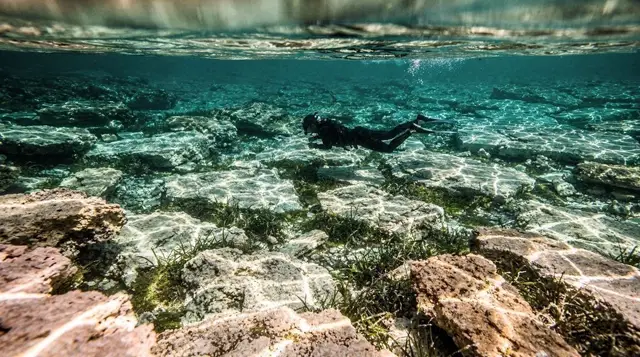
The archipelago's granite seabed and position at the mouth of the Bonifacio Strait, with no major rivers nearby, give it some of the clearest water anywhere around Sardinia — often 25-30m visibility in summer. Dives here tend toward granite drift routes and boulder fields rather than the caves and walls found near Alghero.
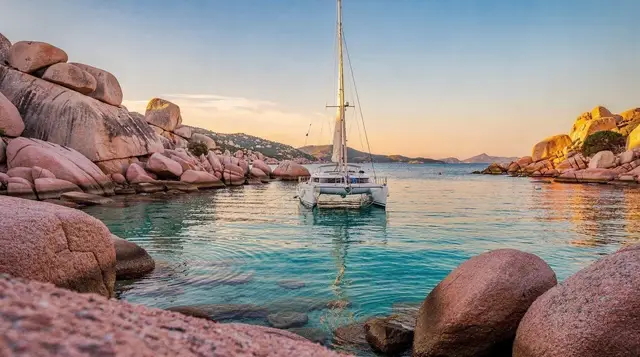
The La Maddalena archipelago sits at the very northern tip of Sardinia, at the mouth of the Bonifacio Strait between the mainland and Corsica, and its granite seabed produces some of the clearest water anywhere on the island — regularly 25-30m visibility through summer, well ahead of most other Sardinian dive regions. The terrain is different from the limestone cliffs and caves further south: expect granite boulder fields, drift routes and open channels rather than dramatic wall diving.
This guide covers the archipelago’s main dive sites, what to expect from a beginner or first-timer experience here, prices for 2026, and how a La Maddalena base compares to diving further south around Alghero or Villasimius.
| Where | La Maddalena archipelago, north Sardinia, mouth of the Bonifacio Strait |
| Terrain | Granite boulders, drift dives, open channels |
| Visibility | 20-30m typically, among the best in Sardinia |
| Best for | Water clarity, beginner-friendly sheltered channels |
| Season | May to October |
| Price | €50-80 per dive, €70-100 for a discover/beginner dive |
Why the water here is so clear
The archipelago’s granite bedrock, rather than the softer limestone found elsewhere on Sardinia’s coast, means less sediment and silt entering the water, and there’s no significant river system nearby to cloud visibility after rain. Combined with the marine park protections covering much of the archipelago’s core, this produces some of the most consistently clear diving water on the island — visitors used to diving elsewhere in the Mediterranean regularly rate La Maddalena’s clarity above anywhere else they’ve dived in Italy.
The scuba diving for beginners in La Maddalena takes advantage of this clarity for a first-timer’s introduction, since good visibility makes early dives noticeably less disorienting than murkier water would. The baptism of the sea scuba diving experience is a similarly structured introductory dive with a slightly different operator and route, worth comparing if the first option’s schedule doesn’t fit.
Some of the archipelago’s best sites sit inside the Parco Nazionale dell’Arcipelago di La Maddalena’s protected boundaries, where anchoring outside marked mooring points is restricted and access to certain zones needs a permit that the dive centre, not the individual diver, arranges as part of the trip. It’s one more reason to book through an established local operator rather than trying to explore the archipelago independently on a rented boat — navigating the park’s rules without local knowledge is easy to get wrong.
Diving toward the Lavezzi Islands and Bonifacio Strait
For certified divers wanting to extend the range beyond the archipelago’s core, the full-day scuba diving trip to the Lavezzi Islands from La Maddalena crosses into the Bonifacio Strait’s protected reserve, one of the most highly regarded stretches of water in the whole western Mediterranean for clarity and marine life combined. This is a longer day with more open-water time than the archipelago’s sheltered inner dives, better suited to divers with a reasonable number of logged dives already.
From Porto Pollo, on the mainland side of the strait, the certified diving trip to La Maddalena and the Lavezzi Islands from Porto Pollo covers similar ground for certified divers based on that side of the water rather than on the archipelago itself.
Granite boulder fields and drift dives
The archipelago’s core diving — around Caprera and the channels between the smaller islands — consists mostly of granite boulder fields at moderate depth, ideal terrain for drift diving where a gentle current carries divers along a route rather than requiring active swimming against it. This style suits divers who enjoy covering ground and seeing varied terrain over a single dive, as opposed to the more static wall-and-cave diving found around Capo Caccia.
| Area | Terrain | Depth range | Suited to |
|---|---|---|---|
| Archipelago core channels | Granite boulders, drift dives | 10-25m | Beginners to intermediate |
| Bonifacio Strait / Lavezzi | Open water, protected reserve | 15-35m | Intermediate to advanced |
| Caprera coastline | Rocky reef | 8-20m | Beginners, first dives |
The military and naval history beneath the surface
The La Maddalena archipelago has a naval history stretching back to the 18th century, and this legacy adds an unexpected dimension to some dives — old mooring structures, remnants of the naval base that operated here for decades, and occasional small wreck sites tied to this history rather than the more scenic natural terrain that dominates most dives here. This isn’t the primary draw of diving in the archipelago, but it’s a genuine point of interest for divers who enjoy a bit of history alongside the natural scenery, and some centres run dives specifically themed around these sites for anyone who asks.
Garibaldi’s house on Caprera, now a museum, is a reminder of the archipelago’s broader historical significance beyond the naval base — the Italian unification hero spent his final decades here, and the connection between this remote, wind-scoured cluster of islands and mainland Italian history is worth knowing even if your main interest is purely underwater. A rest-day visit to the museum pairs naturally with a diving-focused stay, giving non-diving time a genuine point of interest rather than just a beach day, though the beaches around Caprera are also excellent if history isn’t the priority.
Combining diving with the rest of an archipelago stay
Non-diving days here have plenty to fill them. The archipelago’s boat-tour scene, covering the same clear water divers explore at depth, gives a good surface-level sense of the terrain, and Caprera’s beaches and walking trails offer a land-based alternative for a rest day.
Palau and Cannigione on the mainland side both have their own restaurants and a more developed tourist infrastructure than the archipelago’s more remote islands, useful if you’re staying in one of these bases and commuting out to dive rather than staying on La Maddalena itself. See our La Maddalena archipelago boat tour guide for the fuller picture of what else this stretch of coast offers beyond diving.
A typical multi-day diving trip here might combine two or three dive days, including one longer day extending toward the Lavezzi Islands for more experienced divers, with a rest day exploring Caprera or simply relaxing on one of the archipelago’s beaches — a reasonable balance that avoids the fatigue of diving every single day of a stay.
Getting to and basing yourself at La Maddalena
The archipelago is reached by a short ferry crossing from Palau on the mainland, running frequently through the season, with dive centres operating from both La Maddalena town and Palau itself. Cannigione, a short drive from Palau, is another common base for divers heading out to the archipelago without staying on the islands directly. See our La Maddalena archipelago boat tour guide for how diving fits alongside the archipelago’s boat-tour and swimming options if you’re not diving every day of your stay.
Costs and booking for 2026
Prices at La Maddalena sit in line with the rest of Sardinia’s diving regions — €50-80 per certified dive including equipment, €70-100 for a discover or beginner dive with instructor throughout, and €350-500 for a full open-water certification course over three to four days. The Lavezzi Islands full-day trips cost more, typically €100-160, reflecting the longer duration, extended boat transfer and the additional logistics of reaching the protected reserve near the Corsican coast.
| Experience level | What’s included | Typical price |
|---|---|---|
| Discover / beginner dive | Instructor, shallow site, equipment | €70-100 |
| Standard certified dive | Boat, guide, equipment | €50-80 |
| Full-day Lavezzi Islands trip | Extended transfer, two dives, reserve access | €100-160 |
| Full certification course | 3-4 days, open-water qualification | €350-500 |
Book a few days ahead outside peak season; in July and August, particularly for the Lavezzi Islands trips with more limited daily capacity, a week’s notice is safer given how popular this specific route is with both Sardinia-based and Corsica-based divers converging on the same reserve.
Weather and conditions in the strait
The Bonifacio Strait, where La Maddalena sits, is one of the windier stretches of water around Sardinia, funnelling both the maestrale from the north-west and other prevailing winds through a relatively narrow channel between Sardinia and Corsica. This makes conditions here somewhat less predictable than the more sheltered Villasimius coast, and dive centres are quick to reschedule rather than run a dive in marginal conditions. Building a buffer day or two into a La Maddalena-focused diving trip is sensible, particularly if the Lavezzi Islands extension is a priority, since that route is the most exposed and weather-dependent of the options covered here.
How this compares to Sardinia’s other diving regions
La Maddalena wins clearly on water clarity, but the granite drift-dive style is a different experience from the limestone caves and walls at Capo Caccia near Alghero, or the dense marine reserve life at Villasimius’s Capo Carbonara. Divers chasing the single clearest water on the island should base here; divers chasing dramatic topography or the richest fish sightings may prefer one of the other two regions. Our diving in Sardinia guide covers all three side by side.
Water temperature and what to wear
Water temperature at La Maddalena follows a broadly similar seasonal pattern to the rest of Sardinia’s coast, though the more exposed, windier position of the strait can make it feel a degree or two cooler at the surface than the more sheltered Villasimius coast at the same time of year. Expect 14-16°C in winter for the handful of cold-water divers who venture out then, climbing to 24-26°C at the surface by August. A 5mm wetsuit is the sensible default across most of the April-to-October season; a 7mm or a semi-dry suit is worth considering for the deeper Lavezzi Islands routes, where the extended time at depth and cooler thermocline layers can make a noticeable difference to comfort compared with the archipelago’s shallower core sites.
What sets this region apart for repeat visitors
Divers who return to Sardinia specifically for diving, rather than as part of a broader holiday, often gravitate back to La Maddalena precisely because the granite terrain and consistent clarity reward multiple visits to the same sites in a way that’s harder to appreciate on a single dive. Currents and light conditions shift the character of the same channel meaningfully between visits, and the archipelago’s genuinely varied depth range — from shallow beginner-friendly sites to the more serious Lavezzi Islands routes — gives divers room to progress their skills across successive trips rather than exhausting what the region offers in a single stay.
Several dive centres here also offer specialty courses beyond basic open-water certification, including drift-diving and navigation modules that make direct use of the archipelago’s characteristic granite channels, worth asking about for anyone looking to build on an existing qualification during their stay.
Frequently asked questions about diving at La Maddalena
How clear is the water compared to the rest of Sardinia?
Typically the clearest on the island, 20-30m visibility in summer, thanks to the granite seabed and lack of nearby river run-off.
Is La Maddalena good for beginner divers?
Yes — several centres run dedicated beginner and discover-dive experiences in the archipelago’s sheltered inner channels, well suited to a first-time underwater experience.
Do I need to stay on La Maddalena itself to dive there?
No — Palau and Cannigione on the mainland side both have dive centres running trips out to the archipelago, a short ferry or boat ride away.
What’s the terrain like compared to diving at Capo Caccia?
Granite boulder fields and drift dives here, versus limestone walls, swim-throughs and caves at Capo Caccia — a genuinely different style of diving, not just a different location.
Can I combine diving with the Lavezzi Islands and Corsica?
Yes, several operators run full-day trips extending into the Bonifacio Strait’s Lavezzi Islands reserve for certified divers with sufficient experience.
What’s the best time of year to dive here?
June to September for the warmest water and most consistent conditions, though the strait can be windier than more sheltered Sardinian coasts — check forecasts, particularly in shoulder season.
How does this compare in cost to diving elsewhere in Sardinia?
Broadly similar — €50-80 per certified dive, €70-100 for a beginner or discover dive, in line with Capo Caccia and Villasimius pricing.
Is the Lavezzi Islands trip worth the extra cost and travel time?
For divers with a reasonable amount of experience wanting to see one of the most highly regarded stretches of water in the western Mediterranean, yes. For beginners or those with limited time, the archipelago’s own core sites offer excellent diving without the extended transfer.
How windy does it get around La Maddalena?
The strait can be notably windier than more sheltered parts of Sardinia’s coast, funnelling both the maestrale and other prevailing winds through a narrow channel; dive centres monitor conditions closely and reschedule when needed.
Can I combine La Maddalena diving with visiting Corsica?
Some of the deeper dive routes cross toward Corsican waters near the Lavezzi Islands, though a proper visit to Bonifacio itself is a separate trip; see our day trip to Bonifacio and Corsica guide for that option.
Diving & snorkelling tours on GetYourGuide
Verified deep-linked GetYourGuide tours. Book through these links and we earn a small commission at no cost to you.
These are our own photographs of Sardinia, not the operator's pictures of this tour — open the tour page to see those.