A day trip to Bonifacio and Corsica
Can you visit Bonifacio in Corsica as a day trip from Sardinia?
Yes. The ferry from Santa Teresa Gallura takes about 50 minutes, and the earliest and latest sailings give roughly nine or ten hours in Bonifacio — enough to walk the citadel, take a boat under the cliffs and have a proper lunch without an overnight stay.
The one foreign country you can add to a Sardinia trip without flying
From Santa Teresa Gallura, on the very northern tip of the island, the French citadel town of Bonifacio sits just 12km across open water. That gap is the Strait of Bonifacio, and it’s crossed in under an hour by scheduled ferry, which makes this one of the few genuinely worthwhile day trips out of Sardinia entirely. It works whether you’re based in Santa Teresa itself, staying somewhere in Palau or Arzachena, or passing through on a loop around the north during a longer trip such as our seven days in northern Sardinia itinerary.
| Details | |
|---|---|
| Where from | Santa Teresa Gallura, Sardinia |
| Crossing | Strait of Bonifacio, 12km, ~50 minutes by ferry |
| Alternative | Guided boat tour, no ferry booking needed |
| Time needed | Full day (9-10 hours door to door) |
| Cost, ferry route | roughly €50-90 per adult return, plus lunch |
| Cost, boat tour | roughly €70-140 per person, all-inclusive |
| Best months | May to October; some winter sailings suspended |
| Passport needed | Yes — Corsica is French territory |
Getting to Santa Teresa Gallura first
Before any of this, there’s the matter of reaching Santa Teresa Gallura itself, which sits at the very tip of Sardinia and isn’t especially close to anywhere else on the island. From Olbia and its airport, the drive is around 90 minutes on decent roads. From Alghero in the north-west, budget close to two hours.
From Cagliari in the south, it’s a genuine half-day drive of three and a half to four hours, which makes this day trip realistic mainly for visitors already based in the north — Santa Teresa Gallura itself, Palau or Arzachena — rather than a detour worth making from the far south of the island. See visiting Sardinia without a car if arriving by bus or transfer rather than driving.
Two ways to do this trip
There are genuinely two different ways to spend a day in Bonifacio, and they suit different travellers. The first is the scheduled car ferry, covered in full in our ferry between Bonifacio and Santa Teresa guide — you cross as a foot passenger or with a car, spend your day walking Bonifacio’s old town independently, and return on a later sailing. The second is a guided boat tour that leaves from Santa Teresa Gallura, sails past the cliffs and the Lavezzi Islands, and either stops in Bonifacio’s marina for a couple of hours or skips the town altogether in favour of swimming and snorkelling in the strait’s marine reserve. Neither is objectively better; they answer different questions.
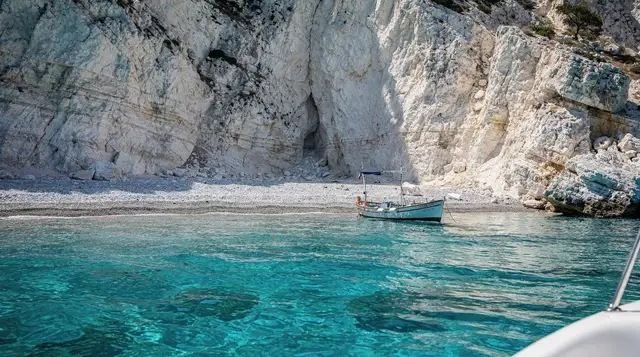
If what you want is to actually walk Bonifacio’s citadel, see the cliff-top ramparts and have a sit-down lunch in the old town, take the ferry. If what you want is a day on the water with swim stops and views of the limestone cliffs from below — with Bonifacio as a bonus rather than the point — a boat tour usually delivers more for the money and needs no separate port arrival on the French side.
Option one: the ferry, and a self-guided day in Bonifacio
Blu Navy and Moby Lines both run the crossing, with up to six or seven sailings a day in July and August and as few as one — or none — in the depths of winter. Taking the first morning sailing and the last evening one back gives roughly nine hours ashore, which is genuinely enough time if you don’t try to cram in more than the town itself.
A realistic plan: arrive by the first sailing, walk up into the citadel through the Porte de Gênes, and spend the first hour simply wandering the narrow streets before the day-trip crowds from bigger cruise excursions arrive. The Bastion de l’Étendard and the walk along the cliff-top ramparts give the best views back over the strait and, on a clear day, across to Sardinia itself. The Escalier du Roi d’Aragon — 187 steps cut into the cliff face, supposedly by Aragonese troops in a single night during a 15th-century siege — is worth the climb down and back up, though it gets busy by midday.
Lunch in the old town runs €20-35 a head at a sit-down restaurant with a marina or cliff view; the harbour-front cafés are convenient but pricier and more tourist-oriented than the alleys a few streets up. After lunch, the marina itself is worth a slow walk — Bonifacio’s harbour, tucked into a narrow limestone inlet, is one of the more dramatic natural anchorages in the Mediterranean, and several operators run short cliff-view boat trips directly from the quay if you didn’t come specifically for a Sardinia-based tour. Catch the late-afternoon or evening sailing back, and you’re in Santa Teresa in time for dinner.
Option two: a boat tour that does the crossing for you
For travellers without a car, or anyone who’d rather not manage a ferry timetable, a guided boat tour from Santa Teresa Gallura solves the whole day in one booking. The boat tour to Bonifacio, Isola Piana and the Lavezzi Islands is the closest match to the ferry-plus-walking-tour version above: it takes in the cliffs from the water, stops near the Lavezzi Islands’ marine reserve for swimming, and typically allows some free time in Bonifacio’s marina.
If open water and cliff views matter more to you than time ashore, the catamaran day tour to the Maddalena archipelago is worth comparing directly against a Corsica day — it stays in Sardinian waters and covers different scenery; our La Maddalena archipelago boat tour guide breaks down what that route actually includes.
For a smaller, more independent option, the self-drive dinghy tour to Corsica and Bonifacio suits two or three people who’d rather pilot their own small boat than join a full-size group vessel, with a guide leading the route. From the Corsican side, tours such as the cruise along the cliffs to the Lavezzi Islands run the same stretch of water in the other direction, useful if you’re basing yourself in Bonifacio for a night rather than doing the trip from Sardinia.
What to actually do once you’re there
Bonifacio’s old town is small enough to see properly in half a day, which is exactly why the day-trip format works. Beyond the citadel walls and the Escalier du Roi d’Aragon, the Cimetière Marin — the marine cemetery perched on the cliff edge — is a quieter, less-visited stop with some of the best views in town, and it costs nothing to walk through. The lighthouse at Capo Pertusato, a 40-minute walk or short taxi ride south of the centre, gives a genuinely different perspective back over the cliffs and the strait, though it’s only worth the detour if you’ve got more than the bare minimum of time.
If you’d rather spend the afternoon on land than back on a boat, the guided hike at Valle della Luna, a granite coastal landscape a short drive from Bonifacio, is a genuinely different way to use a Corsican afternoon than another old-town wander — it suits travellers who’ve already done a Bonifacio day and want a second visit with a different focus.
What it costs, roughly
A foot-passenger return ferry ticket runs €50-80 depending on season, with car fares considerably higher — see the ferry guide for the full 2026 breakdown. Add €20-35 for lunch and perhaps €10-15 for a coffee stop or ice cream, and a self-guided ferry day comes to roughly €80-130 per person all in, excluding a car. A guided boat tour bundles the crossing, swimming stops and narration into one price, typically €70-140 per person depending on boat size and whether lunch is included — often comparable to or cheaper than the ferry-plus-lunch total, and with less planning required.
A little history, and why Bonifacio looks the way it does
Bonifacio’s citadel dates to the 9th century, founded as a Genoese fortress before passing through Pisan, Aragonese and eventually French control — the layered history is visible in the town’s architecture, a mix that doesn’t quite look like mainland France or the rest of Corsica, let alone Sardinia. The clifftop position was defensive: the citadel sits on a narrow limestone promontory with sheer drops on three sides, making it one of the more naturally fortified towns in the Mediterranean, and the reason the marina below feels so dramatically enclosed.
Worth knowing before arriving: Corsica, despite being French territory just 12km from Sardinia, has its own strong regional identity and a language (Corsican) distinct from both French and Italian — locals are generally used to Italian-speaking day-trippers and English gets by fine in the tourist-facing parts of town, but it’s not simply “Italy with French passport control.”
What to bring, and what to skip
A day trip to Bonifacio needs less planning than it might seem. A passport or valid EU ID card is the one non-negotiable item — border checks happen at both ports, even if briefly. Comfortable shoes matter more than usual given the Escalier du Roi d’Aragon’s 187 uneven stone steps and the citadel’s cobbled streets; this isn’t a flip-flops day even in peak summer. Euros work on both sides of the strait, so no currency exchange is needed. A light jacket is worth packing even in summer, since the crossing itself can be breezy regardless of how warm the land feels, and afternoon boat trips or ferry returns catch more wind than the sheltered old town does.
Shopping and souvenirs worth a look
Bonifacio’s old town has a reasonable spread of shops selling Corsican specialities that aren’t available back in Sardinia — charcuterie (Corsican ham and coppa have their own AOC-protected status, distinct from Italian versions), local honey, and myrte and other Corsican digestifs comparable to but distinct from Sardinia’s own mirto. None of this is essential, but it’s a small way to bring something specifically Corsican back rather than a generic souvenir, and prices are broadly in line with what a day-tripper would expect from a well-visited Mediterranean old town — not a bargain, not a rip-off.
When to go, and when not to
May through October is realistic for this trip; outside that window ferry sailings thin to one a day or fewer and some boat-tour operators stop running entirely until spring. July and August give the most sailings and the most boat-tour departures, but also the biggest crowds in Bonifacio’s old town by midday — an early ferry or an early-departure boat tour avoids the worst of it. September is the strongest all-round choice: warm water, thinner crowds, and still-frequent sailings. Whichever month, check live timetables before committing, since neither operator publishes a fixed winter schedule far in advance.
Frequently asked questions about a Bonifacio day trip
Is Bonifacio worth a day trip from Sardinia?
Yes — the citadel, the Escalier du Roi d’Aragon and the cliff-edge marine cemetery are all walkable in a few hours, and a 50-minute crossing each way still leaves most of a day in town if you take an early sailing or tour departure.
Do I need a car to do this trip?
No. Santa Teresa Gallura’s port and Bonifacio’s old town are both walkable from where boats and ferries dock, so this works well as a car-free day — see visiting Sardinia without a car for the wider picture if you’re planning a trip without one.
Is it cheaper to take the ferry or book a boat tour?
For a single traveller focused purely on getting across and back, the scheduled ferry is often the cheaper option, but it only covers transport — swim stops, cliff views from the water and narration come with a guided boat tour, not the ferry.
How much time do I actually get in Bonifacio on a day trip?
On the earliest and latest ferry sailings, roughly nine to ten hours door to door, of which six to eight are genuinely usable in and around the town once you allow for the crossings.
Can I bring a rental car from Sardinia to Corsica?
Only if your rental agreement explicitly permits it — many Sardinian agencies exclude cross-border travel. Confirm before booking; see renting a car in Sardinia for what to check when you book.
Which is better for families, the ferry or a boat tour?
A boat tour usually suits families better — swim stops break up the day, there’s no walking timetable to manage around a ferry departure, and shorter tours mean less time keeping younger children entertained in a queue.
What’s the best month to do this trip?
September, on balance — sailings and tours are still frequent, the water is warm, and Bonifacio’s old town is noticeably quieter than in July or August.
Best day trips in Sardinia on GetYourGuide
Verified deep-linked GetYourGuide tours. Book through these links and we earn a small commission at no cost to you.
These are our own photographs of Sardinia, not the operator's pictures of this tour — open the tour page to see those.