Sardinia versus Corsica
Is Sardinia or Corsica better to visit?
Corsica packs mountains and beaches into a smaller, more compact island with dramatic scenery visible on shorter drives; Sardinia is larger, generally cheaper, and has a wider spread of beach styles and archaeological sites. Both are reachable from each other by a short ferry from Santa Teresa Gallura to Bonifacio, making a combined trip realistic.
Family travel on each island
Families with young children generally find Sardinia’s south coast and its wide, gently shelving beaches around Chia and Villasimius easier going than much of Corsica’s coastline, which leans more toward compact coves with less flat sand and, in places, a steeper approach. Corsica’s compact size can work in a family’s favour differently, though — shorter drives between a mountain morning and a beach afternoon mean less time strapped into a car seat than an equivalent Sardinia day might require, particularly if the plan involves both the coast and the interior. Both islands are manageable with children; the deciding factor tends to be whether a family prioritises easy, level beach access or a wider variety of scenery within a shorter drive.
Neighbours with a real ferry link, not just a comparison
Sardinia and Corsica are the closest thing to true neighbours among Mediterranean islands — a one-hour ferry connects Santa Teresa Gallura on Sardinia’s northern tip to Bonifacio on Corsica’s south coast, and plenty of travellers combine both in a single trip rather than choosing one over the other. Even so, they’re distinct enough to be worth comparing properly: Corsica is smaller, more mountainous relative to its size, and French rather than Italian in language, food and administration; Sardinia is larger, flatter overall, and offers a wider range of landscape from desert-like dunes to limestone gorge coastline.
| Sardinia | Corsica | |
|---|---|---|
| Size | 24,000 km², larger | ~8,700 km², more compact |
| Terrain | Mixed — coast, interior hills, some mountains | More consistently mountainous |
| Language/culture | Italian, Sardu, some Catalan (Alghero) | French, Corsican (Corsu) |
| Prices | Generally lower | Generally higher, especially dining |
| Beach style | Wide bays plus boat-only coves | Compact coves, dramatic cliff scenery |
| Ferry link | 1 hour to Bonifacio from Santa Teresa Gallura | Same crossing, reverse direction |
Size and pace: Sardinia asks for more driving
Corsica’s compact size means a week-long trip can realistically circle much of the island, seeing mountain villages, both coasts and Bonifacio’s cliff-top old town without excessive daily driving. Sardinia’s larger area — roughly 2.7 times Corsica’s size — means a comparable trip covers proportionally less ground, and reaching between, say, Alghero and the Gulf of Orosei is a genuine half-day drive rather than an hour’s hop.
This isn’t a downside so much as a different kind of trip — Sardinia rewards picking one or two regions properly rather than trying to circuit the whole island, something how many days do you need in Sardinia covers in more depth.
Driving culture and road conditions
Both islands share a reputation for demanding, winding coastal and mountain roads without motorways to speak of — Corsica’s roads are, if anything, slightly more consistently narrow and cliff-hugging given how much of the island is mountainous relative to its size, while Sardinia’s SS131 offers at least one genuinely fast dual-carriageway route across the island’s flatter middle.
Both require the same general caution: lower average speeds than a rental car company’s route-time estimates might suggest, particularly on any road marked as scenic or coastal on a map. Neither island is a place to rent a car and expect to cover long distances quickly, and both reward building in more driving time than GPS estimates suggest, especially in peak summer traffic.
Beaches and coastline
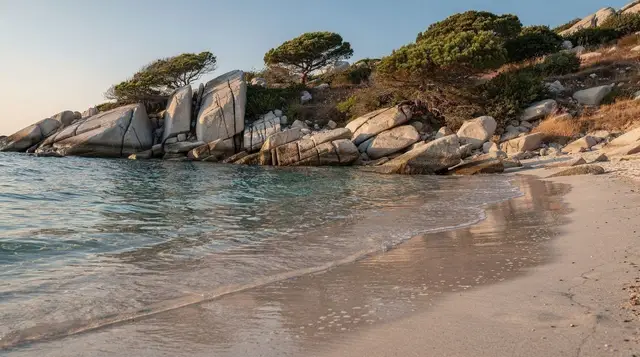
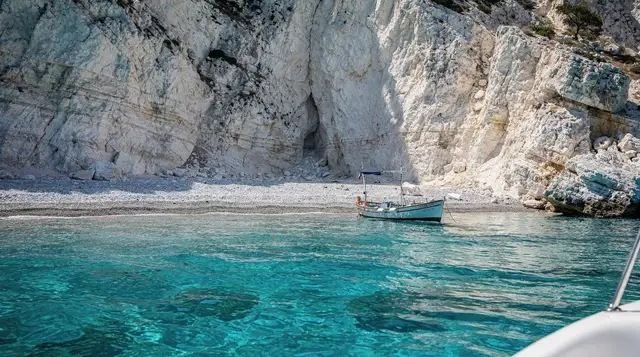
Both islands have genuinely excellent coastlines, but the character differs — Corsica’s beaches, particularly around Bonifacio and the Lavezzi Islands, sit within a more compact and consistently dramatic cliff-and-cove landscape, while Sardinia spreads a wider variety across its longer coastline, from the shallow sandbar at La Pelosa to the boat-only coves of the Gulf of Orosei.
A yacht and catamaran tour to the Lavezzi Islands from Bonifacio captures Corsica’s compact, cliff-framed style well, while Sardinia’s equivalent experiences, such as an aperitif boat tour around the Isola dell’Ogliastra from Arbatax, tend to cover more remote, less-visited stretches of coast simply because there’s more coastline to spread across.
Prices: Corsica generally costs more
As part of France, Corsica generally runs pricier than Sardinia across almost every category — restaurant meals, car hire and accommodation all sit noticeably above Sardinian equivalents, particularly in July and August. Sardinia, while not cheap by Mediterranean standards, undercuts Corsica meaningfully enough that budget-conscious travellers often find it stretches further, especially away from the Costa Smeralda’s own pricier pocket — see Sardinia on a budget for specific numbers.
Best time of year to visit each island
The two islands share a broadly similar Mediterranean climate and season, with June through September as the reliable swimming window on both — but Corsica’s greater average elevation means its interior stays cooler for longer into spring and cools down faster in autumn than Sardinia’s lower-lying interior. For beach-focused trips, the seasonal calendar is close enough between the two that Sardinia’s own month-by-month guides apply reasonably well as a rough guide to Corsica too, though Corsica’s mountain routes have a shorter comfortable hiking season given the additional elevation involved.
Mountains and interior landscape
Corsica’s interior is more consistently mountainous relative to its size, with the GR20 long-distance trail considered one of Europe’s toughest hikes and mountain villages genuinely close to the coast in driving time. Sardinia’s interior — the Supramonte and Gennargentu — offers comparable hiking and genuinely wild landscape, including the demanding Selvaggio Blu trek, but it’s set further back from the coast and requires more dedicated driving time to reach from a beach base. Neither island’s mountains are a lesser version of the other’s; they’re simply positioned differently relative to the coastline most visitors spend their time on.
Combining both islands in one trip
The Santa Teresa Gallura to Bonifacio ferry, roughly an hour each way, makes combining both islands genuinely practical rather than theoretical — many travellers spend a week split across both, using a day trip to Bonifacio and Corsica as a taster before committing more days, or building a longer two-island itinerary from the start. If a full combined trip isn’t realistic on this visit, the day-trip option lets you see Bonifacio’s dramatic clifftop old town and the Lavezzi Islands without restructuring the whole itinerary around it.
Food and drink: French versus Italian identity
Corsica’s food culture sits closer to French cuisine with strong Italian and Genoese influence layered in — charcuterie like coppa and lonzu, chestnut-based dishes from the interior, and Corsican AOC wines that lean toward the island’s own indigenous grape varieties, Niellucciu and Sciaccarellu.
Sardinia’s food identity is unmistakably Italian but distinct within that tradition — culurgiones, pane carasau, Cannonau and Vermentino di Gallura, none of which resemble mainland Italian regional cooking closely. Both islands cook with a strong sense of local identity rather than a generic national cuisine, and neither is a lesser version of its mainland’s food culture — see Sardinian food and wine for the fuller picture on that side of the comparison.
Getting to each island
Corsica connects most directly to mainland France via ferry from Nice, Marseille and Toulon, plus flights into Ajaccio, Bastia, Calvi and Figari from various European cities. Sardinia connects to mainland Italy via ferries from Civitavecchia, Genoa and Livorno, running considerably longer than Corsica’s mainland crossings, plus flights into its three airports from a wide range of European cities — see getting to Sardinia by air and ferries to Sardinia for the full detail.
For travellers starting from France, Corsica is the more naturally convenient first stop of the two; for those starting from Italy or flying into Cagliari or Olbia directly, Sardinia is the easier entry point.
Which suits a first Mediterranean-islands trip
For a first visit to either, Corsica’s compact size and shorter drives make it slightly more forgiving for a traveller unfamiliar with the region’s pace — you can see a genuine cross-section of coast and mountain without extensive daily driving. Sardinia rewards a bit more trip-planning discipline given its larger size, but pays that back with a wider variety of experience across a single island, from desert-like dunes on the west coast to boat-only limestone coves on the east. Neither is the objectively “easier” choice — it depends more on whether you’d rather see more of a smaller island or a deeper slice of a larger one.
Nightlife and evening entertainment
Corsica’s nightlife concentrates around Ajaccio, Bastia and Calvi, with a French sensibility toward late dinners and wine-focused evenings rather than large club scenes. Sardinia’s evening entertainment runs a wider range by comparison — Porto Cervo and the Costa Smeralda have some of the most exclusive, expensive nightlife in the Mediterranean during peak summer, while Cagliari offers a more accessible, year-round scene with a genuine local crowd rather than one built purely around tourism.
Neither island is a natural fit for travellers prioritising nightlife above everything else, but Sardinia’s spread — from Costa Smeralda glamour to Cagliari’s everyday bars — gives more range than Corsica’s more uniformly low-key evenings. See nightlife in Sardinia and nightlife in Cagliari for specifics.
Renting a car on each island
Car hire works similarly on both islands — book ahead for summer, expect manual transmissions as standard, and budget for narrow roads on both — but Corsica’s rental prices generally run higher in peak season, in line with its overall cost premium over Sardinia. Both islands see rental stock sell out in July and August, sometimes weeks ahead for the most popular pickup points, so booking early matters more than on a typical mainland trip either side.
Fuel prices are broadly similar, though Sardinia’s petrol stations thin out more noticeably in remote interior stretches than anywhere comparable in Corsica’s more compact geography. See renting a car in Sardinia for the Sardinia-specific detail, including which categories sell out first.
Frequently asked questions about Sardinia versus Corsica
How long is the ferry between Sardinia and Corsica?
Around one hour between Santa Teresa Gallura and Bonifacio, running multiple times daily in season with reduced schedules in winter.
Is Corsica more expensive than Sardinia?
Generally yes — as part of France, Corsica’s restaurant, accommodation and car hire prices typically run higher than Sardinia’s, particularly during the July-August peak.
Can I visit both Sardinia and Corsica in one trip?
Yes, and it’s genuinely practical thanks to the short ferry crossing — many travellers split a week or more across both islands rather than treating them as separate trips.
Which island has better hiking, Sardinia or Corsica?
Both offer serious hiking — Corsica’s GR20 is one of Europe’s toughest long-distance trails; Sardinia’s Selvaggio Blu and Supramonte routes are comparably demanding, with the difference being proximity to the coast rather than quality.
Is Corsica or Sardinia bigger?
Sardinia is significantly larger, at roughly 24,000 km² compared with Corsica’s approximately 8,700 km² — about 2.7 times the size.
Which island is better for a short trip of 4-5 days?
Corsica’s compact size suits a short trip better, letting you see more varied terrain without long drives; a short Sardinia trip works best focused on one region rather than trying to cover the island.
Do I need a car on both Sardinia and Corsica?
Yes on both — public transport is limited on each island, and a rental car is the practical way to reach beaches, mountain villages and trailheads on either.
Which island has better boat trips to nearby islets?
Both are strong — Corsica’s Lavezzi Islands trips from Bonifacio are compact and dramatic; Sardinia’s equivalent trips, including to La Maddalena archipelago and along the Ogliastra coast, cover a wider spread of less-crowded coastline.
Is Corsica part of France or Italy?
Corsica is a French island, administratively part of France despite its geographic proximity to Italy and its historical Genoese ties, which still show up in the local language and architecture.
Which island has more dramatic mountain scenery?
Corsica’s mountains sit closer to the coast and feel more consistently dramatic across a smaller area; Sardinia’s Gennargentu and Supramonte are comparably wild but require more dedicated driving time from most coastal bases to reach.
Is the food more expensive in Corsica than Sardinia?
Generally yes — as part of France, Corsica’s restaurant prices typically run higher than Sardinia’s for a comparable meal, particularly for anything involving imported French wine or cheese alongside local specialities.
Can I take a rental car on the ferry between Sardinia and Corsica?
Yes, most ferry operators on the Santa Teresa Gallura to Bonifacio route accommodate vehicles, though check your specific rental agreement first — some Sardinian car hire contracts restrict or surcharge cross-border travel to Corsica.
Popular Sardinia experiences on GetYourGuide
Verified deep-linked GetYourGuide tours. Book through these links and we earn a small commission at no cost to you.
These are our own photographs of Sardinia, not the operator's pictures of this tour — open the tour page to see those.