Diving at Villasimius and Capo Carbonara
Why is diving at Capo Carbonara different from the rest of Sardinia?
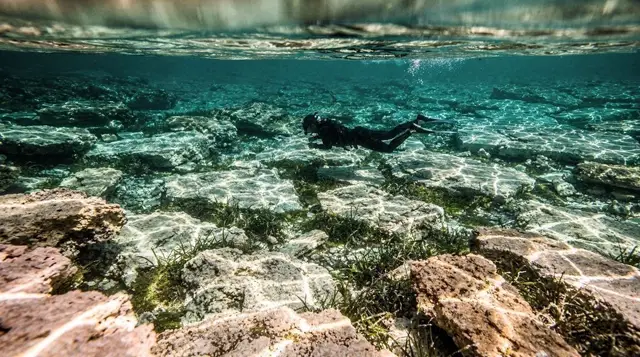
Capo Carbonara is a fully protected marine reserve with decades of restricted fishing, which means noticeably more fish life — groupers, barracuda and large schools of bream — than most unprotected stretches of Sardinian coast. It also has a genuine wreck, the Baiki, alongside its natural rock and cave sites.
Villasimius, an hour east of Cagliari, sits at the edge of the Capo Carbonara marine protected area — one of the earliest and best-enforced marine reserves in Sardinia, and the reason this stretch of coast has some of the richest fish populations on the island. Divers come here less for dramatic topography than for the sheer volume and variety of marine life visible on a single dive, a direct result of restricted fishing inside the reserve boundary.
This guide covers the main dive sites around Capo Carbonara, what marine life to expect, costs for 2026, and how this region compares to Sardinia’s other main diving areas for anyone deciding where to base a diving trip.
| Where | Villasimius, south-east Sardinia, within the Capo Carbonara marine reserve |
| Terrain | Rocky reefs, some caves, one notable wreck |
| Marine life | Groupers, barracuda, large bream schools, occasional dolphins |
| Best for | Marine life, beginner-friendly sheltered sites |
| Season | May to October, best visibility July-September |
| Price | €50-80 per dive, €70-100 for a discover/beginner dive |
Why the marine reserve matters underwater
Capo Carbonara has been under formal protection since the late 1990s, with restrictions on fishing and anchoring inside its boundary that most of the surrounding Sardinian coast doesn’t have. The practical result, decades on, is a noticeably higher density and size of fish than comparable unprotected reefs elsewhere on the island — groupers that have grown large without being fished, barracuda schools that move through the deeper channels, and bream in numbers dense enough to genuinely obscure visibility at times. This is the region’s main draw over more scenic but less biologically rich sites like Capo Caccia.
The scuba diving excursion inside the marine protected area is the standard route into the reserve for certified divers, typically two dives across the morning with a surface interval. For a deeper technical route across the reserve’s outer islands, the diving tour to Cavoli, Serpentara and Capo Carbonara covers three distinct sites in one trip.
Beginner and first-time diving options
Capo Carbonara’s generally calmer, more sheltered conditions than the current-exposed sites at Capo Caccia make it a genuinely good place for a first dive. The discover scuba diving experience at Capo Carbonara and the first-time dive at Capo Carbonara are both structured for complete beginners, with an instructor throughout and no certification required — a shallow, supervised introduction that still reaches genuinely good marine-life sites rather than a token training pool dive.
The Baiki wreck and rocky reef sites
Unlike much of Sardinia’s coast, Capo Carbonara has an accessible wreck dive — the Baiki, a sunken vessel now colonised by marine growth and a regular stop for more experienced divers wanting something beyond the reserve’s natural reef sites. The rocky reefs around the outer islets of Cavoli and Serpentara add depth variation, from shallow sites suitable for less experienced divers to deeper drop-offs for those with more dives logged.
| Site | Depth range | Suited to | Highlight |
|---|---|---|---|
| Capo Carbonara reef | 5-25m | Beginners to intermediate | Dense fish life, bream schools |
| Cavoli & Serpentara | 15-35m | Intermediate to advanced | Rocky drop-offs, occasional barracuda |
| The Baiki wreck | 20-30m | Certified divers | Wreck exploration, marine growth |
Costs and booking for 2026
A standard two-dive excursion inside the reserve runs €80-120 for certified divers, including equipment, with single-dive options and multi-dive packages also available from most centres. Discover scuba diving and first-time experiences cost €70-100, covering a shorter, shallower single dive with an instructor throughout. Full open-water certification, if you’d rather leave Sardinia with a genuine qualification, runs €350-500 over three to four days — worth considering if Capo Carbonara’s calmer conditions make it an appealing place to learn compared with a more current-exposed location.
| Experience level | What’s included | Typical price |
|---|---|---|
| Discover / first-time dive | Instructor, shallow site, all equipment | €70-100 |
| Standard two-dive excursion | Boat, guide, equipment, reserve access | €80-120 |
| Multi-dive package (5+) | Discounted per-dive rate | €300-500 |
| Full certification course | 3-4 days, open-water qualification | €350-500 |
Booking a day or two ahead is usually sufficient outside August; in peak season, particularly for the more popular discover-dive slots, booking a week ahead is safer, since Villasimius draws heavy domestic tourism from Cagliari in July and August that fills up local dive centres’ morning departures first. Weekday mornings tend to have more availability than weekend slots, worth keeping in mind if your schedule allows flexibility on which day to dive during a longer stay.
What to expect on the boat and underwater
Most dives here depart from Villasimius harbour by boat, a short run of 10-20 minutes to the main reserve sites depending on which is chosen for the day. Two dives are standard for a full excursion, with a surface interval between them typically spent on the boat with light refreshments rather than returning to shore. Visibility inside the reserve is good but not exceptional by Sardinia’s best standards — typically 15-20m, behind La Maddalena’s clearest channels but ahead of much of the unprotected coast elsewhere on the island. What Capo Carbonara trades in raw visibility it makes up for in the sheer density of what you’ll see once underwater.
How this compares to Sardinia’s other diving regions
Capo Caccia near Alghero has more dramatic underwater terrain — walls, caves, swim-throughs — but less concentrated marine life than the protected waters here. The La Maddalena archipelago offers the clearest water on the island but a different, more granite-drift style of dive. Villasimius sits between the two: calmer and more beginner-friendly than Capo Caccia, with richer fish life than most unprotected La Maddalena sites outside the core marine park. See our diving in Sardinia guide for the full regional comparison, and our best snorkelling spots guide if you’d rather stay shallow without full scuba gear.
Weather and water conditions through the season
Villasimius’s south-east-facing coast sees somewhat different wind patterns from the west-facing Alghero or the northern La Maddalena archipelago, with the maestrale affecting it less directly than it does the west coast. This generally means more consistently diveable conditions through summer, though the scirocco, a warm wind from the south-east, can occasionally build a swell that closes some of the more exposed reserve sites for a day or two. Dive centres monitor this closely and will reschedule rather than run an unsafe dive, so it’s worth building a day or two of buffer into a diving-focused trip here rather than booking every single day with no flexibility.
Water temperature follows the same broad Sardinian pattern — around 14-16°C in the depths of winter for the rare cold-water divers who venture out then, climbing to 24-26°C at the surface by August, with depth remaining several degrees cooler even in peak summer. A 5mm wetsuit is the sensible default for most of the season; a 3mm shorty suffices only for shallow dives in the height of summer.
Marine reserve rules and why they matter here specifically
Capo Carbonara’s protection status isn’t just a formality — it directly shapes what divers see. Fishing restrictions inside the reserve boundary have been enforced consistently since the reserve’s establishment, allowing fish populations to recover and grow in a way that’s measurably different from unprotected stretches of coast just a short distance away.
Anchoring is restricted in specific zones to protect Posidonia seagrass meadows, which function as nurseries for juvenile fish and contribute meaningfully to the area’s overall marine health. Dive centres operating here brief guests on these rules as standard practice, but understanding the reasoning — rather than treating it as arbitrary restriction — makes for a more engaged and appreciative dive.
Divers are asked not to touch or feed marine life, a rule that applies everywhere responsible diving happens but is enforced particularly closely here given the reserve’s role as a case study in marine protection working as intended. Photography is welcomed and encouraged as an alternative way to document a dive without physical interaction with the reef or its inhabitants. Divers who’ve spent time in less-protected Mediterranean waters elsewhere often remark that the difference here is immediately visible from the first few minutes of a dive — the sheer number and size of fish is a genuinely tangible result of years of consistent protection rather than a subtle or debatable improvement.
Getting to Villasimius and where to base yourself
Villasimius sits about an hour’s drive east of Cagliari along the coast road, close enough for a day trip from the capital but well set up for a longer stay in its own right, with beach access at Villasimius’s beaches doubling as a strong base for anyone splitting time between diving and simply relaxing on the sand. Our day trips from Cagliari guide covers how this fits alongside the capital’s other nearby options, including Chia and Pula’s archaeological sites.
Combining diving with the rest of a Villasimius stay
Villasimius works well as a base for a trip that isn’t entirely diving-focused, since it has strong beaches, easy access to Cagliari’s day-trip attractions, and a genuinely pleasant town centre that doesn’t feel purely built around tourism the way some more heavily developed resorts can. A typical structure for a week here might combine two or three dive days with beach time at Villasimius’s own coastline, a day trip toward Chia or Pula and Nora’s archaeological site further along the south coast, and an evening or two in Cagliari itself for dinner and the old town.
This kind of mixed itinerary suits Villasimius particularly well, since the town itself, while pleasant, doesn’t demand multiple full days of dedicated sightseeing the way Cagliari or Alghero’s old towns do — the diving and the beaches are genuinely the main draw, and the itinerary works best built around them rather than around town-based activities. See our day trips from Cagliari guide for how these pieces fit together into a longer itinerary.
Non-diving companions have plenty to do independently while divers are on the water — the beaches immediately around Villasimius rank among the best in south Sardinia, and several boat tours combine snorkelling stops with the same reserve waters divers are exploring at greater depth, giving families or mixed-interest groups a shared day out even when not everyone is diving. This makes Villasimius a genuinely easier sell to a mixed group than some of the more diving-singular bases elsewhere on the island, where non-divers have fewer obvious alternatives close at hand.
Frequently asked questions about diving at Villasimius and Capo Carbonara
Is Capo Carbonara suitable for beginner divers?
Yes — the reserve’s calmer, more sheltered conditions make it one of the better beginner regions in Sardinia, with dedicated discover and first-time dive options available.
What marine life will I actually see?
Large schools of bream and salema are near-guaranteed; groupers and barracuda are common but not certain on every dive, a direct result of the reserve’s fishing restrictions over recent decades.
Is there a wreck to dive near Villasimius?
Yes, the Baiki, a sunken vessel now colonised by marine growth, suited to certified divers wanting something beyond the natural reef sites.
How does Capo Carbonara compare to Capo Caccia for diving?
Capo Carbonara has richer, denser marine life and calmer conditions; Capo Caccia has more dramatic caves and walls but less concentrated fish life. Choose based on which matters more to you — see our diving in Sardinia guide for the full comparison.
Do I need a permit to dive inside the marine reserve?
Dive centres handle any required reserve permits as part of the booking; independent divers should check with the park authority directly before diving unguided.
What’s the water temperature like for diving at Villasimius?
Similar to the rest of southern Sardinia — up to 26-27°C at the surface in August, cooler at depth, with a 5mm wetsuit recommended year-round beyond the shallowest dives.
Can non-divers join a boat that’s diving Capo Carbonara?
Some operators allow snorkelling companions on the same boat while divers are underwater; ask specifically when booking, as it varies by operator and isn’t guaranteed on every trip.
How much does diving at Villasimius cost compared to certification elsewhere in Sardinia?
Broadly the same as Alghero and La Maddalena — around €350-500 for a full certification course and €70-120 for single or discover dives — so the choice of where to dive comes down to terrain and marine life preference rather than cost.
How far is Villasimius from Cagliari Elmas airport?
About an hour by car, making it a realistic base for a diving-focused trip without needing to factor in a long transfer on arrival or departure. See our Cagliari Elmas airport guide for transfer options.
Is Villasimius worth visiting even without diving?
Yes — its beaches rank among the best in south Sardinia in their own right, covered in our Villasimius beaches guide, so a diving trip here doubles easily as a broader beach-focused stay.
Diving & snorkelling tours on GetYourGuide
Verified deep-linked GetYourGuide tours. Book through these links and we earn a small commission at no cost to you.
These are our own photographs of Sardinia, not the operator's pictures of this tour — open the tour page to see those.