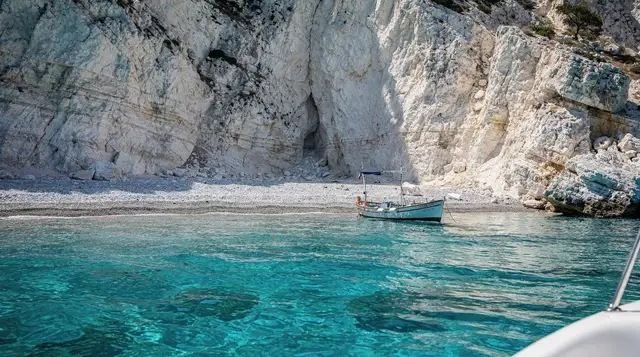
Golfo Aranci sits on the tip of a narrow peninsula 18km north-east of Olbia, and for most visitors it means one thing: the ferry terminal for Corsica Ferries and Moby Lines sailings to Livorno and Civitavecchia. That’s a shame, because the village itself — a grid of pastel houses around a working harbour — is worth more than the hour spent waiting for a boarding call. It sits directly across the water from the Tavolara-Molara-Capo Coda Cavallo marine protected area, which makes it one of the cheapest bases in Gallura for dolphin-watching and kayak trips.
The beaches are small but decent: Cala Sabina and Fig di Mare are sandy coves a short walk from the centre, good for a swim between ferry check-in and departure. What sets Golfo Aranci apart from Olbia or Palau is price — the same three-hour boat trip that costs €65 from Palau often runs €15 to €20 cheaper here, because the operators are smaller and the marketing budget is smaller too.
Getting to Golfo Aranci
Olbia Costa Smeralda airport (OLB) is 20 to 25 minutes away by car, and there’s no motorway shortcut — you’re on the SS125 and then local roads the whole way. A taxi from the airport runs roughly €35 to €40; there’s no direct bus, so most people either rent a car or book a private transfer in advance. If you’re arriving by ferry from the mainland, Golfo Aranci is the terminal itself, and Olbia’s town centre and shops are a 25-minute drive south.
Drivers should know the road in is single-lane for stretches and gets backed up in July and August when ferries load and unload — allow an extra 20 minutes either side of a sailing if you’re driving through rather than boarding. See our Olbia Costa Smeralda airport guide for arrival logistics, and ferries to Sardinia if you’re combining the crossing with a longer Italy trip.
Dolphin-watching and boat trips
This is the reason to add Golfo Aranci to an itinerary rather than just pass through it. The stretch of sea between the village and Tavolara island is a resident feeding ground for bottlenose dolphins, and the small operators here run kayak and RIB trips daily from May to September. A typical outing is three to four hours: paddle or motor out past the lighthouse, spot dolphins if they’re around (sightings aren’t guaranteed, whatever the brochures imply), then snorkel or swim near Molara before an aperitif on the way back.
a half-day dolphin-watching and snorkelling boat tour is the most popular format and suits families reasonably well, since the boats are stable and the pace unhurried. For something more active, a kayak tour with an aperitif stop covers less distance but gets you closer to the water, and groups tend to be smaller — six to ten people rather than thirty on the bigger boats.
If you’d rather cover more ground, a longer excursion around the Gulf of Olbia and Tavolara takes in Molara and the Coda Cavallo headland as well, which is worth the extra couple of hours if you’re not planning a separate day around Tavolara itself. Compare formats in our guide to dolphin-watching in Sardinia before booking, since the marketing photos for these trips are near-identical and the real differences are boat size, group size and how much time is actually spent looking for dolphins versus drinking prosecco.
The kayak trips deserve a closer look, since they’re the format Golfo Aranci does best. Unlike the bigger motorised boats, kayaks let you paddle right up to the rocky inlets along Capo Figari that larger hulls can’t reach, and the slower pace tends to produce closer, calmer dolphin encounters when a pod is in the area — a motor cuts out entirely for the safety of the animals, but a paddle doesn’t disturb them the same way.
A sunset departure adds a different light over the strait and usually a calmer sea than the midday slots, worth the trade-off of slightly cooler evening air. Families with children old enough to paddle a tandem kayak tend to do well on these trips; anyone with limited mobility is better served by one of the motorised boat options instead.
| What | Where | How long | When to go |
|---|---|---|---|
| Dolphin-watching boat trip | Golfo Aranci harbour | 3–4 hours | May–September |
| Kayak tour with aperitif | Golfo Aranci harbour | 3 hours | June–September |
| Cala Sabina beach | 10-min walk from centre | Half day | June–September |
| Ferry to Livorno/Civitavecchia | Golfo Aranci terminal | 8–11 hours overnight | Year-round |
The village and the beaches
Golfo Aranci itself is small enough to walk in twenty minutes — a handful of streets, a lighthouse at Capo Figari you can hike up to for views over the strait, and a passeggiata along the harbour that fills up with locals in the evening. It’s not a destination for nightlife or shopping; the appeal is the low-key pace and the water. Cala Sabina, the main town beach, is sand and shallow, popular with families staying nearby. Fig di Mare, a little further out, is quieter and better for snorkelling near the rocks at either end.
Neither beach carries an access quota (unlike La Pelosa further north), so there’s no need to book ahead — just show up, though parking in August fills by mid-morning. For a wider comparison of beaches in this part of the coast, see best beaches in Costa Smeralda, which covers the better-known sweep from Golfo Aranci down to Cala Brandinchi.
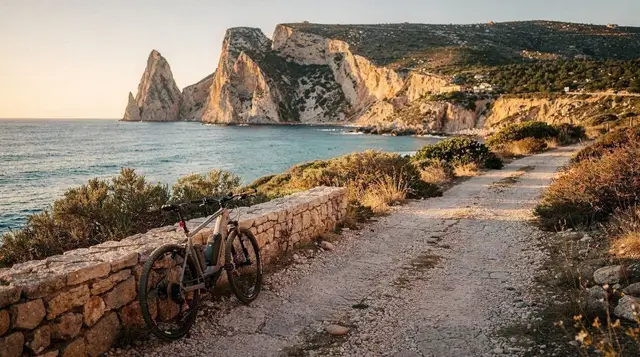
The Capo Figari headland behind the village is worth the walk even without a boat trip in mind. The path up is unshaded and takes about 40 minutes each way, past scrubland that’s home to wild donkeys in a small protected reserve, ending at the disused lighthouse and clifftop views back over the strait to Tavolara. Go early morning in summer to avoid the exposed heat, and bring more water than seems necessary — there’s nowhere to refill along the route.
Practical notes
There’s no real culinary reputation to speak of here — a handful of harbourside trattorie serve competent seafood pasta and grilled catch of the day, at prices noticeably lower than Porto Cervo 25km up the coast. Expect simple, honest cooking rather than anything ambitious: spaghetti alle vongole, grilled orata, a straightforward house Vermentino. Reservations are rarely necessary outside the busiest August weekends, which is itself part of the appeal after the booked-out terraces further along the Costa Smeralda.
It’s a sensible overnight base if you want to catch an early ferry or a morning boat trip without the Costa Smeralda price tag, and it works as a quiet alternative to staying in central Olbia — hotel rates here typically run 20 to 30% below equivalent quality in Olbia town during peak season. Accommodation is limited to a handful of small hotels and B&Bs rather than large resorts, so book ahead in July and August even though the village itself never feels overcrowded.
For a longer stay in the area, our 3-day Olbia and Costa Smeralda itinerary slots Golfo Aranci in as a half-day or overnight stop, and the north Sardinia 7-day itinerary uses it as a base for the dolphin-watching leg. If you’re weighing up which coastal town to sleep in for your first and last nights, our Cagliari vs Alghero vs Olbia comparison covers the wider trade-offs, though Golfo Aranci itself is worth considering as a quieter fourth option near Olbia’s airport.
Frequently asked questions about visiting Golfo Aranci
Is Golfo Aranci just a ferry port, or is it worth a stay?
It’s both. The ferry terminal dominates its reputation, but the village has decent beaches and some of the most affordable dolphin-watching and kayak trips in Gallura — worth a one or two-night stay even without a ferry to catch.
How do I get from Olbia airport to Golfo Aranci?
By car it’s 20 to 25 minutes on the SS125 and local roads; there’s no direct airport bus, so budget €35 to €40 for a taxi or arrange a private transfer in advance.
Are dolphin sightings guaranteed on the boat trips?
No. Operators know the feeding grounds and sightings are frequent between May and September, but dolphins are wild animals and no honest company guarantees an encounter — treat the snorkelling and scenery as the trip’s real value.
Which beach is better, Cala Sabina or Fig di Mare?
Cala Sabina is closer to the village, sandier and busier with families; Fig di Mare is a short drive further out, quieter, and better for snorkelling around its rocky edges.
Do I need to book boat trips in advance in high season?
Yes, in July and August the smaller boats fill up two to three days ahead. Outside peak season you can often book the same morning.
Can I visit Tavolara island directly from Golfo Aranci?
Most Golfo Aranci boats circle Tavolara and stop for swimming rather than landing on the island; for an actual stop on Tavolara, book from Porto San Paolo instead.
Is Golfo Aranci a good place to stay if I’m flying into Olbia late at night?
Yes — it’s close enough to the airport (20 to 25 minutes) to make sense as a first-night base, and rates are generally lower than staying in central Olbia or further up the coast toward the Costa Smeralda.
What’s the walk up to Capo Figari like?
About 40 minutes each way on an unshaded path, ending at clifftop views and a disused lighthouse; go early in the morning during summer and carry plenty of water, since there’s nowhere to refill along the route.