Via ferrata in Sardinia, mainly on Tavolara island
Where is the via ferrata in Sardinia?
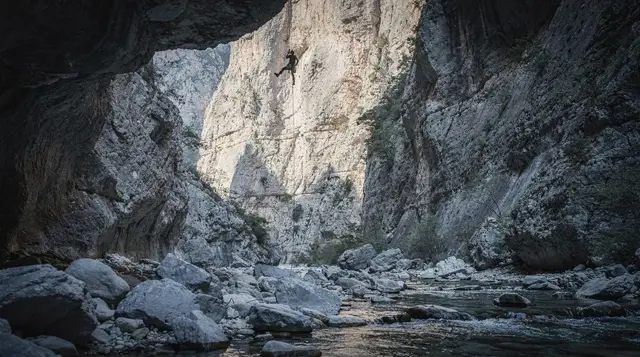
The island's established via ferrata route is on Tavolara, off the coast near Olbia, following fixed cables and metal rungs up part of the island's dramatic limestone-topped granite face. It's guided rather than self-access, since the approach is by boat and the exposure is real.
Via ferrata — literally “iron path” — means a route protected by fixed steel cable, rungs and sometimes ladders bolted into the rock, clipped with a lanyard system rather than a rope you manage yourself. It’s an Alpine invention, and Sardinia has nothing like the density of routes you’d find in the Dolomites, but the one established line here happens to sit somewhere genuinely spectacular: Tavolara, the limestone-capped granite island that rises almost 600 metres straight out of the sea just off Olbia.
| Where | Tavolara island, reached by boat from Olbia |
| Length | A guided route of several hours including the boat crossing and approach walk |
| Difficulty | Moderate — fixed cable and rungs, no prior climbing needed, but real exposure |
| Cost | Roughly €70-110 per person including guide and technical kit |
| Season | Spring through autumn; cancelled in strong wind or wet rock |
What the Tavolara route actually involves
The island’s fixed-cable sections climb through the lower and middle reaches of Tavolara’s dramatic north-western face, using steel cable to clip a via ferrata lanyard to as you ascend rungs, ledges and short exposed traverses bolted into the rock. It isn’t a full summit route to the island’s highest point — that remains a serious alpine objective reserved for specialist parties — but it delivers real height, genuine exposure over the sea, and views back across the Gulf of Olbia that most visitors never see, since access to any of it is by guided boat and climb only:
Guided via ferrata route on Tavolara islandA typical outing starts with a short boat crossing from Olbia’s marina, a walking approach to the base of the fixed-cable section, the ferrata itself (typically one to two hours of climbing with rest stops), and a return the same way. Guides fit a harness, helmet and via ferrata lanyard set before the technical section begins, and give a briefing on clipping technique — the main skill via ferrata demands, since the exposure is real even though the protection is fixed.
Why Sardinia has so little via ferrata compared to the Alps
Via ferrata as a discipline developed in the Dolomites and the eastern Alps, originally as military infrastructure during the First World War before being adapted for recreation, and the terrain that suits it — long, sustained rock faces at altitude, with an established Alpine guiding culture to build and maintain the fixed cable — simply doesn’t exist at scale in Sardinia. The island’s mountains, while dramatic, are lower and generally lack the kind of sustained vertical rock faces the Dolomites offer in abundance.
Tavolara is the exception because it combines real height (getting close to 600 metres above sea level from a standing start) with dramatic exposure over water, which is precisely the combination that makes a single route worth the infrastructure investment even without a wider network around it. Don’t come to Sardinia expecting an Alpine-style via ferrata circuit; come for the one genuinely excellent route it has.
What the crossing and climb actually feel like
The boat crossing from Olbia sets the tone before you’ve even touched rock — Tavolara rises ahead of you the whole way, and by the time you land the scale of what you’re about to climb is obvious rather than a surprise sprung on you partway up. The approach walk from the landing point to the base of the fixed-cable section covers rough coastal terrain, warm and exposed most of the year, and gives guides a chance to assess how everyone in the group is moving before the technical climbing starts.
Once on the cable, the pace is steady rather than rushed — groups typically move one climber at a time through the more exposed sections, with the guide positioned to assist and coach technique on the rungs and ledges. The views back across the Gulf of Olbia and, on a clear day, toward Corsica to the north, open up gradually rather than all at once, which is part of what makes the route feel earned rather than simply scenic.
Who it suits and who it doesn’t
No prior climbing experience is required, which is the whole point of via ferrata as a discipline — the fixed protection does the work that a rope and rack would do in free climbing. What matters more is a reasonable level of fitness, comfort with heights (there’s no getting around the exposure on an island route like this), and the ability to follow instructions calmly under a bit of physical strain. It’s not generally suitable for young children, and most operators set a minimum age around 12-14 given the seriousness of the terrain; check when booking if you’re travelling with teenagers. Anyone with a genuine fear of heights should think carefully — a via ferrata route doesn’t hide the drop the way a walking trail can.
Alternatives if you want more climbing on the same trip
Tavolara also offers guided trekking-and-climbing days that go beyond the fixed-cable route for parties with some climbing background, covered in the rock climbing guide:
Guided trekking and climbing day on Tavolara islandIf the appeal is exposure and adrenaline rather than climbing specifically, the Gorropu gorge near Dorgali offers a different kind of dramatic terrain — a canyon rather than a peak, walked or descended on rope depending on which route you choose:
Gorropu canyon trek with panoramic viewpoints from DorgaliFor non-technical hiking that still delivers big Supramonte views without ropes or cable, hiking in Sardinia and the Supramonte hiking guide cover the wider trail network, and canyoning in Sardinia is the closest equivalent adrenaline activity in the interior rather than on the coast.
A typical schedule, hour by hour
Most operators structure the day roughly as follows: an early meeting time at Olbia’s marina, generally between 8am and 9am to make the most of cooler morning temperatures on the exposed sections; a 20-30 minute boat crossing to Tavolara; a briefing and equipment fitting at the landing point; a 30-45 minute approach walk to the base of the fixed-cable section; the via ferrata climb itself, typically one to two hours including rest stops for photos and to let the group regroup at ledges; and a return the same way, finishing with the boat crossing back to Olbia by early-to-mid afternoon.
Some operators offer an afternoon departure instead, useful if you’d rather avoid an early start, though the exposed sections can feel noticeably hotter later in the day during peak summer.
Alternative, less strenuous ways to see Tavolara
If the via ferrata’s exposure genuinely isn’t for you but the island itself still appeals, boat trips that circle Tavolara without landing offer the same dramatic silhouette from sea level, with none of the climbing commitment — covered in Tavolara boat tours. Some operators also run gentler walking routes on the island’s lower, flatter sections, well short of the fixed-cable terrain, for visitors who want to set foot on Tavolara without the climb.
It’s worth being honest with yourself about which experience you actually want before booking — the via ferrata is genuinely the headline activity here, but it isn’t the only way to appreciate the island, and a boat circuit at sunset arguably shows off Tavolara’s scale just as effectively for a fraction of the physical commitment.
What else the Gulf of Olbia offers
Via ferrata days rarely fill an entire trip on their own, and Olbia sits close to enough of the island’s northeast highlights that most visitors build the climb into a longer stay rather than a single-purpose visit. Day trips from Olbia covers the wider area, including the Costa Smeralda’s beaches and the boat trips out to La Maddalena, both realistic additions either side of a via ferrata day. If you’re drawn to Tavolara’s granite specifically, rock climbing in Sardinia covers the more technical multi-pitch routes on the same island for anyone who wants to go beyond the fixed-cable format on a return visit.
Getting there
Every via ferrata booking on Tavolara starts from Olbia, reached by ferry from mainland Italy or flights into Olbia Costa Smeralda airport — see getting to Sardinia by air and ferries to Sardinia if you’re still planning the wider trip. From Olbia, operators handle the boat transfer to Tavolara as part of the booking, so there’s no need to arrange your own crossing. If you’re combining a via ferrata day with time further along the coast, day trips from Olbia covers other options for the rest of your stay in the area.
Insurance, waivers and health declarations
Every operator running the Tavolara via ferrata requires a signed liability waiver before the boat departs, and most ask a few basic health questions covering heart conditions, recent injuries and general fitness rather than a formal medical check. Standard travel insurance doesn’t automatically cover via ferrata in every policy, since some insurers classify it as an adventure activity alongside climbing or canyoning rather than general hiking, so it’s worth checking your policy’s activity list specifically before booking rather than assuming cover.
Operators themselves generally carry liability insurance for their guiding, equipment and the boat crossing, but this covers their negligence rather than personal accident or medical costs, which remain the visitor’s own responsibility to insure separately. Anyone with a genuine pre-existing heart or joint condition should get medical advice before booking rather than relying on the waiver’s self-declaration questions to catch something a doctor would flag.
Frequently asked questions about via ferrata in Sardinia
Is via ferrata the same as rock climbing?
No. Via ferrata uses fixed cable and rungs bolted permanently into the rock, clipped with a lanyard system, so no rope management or climbing technique is needed. Rock climbing requires you to place or clip your own protection and manage a rope, which demands prior training. The rock climbing guide covers that side in full.
How fit do I need to be for the Tavolara route?
Reasonable general fitness is enough — you’re climbing steadily for one to two hours with rest stops, not sprinting. The bigger factor is comfort with exposure and heights rather than raw strength.
Is the route safe for someone afraid of heights?
Fixed protection makes a fall very unlikely, but the exposure is genuine and visible the whole way up; if height anxiety is significant, this probably isn’t the activity to test it on.
What should I wear?
Closed, grippy shoes, layered clothing (it’s cooler and windier at height than at sea level), and sun protection for the boat crossing and approach walk. A hat that won’t blow off is worth leaving at home in favour of something with a strap.
Do children do the via ferrata?
Most operators set a minimum age around 12-14 given the seriousness of the terrain and the strength needed to manage the lanyard system; always confirm directly when booking with teenagers.
Are there other via ferrata routes in Sardinia besides Tavolara?
Tavolara is the established, commercially guided route. A few informal or historic fixed-line sections exist elsewhere on the island, but they aren’t maintained or guided for visitors, so Tavolara is the realistic option for anyone without local climbing contacts.
Can you see Corsica from the route?
On a clear day, yes — the northern stretches of the climb and the approach walk offer views toward Corsica across the strait, alongside the closer views over Olbia and the Gulf.
How long should I set aside for the whole day, including travel?
Budget a full day rather than a half-day once you include getting to Olbia’s marina, the boat crossing both ways, the approach walk, and the climb itself with rest stops — most guided packages run four to six hours door to door.
Is there a weight or size limit for the harness and lanyard equipment?
Standard equipment fits most adult body types, but if you’re outside typical sizing, it’s worth mentioning when booking so the operator can confirm they have suitable gear rather than finding out at the base of the climb.
What happens if someone in the group struggles partway up?
Guides are trained to manage exactly this — pacing the group to the slowest member, offering extra reassurance or a short rest at a secure ledge, and in genuine cases of someone needing to stop, helping arrange a controlled retreat back down the fixed cable rather than pushing on regardless. It’s a normal part of guided via ferrata, not a failure, and worth mentioning any anxiety about heights honestly at the briefing stage rather than partway up the route.
Does the price include photos of the climb?
Not usually as standard — some guides carry a camera and offer a paid photo package afterwards, similar to the arrangement on many canyoning trips, but it’s worth asking directly when booking if this matters to you rather than assuming it’s included.
Adventure activities on GetYourGuide
Verified deep-linked GetYourGuide tours. Book through these links and we earn a small commission at no cost to you.
These are our own photographs of Sardinia, not the operator's pictures of this tour — open the tour page to see those.